
| Lesson | Principle | Level | Theme | Reading Time |
|---|---|---|---|---|
| #106 | Opening | Intermediate | Closed Openings | 8 mins |
Introduction
Closed Games arise after the moves 1.d4 d5, where both players establish a strong presence in the centre before developing their pieces. Unlike Open Games, which often lead to immediate tactical battles, Closed Games are generally slower and more strategic. Players focus on building solid pawn structures, improving piece coordination, and preparing long-term plans before launching an attack.
Because the centre remains relatively closed in the early stages, understanding pawn structures and positional play becomes more important than memorizing tactical sequences. Both sides must carefully choose when to advance pawns, exchange pieces, or create weaknesses in the opponent’s position. Patience, planning, and accurate piece placement are the keys to success.
In this lesson, we will explore some of the most important Closed Games, including the Queen’s Gambit, Queen’s Gambit Declined, Slav Defence, King’s Indian Defence, Nimzo-Indian Defence, and Grünfeld Defence. These openings have been trusted by World Champions for decades and continue to be among the most popular choices in modern chess. Studying them will help you develop a deeper understanding of positional chess and prepare you for complex middlegame battles.
Example 1 – Punishing Greed in the Taimanov Sicilian
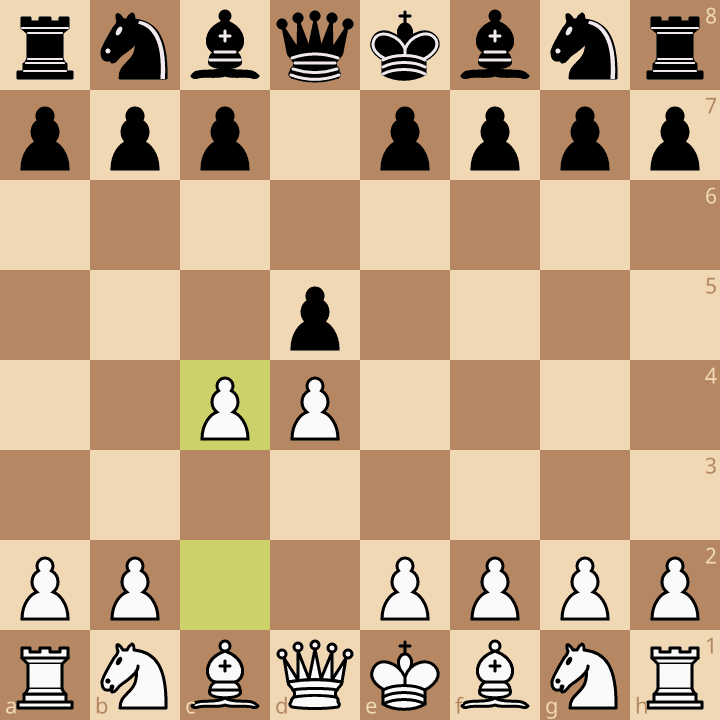
1.d4 d5 2.c4
The Queen’s Gambit is one of the oldest and most respected openings in chess. White offers the c-pawn to challenge Black’s control of the centre and create long-term positional pressure. Despite its name, the Queen’s Gambit is not a true gambit because Black usually cannot keep the pawn without falling behind in development. Instead, the opening aims to establish a strong pawn centre while encouraging active piece play.
After 2…e6, 2…c6, or 2…dxc4, the game often develops into rich positional battles where pawn structures and piece coordination become more important than immediate tactics. White generally develops naturally with Nc3, Nf3, Bg5, or Bf4, while Black seeks to challenge the centre and complete development without creating weaknesses. The Queen’s Gambit has been trusted by generations of World Champions because it provides White with lasting pressure while maintaining a sound position.
Unlike many tactical openings, success in the Queen’s Gambit depends on patience, strategic planning, and understanding pawn structures rather than memorizing long variations.
Lesson: The Queen’s Gambit teaches that space, central control, and harmonious development often create stronger long-term advantages than immediate material gain.
Example 2– Queen’s Gambit Declined
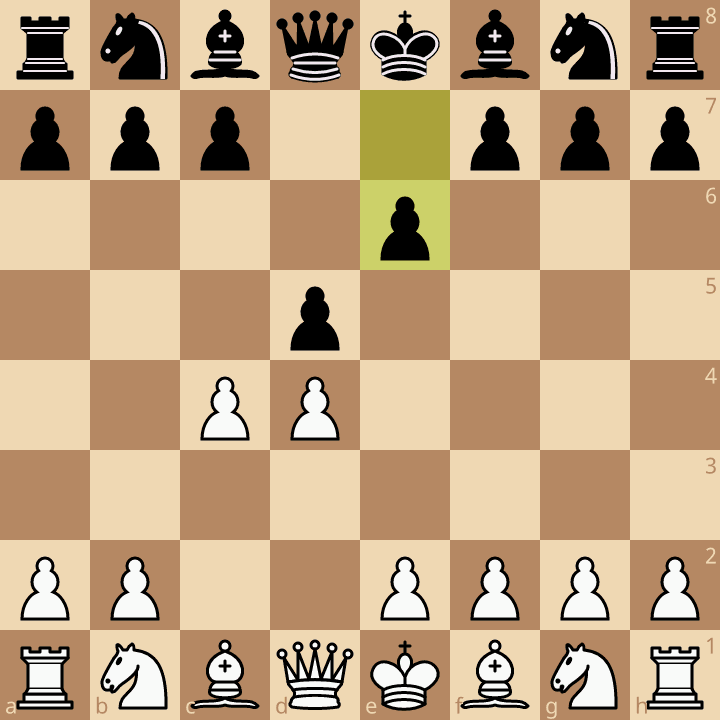
1.d4 d5 2.c4 e6
The Queen’s Gambit Declined (QGD) is one of the most classical and dependable openings in chess. Instead of accepting White’s pawn offer, Black reinforces the d5 pawn with e6, maintaining a solid central structure and preparing to develop naturally. The QGD has stood the test of time because it combines strategic soundness with excellent defensive resources.
Positions arising from the QGD are often rich in positional ideas rather than immediate tactical complications. Both players compete for central control, improve their pieces, and look for favourable pawn breaks. White generally enjoys slightly more space, while Black relies on careful coordination and timely counterplay to equalize.
The Queen’s Gambit Declined has been played by nearly every World Champion and remains one of the most respected openings in chess theory.
Lesson: The Queen’s Gambit Declined teaches that strong defence and careful development can neutralize even the most ambitious opening systems. Patience is often rewarded with a resilient position.
Example 3 – Slav Defence
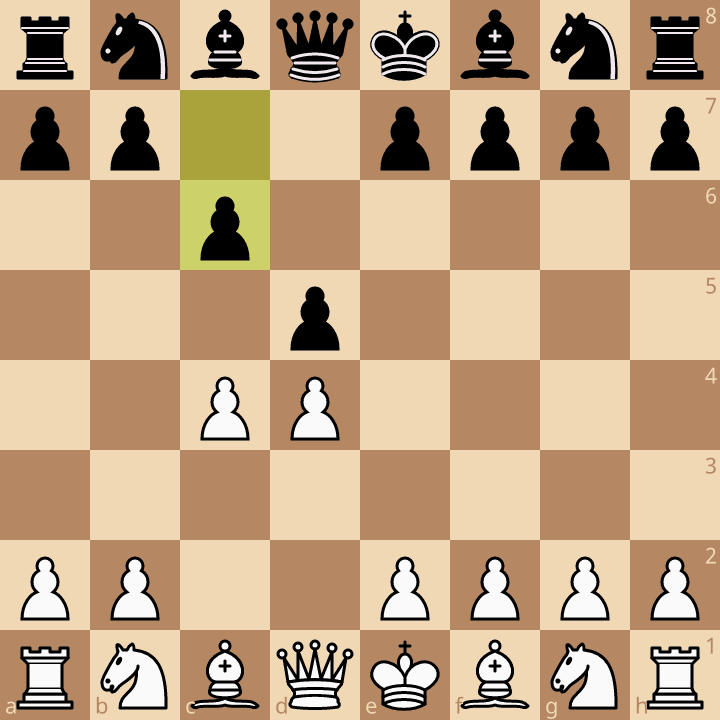
1.d4 d5 2.c4 c6
The Slav Defence is one of the most reliable and solid responses to the Queen’s Gambit. By supporting the d5 pawn with c6, Black maintains a strong central presence while keeping the light-squared bishop free to develop outside the pawn chain. This flexibility distinguishes the Slav from many other closed openings.
The Slav Defence leads to balanced positions where both players focus on sound development, healthy pawn structures, and gradual positional improvement. Although the opening appears quiet, it contains many subtle strategic ideas and tactical opportunities. White seeks space and central control, while Black aims for active piece play and a solid defensive setup.
Because of its reliability, the Slav Defence has been used by numerous World Champions and remains one of the most popular openings in modern tournament chess.
Lesson: The Slav Defence teaches that a solid foundation and flexible development often provide the best platform for long-term success. Strong pawn structures are the backbone of positional chess.
Example 4 – King’s Indian Defence
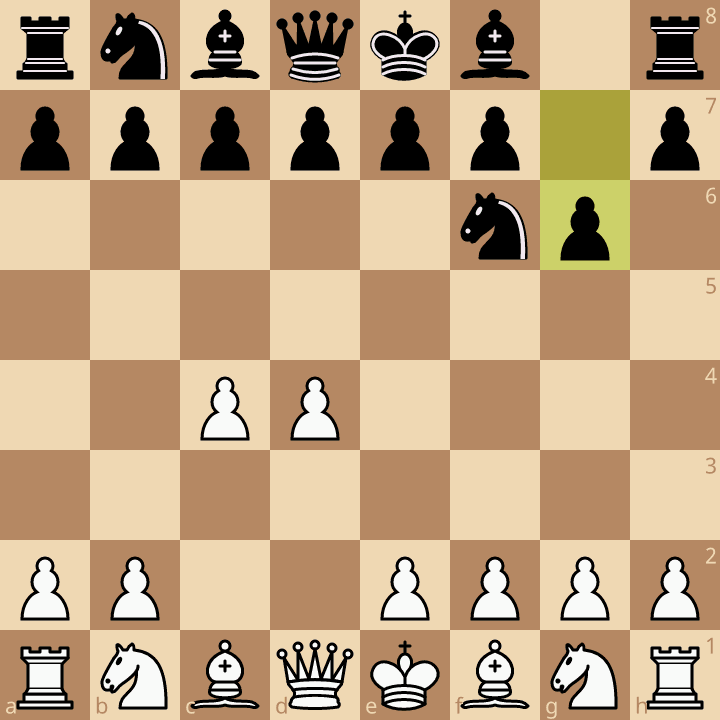
1.d4 Nf6 2.c4 g6
The King’s Indian Defence is one of the most dynamic openings against 1.d4. Instead of occupying the centre immediately, Black allows White to build a strong pawn centre before preparing a powerful counterattack. Black develops the bishop to g7, castles kingside, and later challenges the centre with moves such as …e5 or …c5.
The King’s Indian Defence often produces exciting, unbalanced positions where both sides attack on opposite wings. White usually expands in the centre and queenside, while Black seeks an aggressive kingside attack. This opening rewards players who enjoy active play, tactical opportunities, and long-term strategic planning.
Many legendary attacking players, including Bobby Fischer and Garry Kasparov, successfully employed the King’s Indian Defence because it allows Black to fight for the initiative rather than settle for equality.
Lesson: The King’s Indian Defence demonstrates that allowing your opponent space can be part of a successful strategy. Accurate timing and energetic counterplay are the keys to success.
Example 5 – Nimzo-Indian Defence
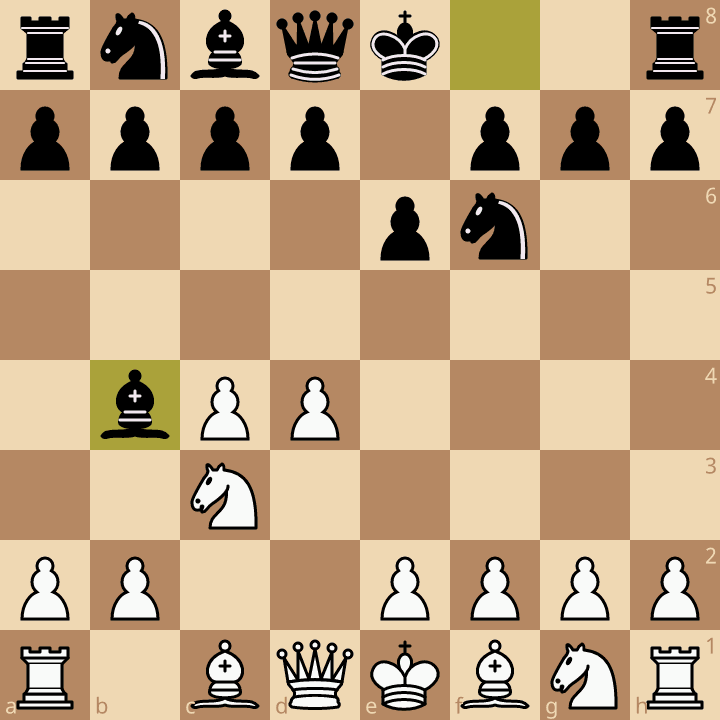
1.d4 Nf6 2.c4 e6 3.Nc3 Bb4
The Nimzo-Indian Defence is one of the most respected responses to 1.d4. By pinning White’s knight with Bb4, Black immediately places pressure on the centre without occupying it directly. Named after the great grandmaster Aron Nimzowitsch, this opening introduced many modern strategic concepts that continue to influence chess today.
Instead of rushing into tactical complications, the Nimzo-Indian focuses on controlling key central squares, creating structural imbalances, and challenging White’s pawn centre. Black is often willing to exchange the bishop for White’s knight, doubling White’s pawns in exchange for long-term positional compensation. The resulting positions require careful planning, precise piece coordination, and a good understanding of pawn structures.
The Nimzo-Indian has been a favourite of many World Champions because it offers Black a flexible and reliable defence against 1.d4 while avoiding passive positions.
Lesson: The Nimzo-Indian Defence teaches that piece activity and strategic pressure can be more valuable than preserving the bishop pair. Understanding pawn structure is essential for mastering this opening.
Example 6 – Grünfeld Defence
1.d4 Nf6 2.c4 g6 3.Nc3 d5
The Grünfeld Defence is one of the most dynamic and counterattacking responses to 1.d4. Named after the Austrian grandmaster Ernst Grünfeld, this opening allows White to build a strong pawn centre before immediately challenging it with the central pawn break …d5. Unlike the King’s Indian Defence, where Black often waits before striking the centre, the Grünfeld attacks White’s central pawns at an early stage, creating active and unbalanced positions.
After the opening moves, White usually establishes an imposing pawn centre with cxd5 and e4, while Black develops quickly and applies pressure using pieces rather than pawns. The bishop on g7 becomes a powerful attacking piece, controlling the long diagonal and targeting White’s centre. Black aims to undermine White’s pawns with timely breaks such as …c5 or …e5, forcing White to defend the centre accurately.
The Grünfeld Defence has been a favourite of World Champions such as Bobby Fischer, Garry Kasparov, and Viswanathan Anand.
Lesson: The Grünfeld Defence teaches that an impressive pawn centre is only an advantage if it can be maintained. By combining rapid development, active piece placement, and timely counterplay, Black demonstrates that dynamic activity can successfully challenge even the strongest central positions.
From the Editor
Closed Games remind us that chess is not always won by the first attack—it is often won by the better plan. Unlike many Open Games, where tactics appear quickly, these openings reward patience, careful calculation, and a deep understanding of positional ideas. Every pawn move shapes the character of the game, and every piece must be placed with a long-term purpose.
As you study the Queen’s Gambit, Slav Defence, King’s Indian Defence, Nimzo-Indian Defence, and other Closed Games, don’t focus solely on memorizing variations. Instead, pay attention to the pawn structures, key squares, and typical plans for both sides. Ask yourself why a piece belongs on a certain square, which pawn breaks each player is preparing, and how the position is likely to evolve over the next ten or twenty moves.
Many of the greatest positional players in history, including José Raúl Capablanca, Anatoly Karpov, and Vladimir Kramnik, built much of their success on a deep understanding of Closed Games. By mastering these openings, you’ll improve not only your opening repertoire but also your strategic thinking, patience, and ability to create long-term advantages—skills that are essential for every serious chess player.