
| Lesson | Principle | Level | Theme | Reading Time |
|---|---|---|---|---|
| #104 | Opening | Beginner | Open Openings | 9 mins |
Introdution
Open Games begin with the moves 1.e4 e5, where both players immediately compete for control of the centre. These openings are among the oldest and most extensively studied in chess, making them an excellent starting point for beginners. They emphasize rapid development, king safety, and active piece play while creating open lines that often lead to tactical opportunities.
In this lesson, we explored six of the most important Open Games: the Italian Game, Ruy Lopez (Spanish Game), Scotch Game, Four Knights Game, Vienna Game and Petrov Defence. Although each opening has its own unique ideas and strategic plans, they all follow the same classical principles of controlling the centre, developing pieces efficiently, and castling early.
Studying these openings helps players understand the fundamentals of chess rather than simply memorizing move sequences. Once you understand the ideas behind each opening, you can confidently adapt to different positions and transition smoothly into the middlegame.
Remember: Open Games are not about remembering every variation—they are about understanding the principles that guide every strong opening. Master the ideas, and the moves will become much easier to find over the board.
Example 1 – Italian Game
The Italian Game is one of the oldest and most popular chess openings, making it an excellent choice for beginners to learn the fundamental principles of the opening. After the moves 1.e4 e5, both players immediately compete for control of the central squares. White develops the knight to f3, attacking the e5 pawn, while Black responds by developing the knight to c6 to defend it. Both bishops are then placed on active diagonals with Bc4 and Bc5, aiming toward the opponent’s kingside and supporting future attacks.
The subsequent moves 4.c3 Nf6 5.d3 O-O 6.O-O d6 7.h3 h6 complete a harmonious opening setup. White reinforces the center with d3, prepares for future expansion, and castles early to ensure the king’s safety. Black follows the same principles by developing pieces naturally, securing the king through castling, and strengthening the center with d6. The quiet moves h3 and h6 prevent opposing bishops or knights from creating early tactical threats, while also giving each king additional breathing space.
This position perfectly demonstrates the three essential opening principles: control the center, develop your pieces efficiently, and protect your king by castling early. Rather than memorizing long opening variations, beginners should focus on understanding these ideas.
1.e4 e5 2. Nf3 Nc6 3. Bc4 Bc5 4. c3 Nf6 5. d3 O-O 6. O-O d6 7. h3 h6

Example 2 – Ruy Lopez (Spanish Opening)
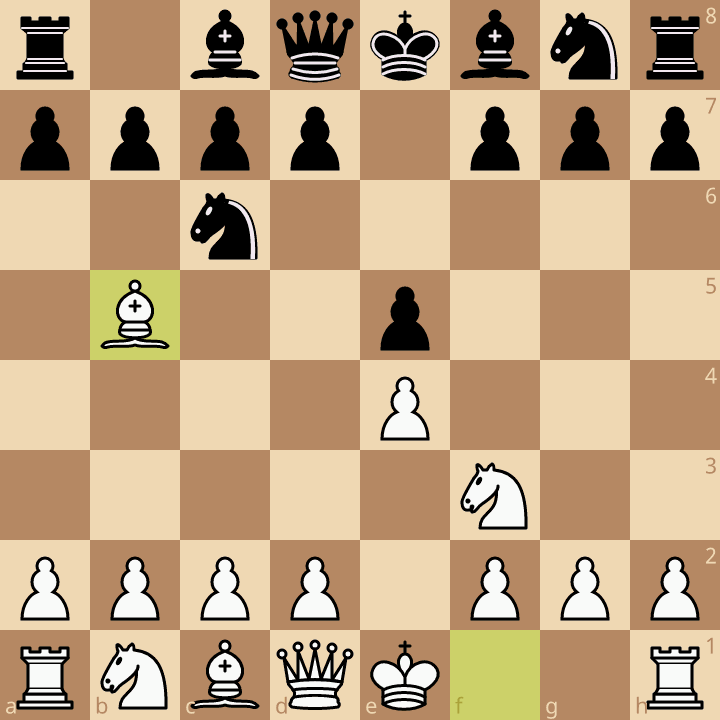
1.e4 e5 2.Nf3 Nc6 3.Bb5
The Ruy Lopez, also known as the Spanish Opening, is one of the oldest and most respected openings in chess. Named after the 16th-century Spanish priest Ruy López de Segura, it has been played by countless World Champions and remains one of the most popular openings at every level of the game. Rather than attacking immediately, White develops the bishop to b5, placing indirect pressure on Black’s knight, which defends the important e5 pawn.
Although White does not win material right away, the bishop creates long-term positional pressure. Black usually responds with moves such as 3…a6, 3…Nf6, or 3…Bc5, leading to rich strategic battles. Both players continue by developing their pieces, controlling the centre, and castling early.
Players learn how to improve piece coordination, maintain central control, and patiently build pressure before launching an attack. Because of its depth and flexibility, the Ruy Lopez remains one of the best openings for beginners and advanced players alike.
Lesson: The Ruy Lopez demonstrates the importance of long-term positional play. Instead of chasing quick tactics, focus on developing your pieces, controlling the centre, and improving your position step by step. Small advantages, accumulated patiently, often lead to winning opportunities later in the game.
Example 3 – Scotch Game
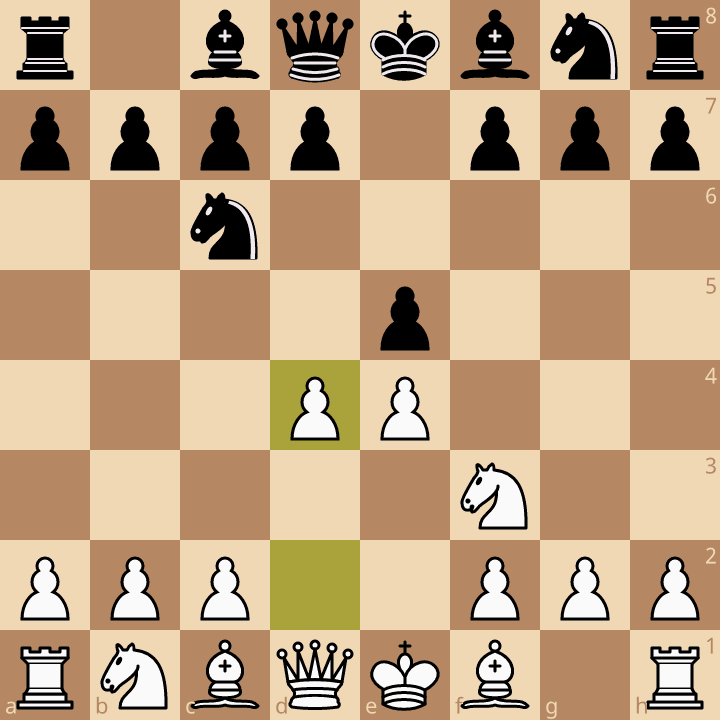
1.e4 e5 2.Nf3 Nc6 3.d4
The Scotch Game is one of the oldest and most direct openings in chess. Popularized by a correspondence match between Edinburgh and London in 1824, it begins with 3.d4, where White immediately challenges Black’s control of the centre. Unlike the Italian Game or the Ruy Lopez, which focus on gradual development, the Scotch Game aims to open the position early and create active piece play.
After 3…exd4 4.Nxd4, White quickly regains the pawn while placing a knight in the centre. Both sides continue by developing their minor pieces, castling, and preparing for the middlegame. The open central files often lead to tactical opportunities, making the Scotch Game an excellent choice for players who enjoy active and straightforward positions. Because the centre opens early, both players must pay close attention to development and king safety. Falling behind in development can quickly lead to tactical problems and loss of the initiative.
Lesson: The Scotch Game teaches that early central control and rapid development are often rewarded with active piece play and attacking opportunities. Develop your pieces quickly, castle early, and use the open centre to keep the initiative throughout the game.
Example 4 – Four Knights Game
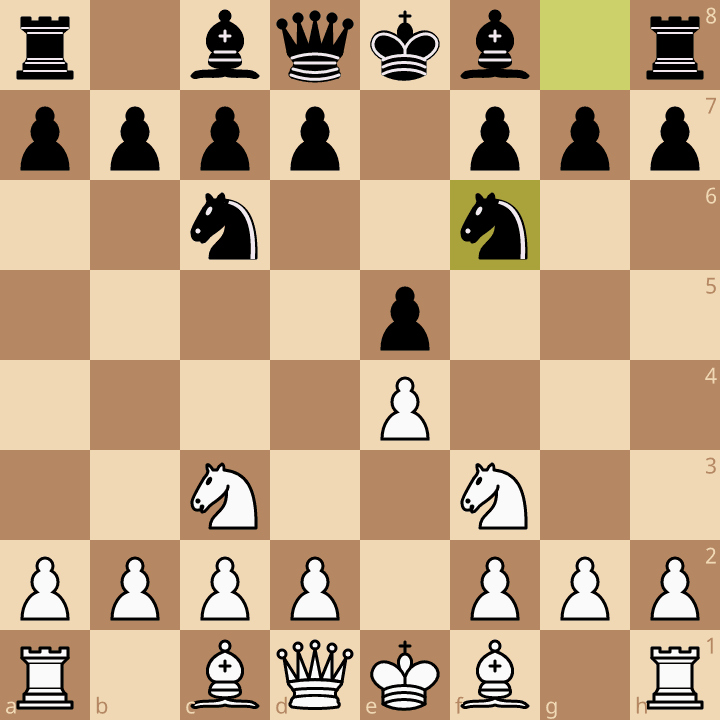
1.e4 e5 2.Nf3 Nc6 3.Nc3 Nf6
The Four Knights Game is one of the simplest and most instructive openings in chess. As the name suggests, both players develop their knights before committing their bishops or queens, resulting in a balanced and symmetrical position. This opening follows classical opening principles by emphasizing rapid development, central control, and king safety.
Because both sides develop naturally, the Four Knights Game is an excellent choice for beginners learning the fundamentals of chess. White and Black typically continue by developing their bishops, castling early, and preparing to contest the centre with pawn breaks such as d4 or …d5. While the opening may appear quiet, it often leads to rich positional battles and tactical opportunities if either player neglects development or makes an inaccurate move.
Lesson: The Four Knights Game teaches that solid development is the foundation of a successful opening. By developing your pieces efficiently, controlling the centre, and castling early, you create a harmonious position that prepares you for both strategic and tactical play in the middlegame.
Example 5 – Vienna Game
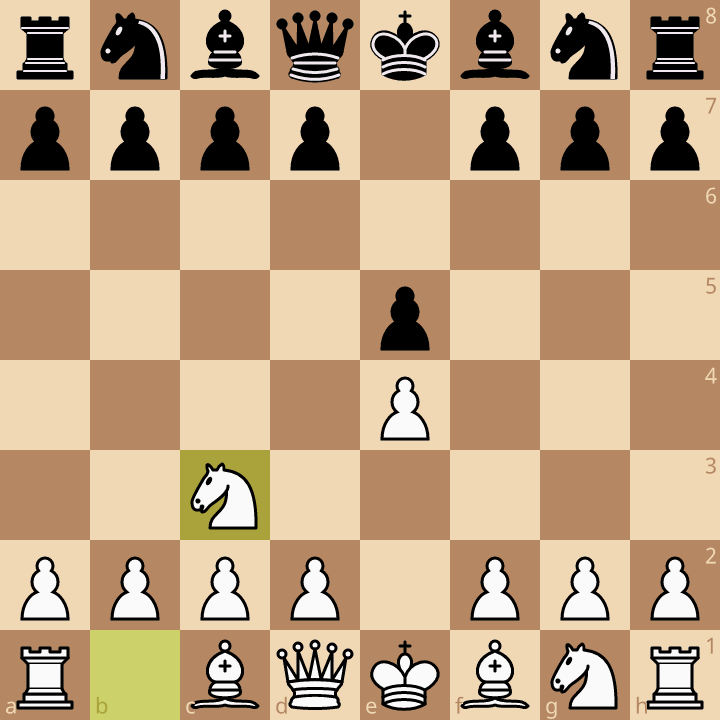
1.e4 e5 2.Nc3
The Vienna Game is an aggressive and flexible opening that begins with 1.e4 e5 2.Nc3. Instead of immediately developing the king’s knight to f3, White develops the queen’s knight, keeping several strategic options available. This move supports a future f4 pawn advance, allowing White to seize more space in the centre and potentially launch a kingside attack. The Vienna Game combines sound opening principles with tactical opportunities, making it a popular choice for players who enjoy creative and dynamic positions.
Unlike the Italian Game or Ruy Lopez, the Vienna Game often leads to less explored positions, allowing White to steer the game away from heavily analysed theory. Black usually responds with natural developing moves such as 2…Nf6, 2…Nc6, or 2…Bc5, after which both players continue developing their pieces, controlling the centre, and preparing to castle. While the opening can produce sharp attacking lines, it also rewards careful positional play and good piece coordination.
Lesson: The Vienna Game teaches the value of flexibility in the opening. Rather than committing to a fixed plan too early, White develops naturally while keeping multiple strategic ideas available. By combining solid development, central control, and timely attacking opportunities, players can create dynamic positions without sacrificing sound opening principles.
Example 6 – Petrov Defence (Russian Game)
1.e4 e5 2.Nf3 Nf6
The Petrov Defence, also known as the Russian Game, is a solid and symmetrical opening that begins with 1.e4 e5 2.Nf3 Nf6. Instead of defending the e5 pawn with 2…Nc6, Black immediately counterattacks White’s e4 pawn. This active response follows classical opening principles by contesting the centre while developing a knight. The Petrov Defence has long been favored by strong positional players because of its reliability and balanced nature.
After 3.Nxe5, Black usually regains the pawn with 3…d6, challenging the advanced knight before continuing with natural development. Both sides aim to develop their bishops and knights, castle early, and establish a sound pawn structure.
The Petrov Defence is an excellent choice for players seeking a dependable opening against 1.e4. It teaches the importance of equalizing through sound development rather than pursuing risky complications. Many World Champions, including Vladimir Kramnik and Fabiano Caruana, have successfully employed the Petrov Defence at the highest level because of its solid and resilient character.
Lesson: The Petrov Defence demonstrates that active defence can be just as effective as direct attack. By challenging the centre immediately, developing pieces harmoniously, and prioritizing king safety, Black can achieve a comfortable and balanced position while remaining ready to seize opportunities if White overextends.
From the Editor
Open Games are the birthplace of classical chess. Every move teaches a fundamental lesson: fight for the centre, develop your pieces quickly, castle early, and coordinate your forces before launching an attack. Whether you choose the tactical Scotch Game, the strategic Ruy Lopez, the balanced Four Knights Game, the flexible Vienna Game, the aggressive Italian Game, or the solid Petrov Defence, the underlying principles remain the same.
As a beginner, resist the temptation to memorize long opening variations. Instead, strive to understand why each move is played. Ask yourself: What is this move trying to achieve? Which piece is being improved? How does it help control the centre or protect the king? Players who understand these ideas will consistently outperform those who rely solely on memorized sequences.
The openings in this chapter have stood the test of time and have been trusted by World Champions for generations. They provide the ideal foundation for developing sound positional understanding, tactical awareness, and strategic planning. Master these classical Open Games first, and every new opening you study will become easier to understand. Remember, great chess is built on strong fundamentals, and every great player begins by mastering the basics.
Related Articles