
| Lesson | Principle | Level | Theme | Reading Time |
|---|---|---|---|---|
| #102 | Opening | Beginner | Common Opening Mistakes | 6 mins |
Lesson Objective
Learn to identify and avoid the most common opening mistakes that lead to poor positions, loss of material, or even early checkmate. By understanding these errors, you will develop healthier opening habits and confidently transition into the middlegame.
Introduction
A solid opening gives you the freedom to develop your pieces, protect your king, and prepare for the middlegame. Even if you do not know a specific opening, following the basic opening principles will usually give you a playable position.
However, many beginners struggle not because they lack tactical ability, but because they make fundamental mistakes during the opening. Weak pawn moves, poor piece development, delayed castling, or neglecting basic threats often create weaknesses that stronger opponents can exploit immediately.
Learning what not to do is just as important as learning the correct moves. By avoiding these common mistakes, you will not only survive the opening but also give yourself the best chance to improve your tactical and strategic skills.
The following examples illustrate three of the most common opening mistakes made by beginners.
Key Takeaways
- Develop your knights and bishops before launching attacks.
- Avoid moving the same piece repeatedly in the opening.
- Do not bring your queen out too early without a clear reason.
- Limit unnecessary pawn moves, especially around your king.
- Castle early to keep your king safe.
- Always check your opponent’s threats before making your move.
Example 1 – Weakening the King Before Development
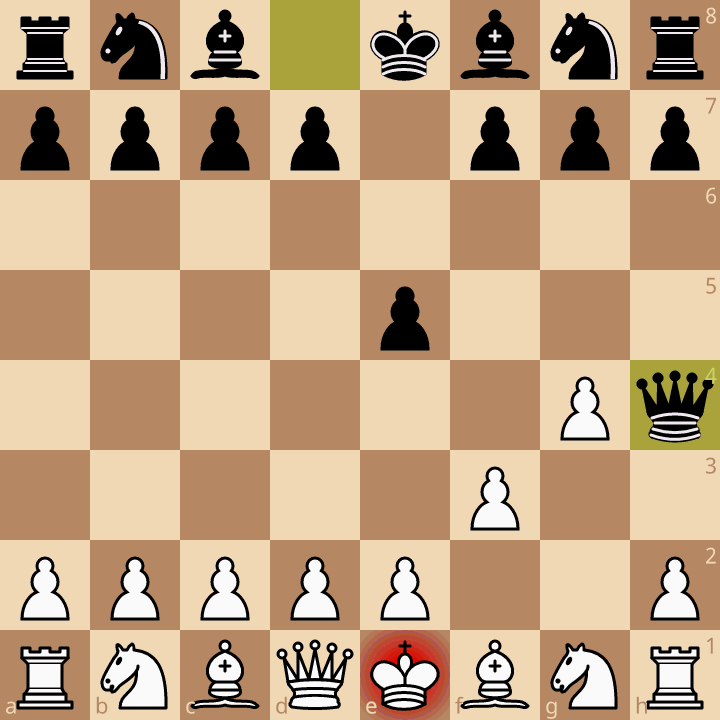
One of the most common mistakes made by beginners is moving the pawns in front of their king without a clear purpose. In this example, White starts with 1.g4, advancing the kingside pawn instead of developing a knight or fighting for the center. This move weakens the squares around the king and makes future castling less secure. White then compounds the mistake with 2.f3??, opening the dangerous diagonal from d8 to h4 and creating even more weaknesses around the king. Neither of White’s first two moves contributes to piece development, central control, or king safety.
Black immediately recognizes the opportunity and responds with 2…Qh4#, delivering checkmate on just the second move. This famous mating pattern is known as Fool’s Mate, the fastest possible checkmate in chess. Although it is rarely seen in games between experienced players, it perfectly illustrates how quickly a game can be lost when the basic opening principles are ignored.
The lesson is simple but extremely important: do not make unnecessary pawn moves around your king during the opening. Your first priority should be to control the center, develop your knights and bishops, and castle as early as possible. By following these principles, you keep your king safe, avoid creating unnecessary weaknesses, and enter the middlegame with a solid and well-coordinated position instead of facing an early tactical disaster.
1.g4 e5 2. f3 Qh4#
Example 2 – Bringing the Queen Out Too Early
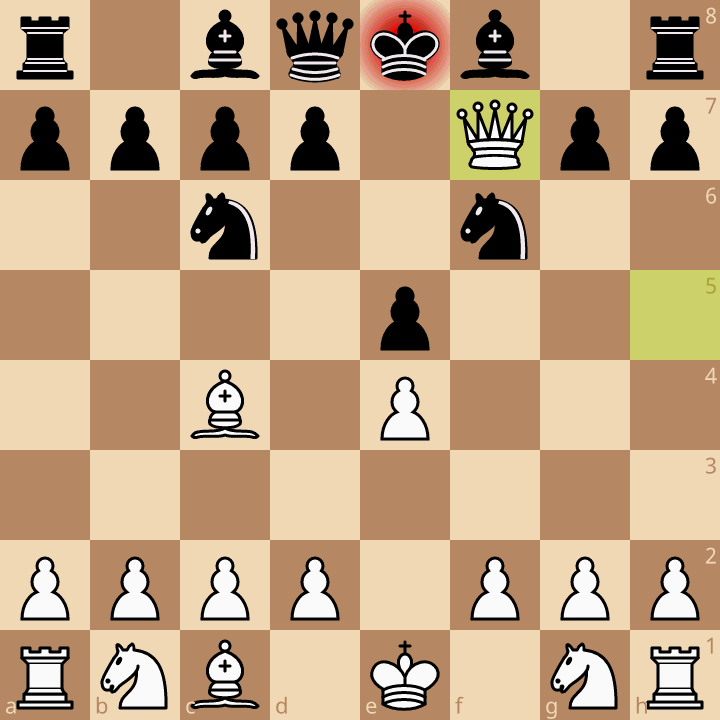
A common mistake among beginner chess players is developing the queen too early in the opening. Because the queen is the most powerful piece on the board, many new players try to use it to launch a quick attack or deliver an early checkmate. In this example, after 1.e4 e5 2.Bc4 Nc6, White plays 3.Qh5?!, immediately targeting the weak f7 square. Although this creates a threat, it ignores one of most important opening principles—developing the minor pieces before the queen.
Against accurate play, Black can calmly defend with 3…g6, attacking the queen and forcing it to move again. After 4.Qf3 Nf6, Black has gained valuable time by developing pieces while White has spent two queen moves without improving the rest of the position. This is known as losing tempi, allowing the opponent to complete development more quickly.
However, Black must also remain alert. If Black carelessly responds with 3…Nf6??, overlooking White’s threat, then 4.Qxf7# delivers checkmate immediately. This well-known trap, often called the Scholar’s Mate, shows how dangerous it can be to ignore tactical threats.
The key lesson is to develop your knights and bishops before bringing out the queen. Early queen moves often become targets for your opponent, while proper development leads to safer positions and a stronger foundation for the middlegame.
1. e4 e5 2. Bc4 Nc6 3. Qh5 Nf6 4. Qxf7#
Example 3 – Delaying Development and Castling
One of the most costly mistakes in the opening is failing to develop your pieces and delaying castling. In this example, Black begins with sensible moves but soon loses focus by playing 3…f5?!, followed by several pawn moves instead of completing the development of the kingside pieces. While these moves may appear aggressive, they neglect the most important priority in the opening—bringing the minor pieces into play and ensuring the king’s safety.
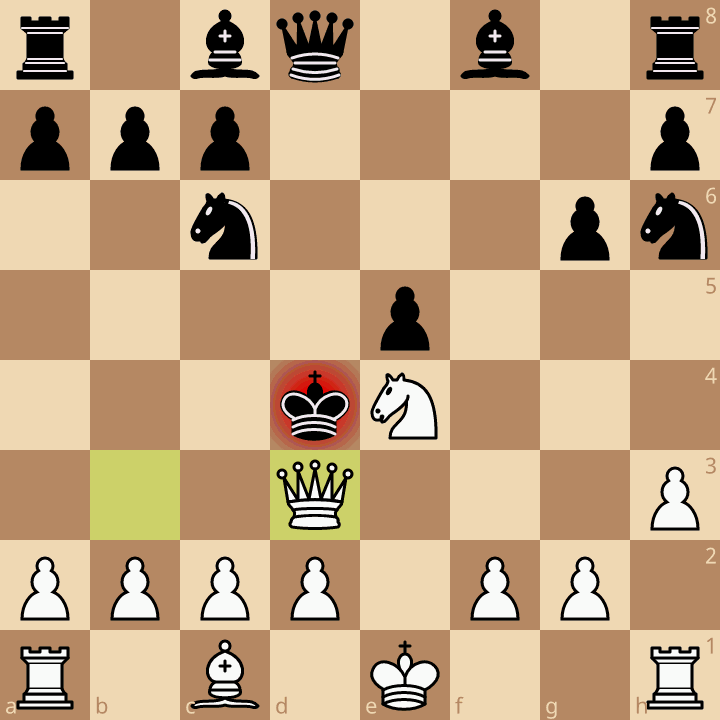
White takes full advantage of this situation by developing quickly and creating immediate threats. After 4.h3 fxe4 5.Nxe4 Nc6 6.Nfg5 d5 7.Qh5+ g6 8.Nf6+, White’s knights and queen coordinate beautifully to launch a powerful attack against the exposed king. Because Black has not castled and several pieces remain undeveloped, there are too few defenders available to stop the attack. The pressure continues until Black is eventually checkmated in the center of the board.
This example demonstrates why rapid development and early castling are essential opening principles. An uncastled king becomes increasingly vulnerable as the position opens, especially when the opponent has completed development. Before thinking about launching an attack, always ask yourself whether your king is safe and whether your pieces are ready to support one another. By developing your knights and bishops efficiently and castling at the earliest suitable opportunity, you greatly reduce the risk of early tactical attacks and enter the middlegame with a secure, well-coordinated position.
1. Nc3 e5 2. Nf3 d6 3. e4 f5 4. h3 fxe4 5. Nxe4 Nc6 6. Nfg5 d5 7. Qh5+ g6 8. Qf3 Nh6 9. Nf6+ Ke7 10. Nxd5+ Kd6 11. Ne4+ Kxd5 12. Bc4+ Kxc4 13. Qb3+ Kd4 14. Qd3#
From the Editor
Strong opening play is not about memorizing dozens of variations—it’s about avoiding the mistakes that repeatedly cost beginners games. Every move in the opening should have a clear purpose: control the center, develop your pieces, or improve king safety. Before making any move, ask yourself, “Does this help my position, or am I creating a weakness?” Developing this habit will help you build solid positions and reduce avoidable losses, allowing you to focus on the exciting tactical and strategic battles that follow in the middlegame.
Related Articles