
| Chapter | Chapter Name | Unit | Level | Reading Time |
|---|---|---|---|---|
| BG003 | Master the Chess Pieeces | Basic Guide | Beginner | 4 min |
Every Piece Has a Personality
Imagine trying to play football without knowing who the goalkeeper, defender, or striker is. Every player has a unique role, and success comes from using each player at the right moment.
Chess works in exactly the same way.
Many beginners think every piece should simply capture as many opponent’s pieces as possible. In reality, each chess piece has its own personality, strengths, and weaknesses. Some pieces love open positions, while others thrive in crowded battles. Some are powerful attackers, while others quietly defend important squares.
Learning how each piece moves is only the beginning. The real skill is understanding where a piece belongs and when it becomes powerful.
In this chapter, you’ll meet every member of your chess army, discover what each piece does best, and learn simple tips that will help you use them more effectively in every game.
Key Takeaways
After completing this chapter, you will be able to:
- Understand the role of every chess piece.
- Know where each piece is strongest.
- Recognise the strengths and weaknesses of each piece.
- Improve the coordination of your pieces.
The King – The Leader
The King is the most important piece on the chessboard. Although it moves only one square at a time, every decision in chess revolves around keeping king safe.
A king is usually protected during the opening and middlegame by castling. However, in the endgame, the king transforms into an active fighting piece and often leads the attack.
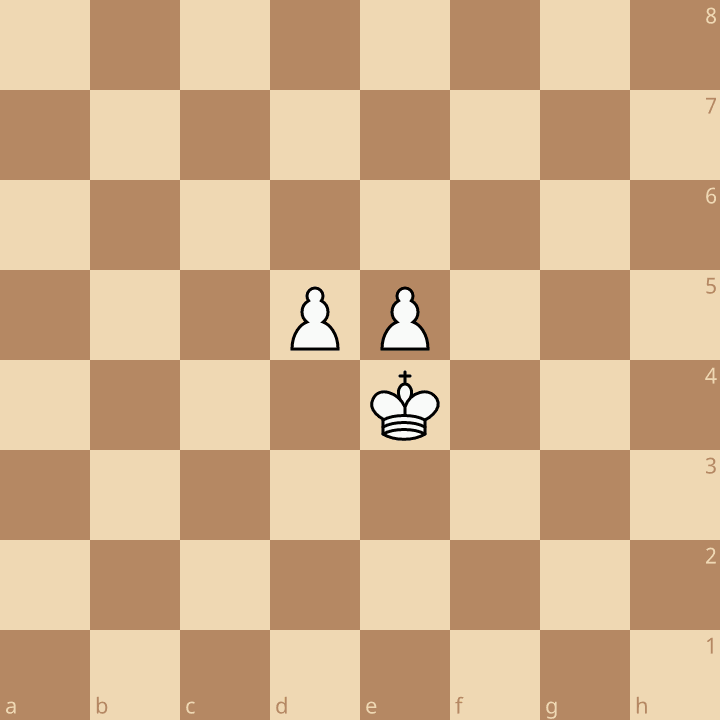
Coach’s Tip: Don’t hide your king forever. In the endgame, an active king is often your strongest piece.
The Queen – The Most Powerful Piece
The Queen combines the power of a rook and a bishop.
She can move:
Horizontally, Vertically & Diagonally
Because of her strength, beginners often bring the queen out too early. This usually allows the opponent to attack her repeatedly, wasting valuable time.
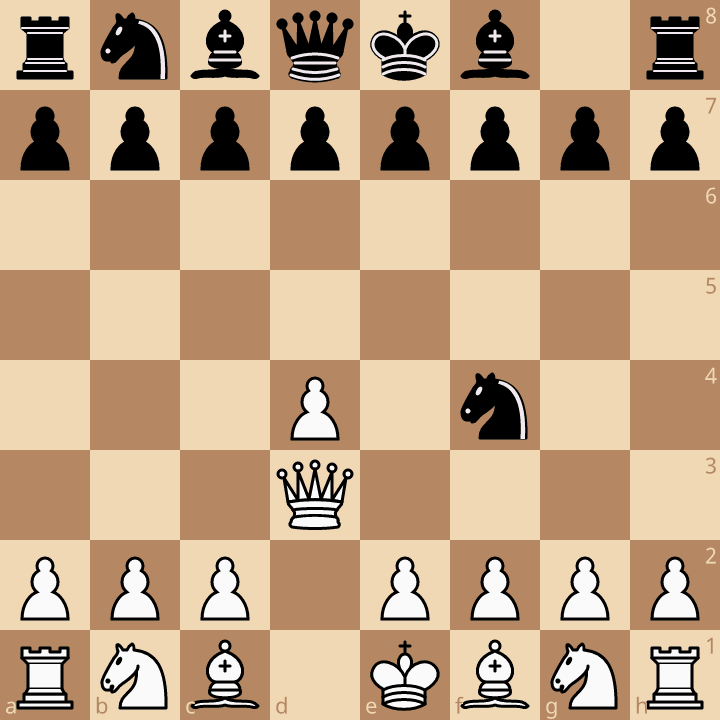
Golden Rule:
Develop your minor pieces before bringing the queen into battle.
The Rook – The Heavy Artillery
Rooks become strongest when they occupy:
Open files, Seventh Rank or Behind passed pawns
Unlike the queen, rooks usually become active later in the game. A rook trapped behind its own pawns is often much weaker than a rook controlling an open file.
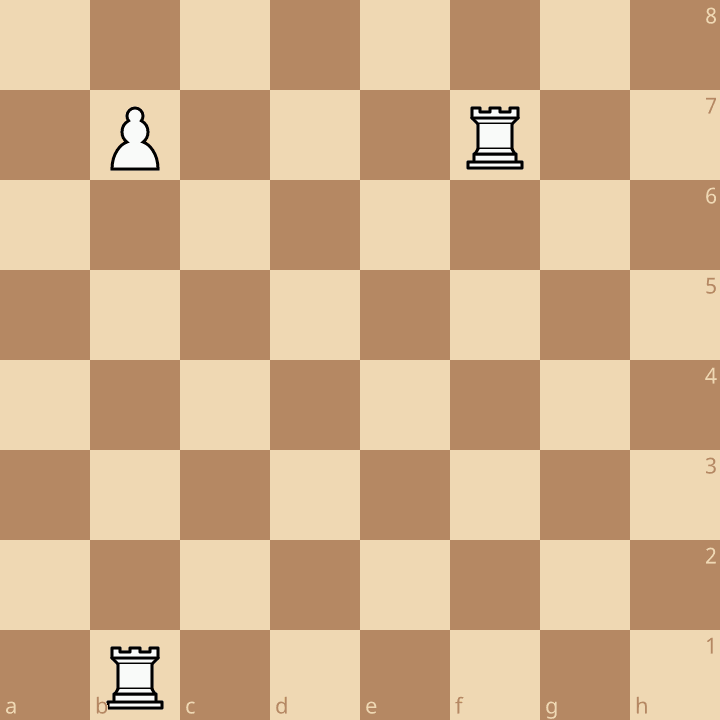
Remember:
“Rooks belong on open files.”
The Bishop – The Long-Range Sniper
Bishops move diagonally and always remain on the same colour throughout the game.
One bishop controls light squares.
The other controls dark squares.
A bishop becomes extremely powerful when long diagonals are open.
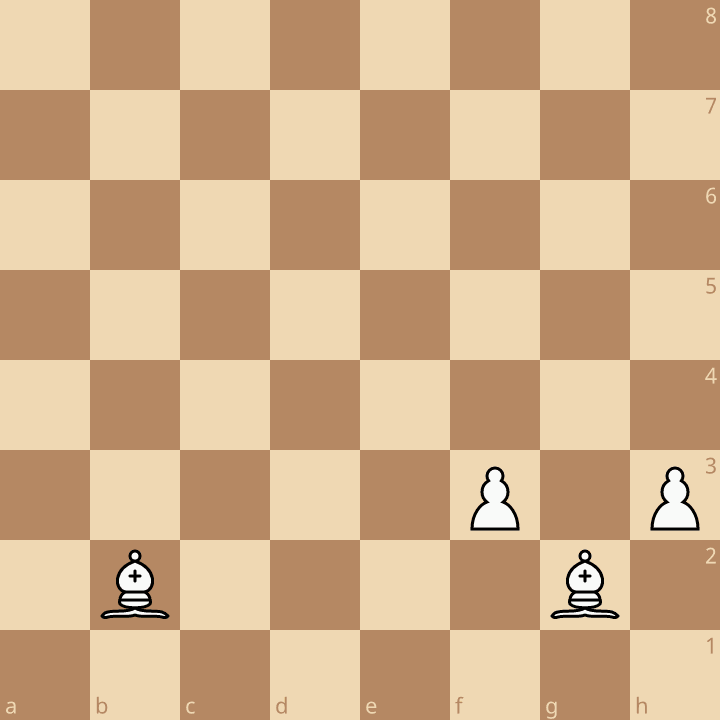
Sometimes a bishop is blocked by its own pawns.
This is called a bad bishop.
The Knight – The Trickster
The Knight is the only piece that can jump over other pieces. It moves in an “L” shape. Knights love:
- Central squares
- Closed positions
- Outposts
A knight on the edge of the board has very few options.
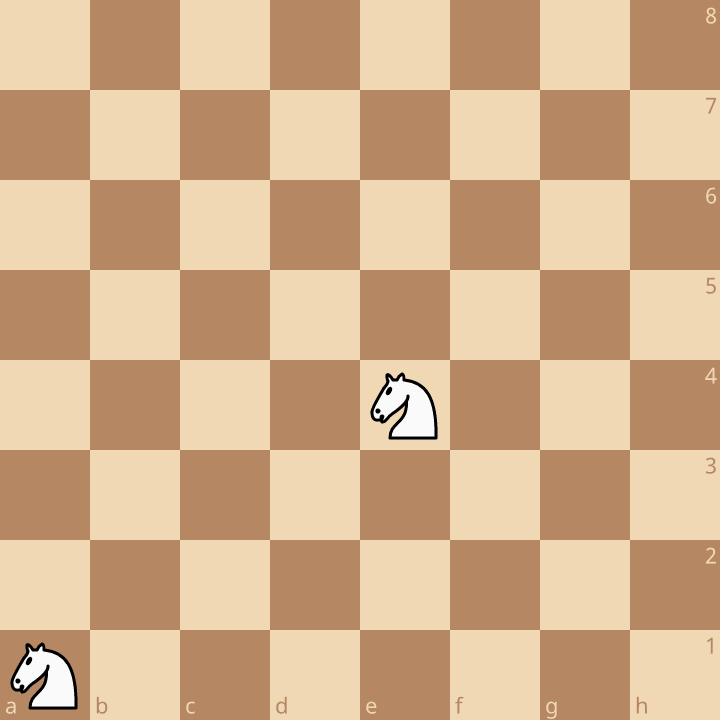
Remember the famous saying:
“A Knight on the Rim is Dim.”
The Pawn – The Soul of Chess
Pawns appear weak.
Yet they control space, protect pieces, and decide many games.
Every pawn move creates strengths and weaknesses because pawns never move backwards.
Treat every pawn move as a permanent decision.
Many Grandmasters believe:
“Pawn structure decides the plan.”
Working Together
The strongest chess players don’t rely on one powerful piece.
They make the entire army work together.
A queen without support can be trapped.
A rook without open files becomes passive.
A bishop without diagonals becomes ineffective.
Before every move, ask yourself: Which of my pieces is doing the least work?
Improving your worst-placed piece is often the best move.
Summary
Remember these simple ideas:
- Protect your king.
- Don’t rush your queen.
- Activate your rooks.
- Use bishops on open diagonals.
- Keep knights near the centre.
- Think carefully before moving pawns.
When every piece works together, your position becomes stronger naturally.
Advice from the Coach
Many beginners judge a position only by counting material. Strong players look at activity instead. A knight in the centre may be worth more than a rook trapped in the corner. Before making a move, don’t ask, “Which piece is strongest?” Instead ask, “Which piece can I improve?” That simple habit will make your chess much stronger over time.
Before You Play Your Next Game
Try to answer YES after every game:
- ✅ Did I keep my king safe?
- ✅ Did I avoid bringing my queen out too early?
- ✅ Were my rooks active?
- ✅ Did my bishops have open diagonals?
- ✅ Were my knights placed near the centre?
- ✅ Did I think before moving my pawns?
Did You Know?
- The famous phrase “The pawns are the soul of chess” was popularized by the great French player François-André Danican Philidor.
- Knights are the only chess pieces that can jump over other pieces.
- A queen can control up to 27 squares from the centre of an empty board, making it the most powerful piece in chess.
| Previous Chapter: BG002 – Build Strong Chess Foundations | Next Chapter : BG004 – Special Moves & Game Results |