
| Chapter | Chapter Name | Unit | Level | Reading Time |
|---|---|---|---|---|
| BG002 | Build Strong Chess Foundations | Basic Guide | Beginner | 4 min |
The Five Golden Rules Every Beginner Should Know
Many beginners believe that learning chess means memorising opening moves. They spend hours trying to remember famous openings, hoping to surprise their opponents in the first few moves. Unfortunately, this approach rarely works for long.
Imagine building a house. No matter how beautiful the walls or roof may look, the entire building will eventually collapse if the foundation is weak. Chess works in exactly the same way. Before learning complicated openings or spectacular sacrifices, you must first understand the basic principles that every strong player follows.
These principles are not secret opening lines or clever tricks. They are simple ideas that help your pieces work together, keep your king safe, and prepare you for the middlegame. Whether you play the Italian Game, the Queen’s Gambit, or the Sicilian Defence, these rules remain almost the same.
Every Grandmaster follows these principles. The difference is that experienced players know when to break them, while beginners should first learn why they exist.
In this chapter, you’ll learn the Five Golden Rules of Chess—the foundation upon which every strong game is built.
Key Takeaways
After completing this chapter, you will be able to:
- Understand the importance of the centre.
- Develop your pieces efficiently.
- Keep your king safe.
- Coordinate your army.
- Think before making every move.
Control the Centre
The four central squares—e4, e5, d4, and d5—are the most important squares on the chessboard.
Why?
Because pieces placed near the centre can move to more squares than pieces stuck on the edge.
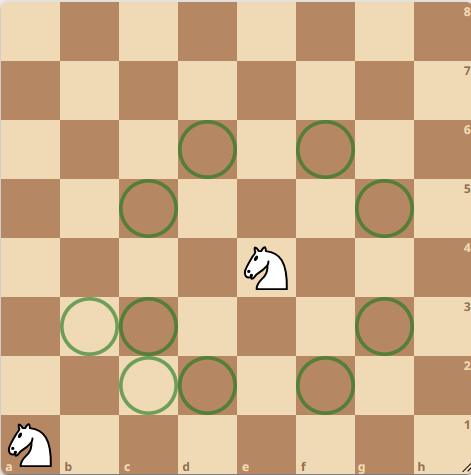
Imagine placing a knight on e4.
It attacks eight squares.
The same knight on a1 attacks only two.
This is why strong players usually begin by placing pawns in the centre and developing their pieces toward these important squares.
Remember: “Who controls the centre usually controls the game.”
Develop Your Pieces
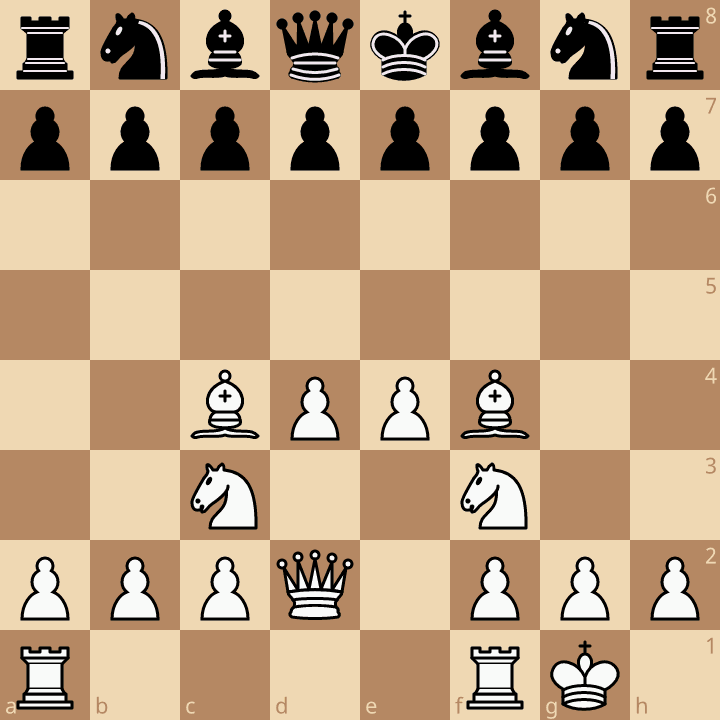
Every piece should enter the game as quickly as possible.
Many beginners waste time by moving the same piece repeatedly while other pieces remain on their starting squares.
Good development means:
Bring out your knights.
Develop your bishops.
Connect your rooks.
Avoid unnecessary queen moves in the opening.
Your pieces are like members of a football team. If only two players are active while the others stand still, winning becomes very difficult.
Castle Early
Your king is your most important piece.
Leaving it in the centre for too long makes it an easy target.
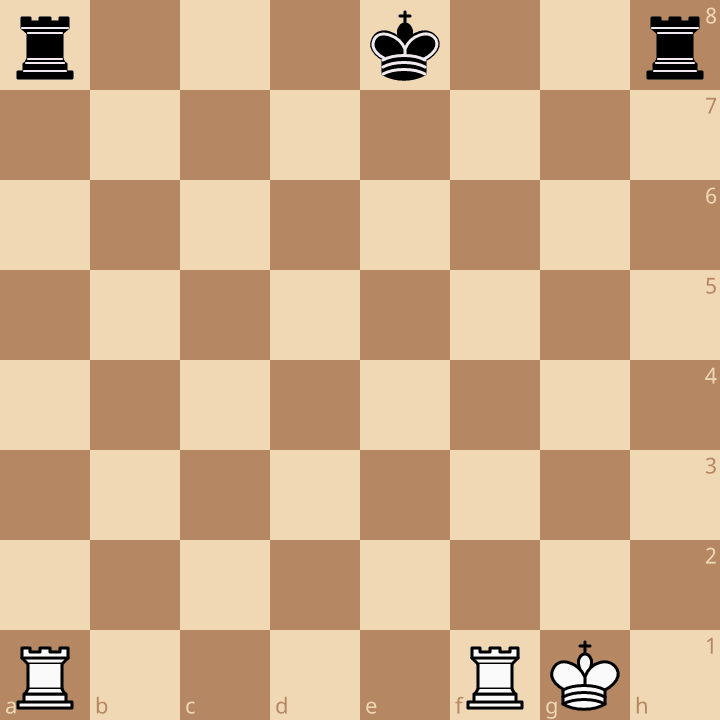
Castling does two wonderful things in one move:
It moves your king to safety.
It activates your rook.
Unless there is a good reason not to, try to castle within the first 10–12 moves.
Remember:
“A safe king allows your pieces to attack freely.”
Make Your Pieces Work Together
Chess is a team game. Not for people—but for your pieces.
A queen cannot win alone. Neither can two rooks if the bishops and knights are asleep.
Before every move, ask yourself:
- Which of my pieces is not helping?
- Can I improve its position?
- Can two pieces attack together?
Strong players don’t simply move pieces. They improve the entire army.
Think Before Every Move
Perhaps the most important habit in chess is to pause before moving. Instead of playing the first move you see, ask yourself three simple questions:
- What is my opponent threatening?
- Is my move safe?
- Does my move improve my position?
These three questions will prevent countless mistakes.
Remember: “The fastest move is not always the best move.”
Key Points to Remember
Before moving to the next chapter, remember these five golden rules:
- Fight for the centre.
- Develop all your pieces.
- Castle early.
- Coordinate your army.
- Think before every move.
Master these principles first, and every opening you learn later will become much easier to understand.
Advice from the Coach
Many beginners lose games before the middlegame even begins—not because they miss tactics, but because they ignore basic principles. Don’t worry about memorising twenty moves of opening theory. If you consistently follow these five golden rules, you’ll already play better than most beginners. Build good habits now, and they will stay with you for the rest of your chess journey.
Before You Play Your Next Game
Try to answer YES to each question:
- ✅ Did I control the centre?
- ✅ Did I develop my knights and bishops?
- ✅ Did I castle?
- ✅ Did all my pieces participate?
- ✅ Did I think before every move?
Even if you lose the game, following these five principles means you’re learning the right way.
Did You Know?
- Wilhelm Steinitz, the first official World Chess Champion, popularized many of the positional principles that beginners still learn today.
- The famous saying “A knight on the rim is dim” reminds players that knights are strongest near the centre.
- Many games between beginners are decided not by brilliant tactics, but by who develops their pieces more efficiently.
| Previous Chapter: BG001 – Know Your Chessboard & Pieces | Next Chapter : BG003 – Master the Chess Pieces |