
| Chapter | Chapter Name | Unit | Level | Reading Time |
|---|---|---|---|---|
| BG004 | Special Moves & Game Results | Basic Guide | Beginner | 4 min |
Master the Rules Beyond the Basics
Chess has only six pieces, but there are a few special rules that every beginner must know before playing a tournament. Imagine promoting a pawn to a queen, capturing a pawn using en passant, or accidentally turning a winning position into a draw because of stalemate. These situations may not occur in every game, but when they do, knowing the rules can make the difference between winning and drawing—or even losing.
In this chapter, you’ll learn the most important special moves in chess, understand the different ways a game can end, and discover the common draw rules used in tournaments. Mastering these rules will help you play with confidence and avoid costly mistakes.
Key Takeaways
After completing this chapter, you will be able to:
- Understand pawn promotion and underpromotion.
- Learn how en passant works.
- Recognise the different ways a chess game can end.
- Understand the most common draw rules used in tournaments.
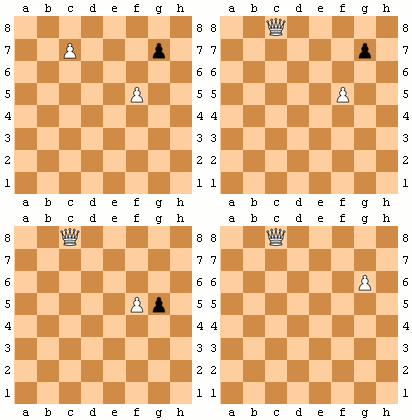
Special Pawn Rules
Pawn Promotion
When a pawn reaches the last rank (8th rank for White or 1st rank for Black), it must be promoted to a Queen, Rook, Bishop, or Knight. In most situations, players choose a queen because it is the strongest piece on the board. Remember, you can have more than one queen if multiple pawns are promoted during the game.
En Passant
En passant is a special pawn capture. If your opponent moves a pawn two squares from its starting position and lands beside your pawn, you may capture it as if it had moved only one square. This special capture is only allowed on your very next move; otherwise, the opportunity is lost.
Underpromotion
Although promoting to a queen is usually the best choice, there are rare situations where promoting to a rook, bishop, or knight is stronger. This is called underpromotion. It can help avoid stalemate, deliver checkmate, or create a winning tactic that a queen cannot.
Winning, Losing & Drawing
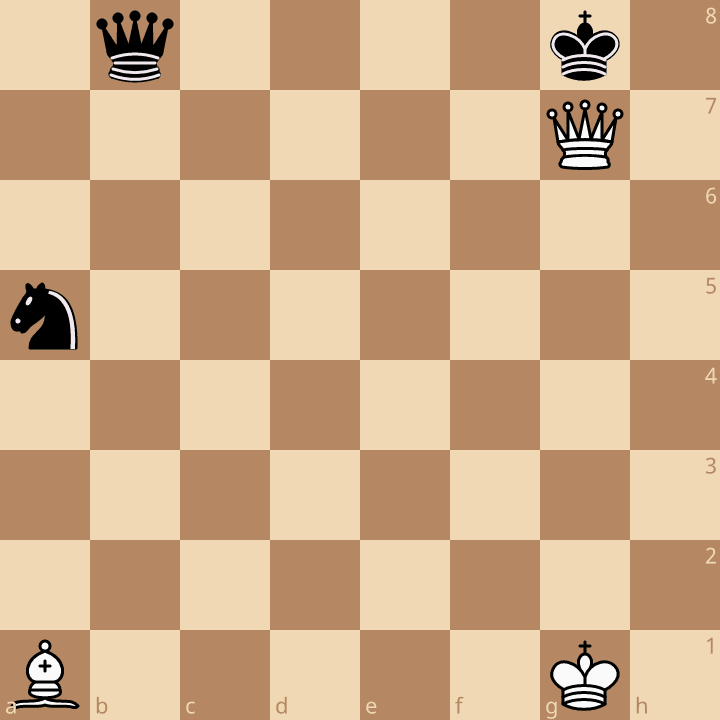
Checkmate
A game ends in checkmate when a king is under attack and has no legal move.
Unlike a check, the king cannot move away, block the attack, or capture the attacking piece.
Checkmate immediately ends the game, and the player delivering checkmate is declared the winner.
Stalemate
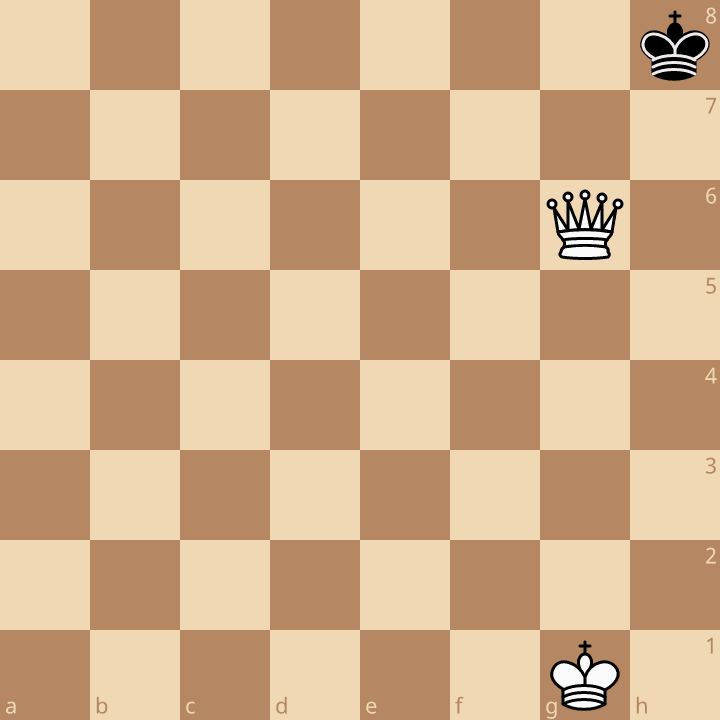
A stalemate occurs when a player has no legal move, but their king is not in check.
Although one player may have a clear material advantage, the game ends in a draw.
Before making your final move, always check whether your opponent still has a legal move.
Other Ways a Game Can End
A chess game may also end in the following ways:
- Resignation – A player accepts defeat because the position is hopeless.
- Time Forfeit – A player loses by running out of time on the chess clock.
- Two Illegal Moves – In standard FIDE classical tournaments, a player loses the game after making two illegal moves.
- Draw by Agreement – Both players agree to end the game in a draw.
- Threefold Repetition – The same position occurs three times with the same player to move and the same legal moves available.
- 50-Move Rule – Fifty consecutive moves are played without a pawn move or a capture.
- Insufficient Material – Neither player has enough pieces to force a checkmate (e.g., King vs King, King & Bishop vs King, or King & Knight vs King).
Understanding these rules will help you avoid unnecessary losses during tournament play.
Summary
Special rules are an important part of chess and every tournament player should know them.
Remember:
- Promote your pawn wisely.
- Understand when en passant is possible.
- Know the difference between checkmate and stalemate.
- Learn the common ways a game can end in a draw.
Before You Play Your Next Game
Before every game, ask yourself:
- ✅ Do I know how pawn promotion works?
- ✅ Can I recognise an en passant opportunity?
- ✅ Have I checked for stalemate before delivering the final move?
- ✅ Do I know the most common draw rules?
Advice from the Coach
Many beginners lose games not because of poor tactics, but because they forget a simple rule. Before playing your first tournament, make sure you’re comfortable with promotion, en passant, stalemate, and the basic draw rules. Knowing these special rules gives you confidence and prevents avoidable mistakes when the pressure is on.
Did You Know?
- A player may have more than one queen on the board through pawn promotion.
- The move en passant is French for “in passing.”
- Some famous games have ended in a draw because a player accidentally forced stalemate despite having a completely winning position.
| Previous Chapter: BG003 – Mastering The Chess Pieces | Next Chapter : BG005 – Playing Your First Tournament |