
| Chapter | Chapter Name | Unit | Level | Reading Time |
|---|---|---|---|---|
| OG003 | Open Chess Openings | Opening Guide | Beginner | 3 min |
Classical Chess Begins with 1.e4 e5
Open Openings begin with the moves 1.e4 e5, where both players immediately compete for control of the centre. These openings create open lines for the bishops and queens, encourage rapid piece development, and often lead to active tactical play. They have been played for centuries and remain some of the best openings for beginners because they teach the fundamental principles of chess.
In this chapter, you will discover six of the most popular Open Openings. Each has its own style and strategic ideas, but they all share the same objective—develop your pieces, castle early, and prepare for an active middlegame.
Key Takeaways
- Open Openings begin with 1.e4 e5.
- Both players fight for the centre from the very first move.
- They encourage rapid development and active piece play.
- Most classical chess openings belong to this family.
Italian Game
Moves
1.e4 e5 2.Nf3 Nc6 3.Bc4
Best For
- ✔ Active Piece Development
- ✔ Tactical Opportunities
- ✔ Excellent for Beginners
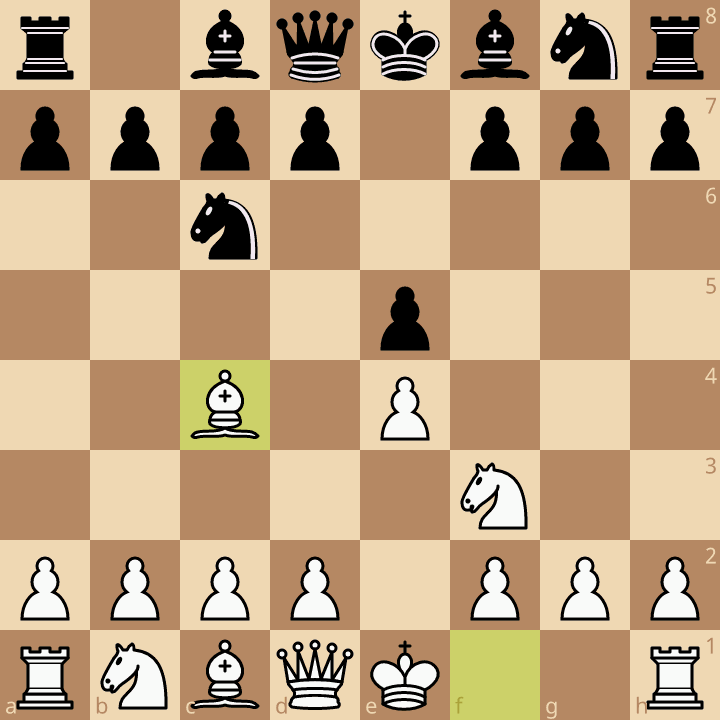
The Italian Game is one of the oldest and most beginner-friendly chess openings. White develops the bishop to an active square, prepares to castle, and often creates pressure against Black’s weak f7 pawn.
Ruy Lopez (Spanish) Opening
Moves
1.e4 e5 2.Nf3 Nc6 3.Bb5
Best For
- ✔ Strategic & Positional
- ✔ Long-Term Pressure
- ✔ Patient Piece Play
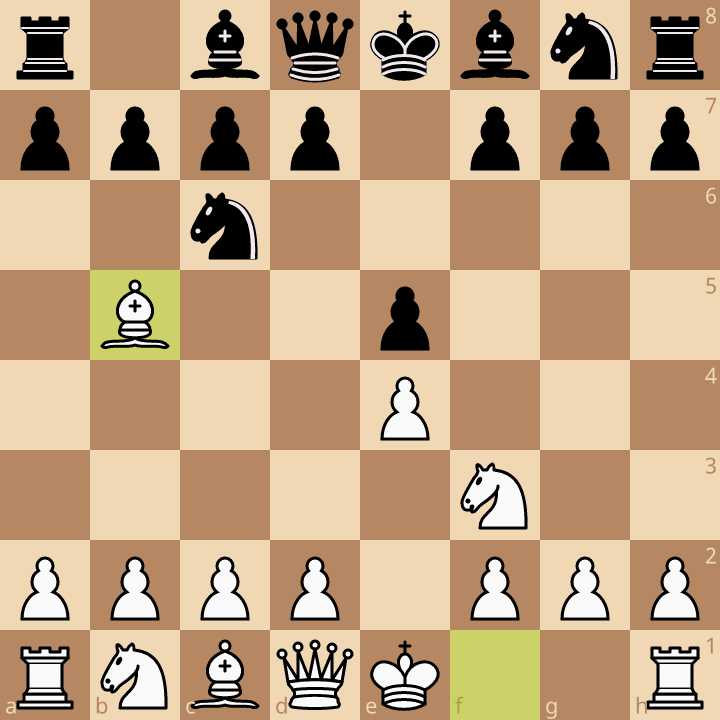
The Ruy Lopez is one of the most respected openings in chess. Instead of attacking immediately, White places long-term pressure on Black’s knight and central pawn, leading to rich positional play.
Scotch Game
Moves
1.e4 e5 2.Nf3 Nc6 3.d4
Best For
- ✔ Open Positions
- ✔ Direct Central Play
- ✔ Tactical Battles
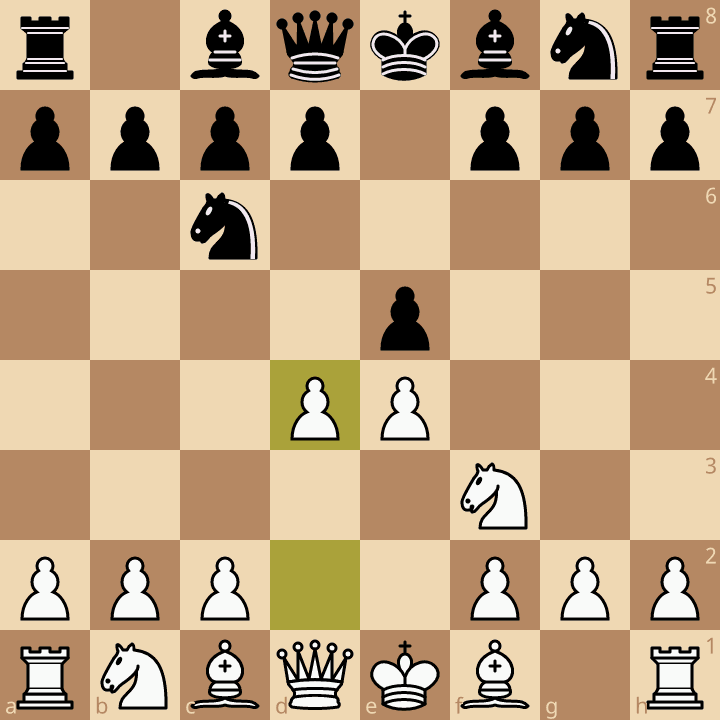
The Scotch Game immediately challenges Black’s centre and opens the position early. It is a direct opening that rewards rapid development and active piece play.
Four Knights Game
Moves
1.e4 e5 2.Nf3 Nc6 3.Nc3 Nf6
Best For
- ✔ Solid Development
- ✔ Balanced Positions
- ✔ Easy to Learn
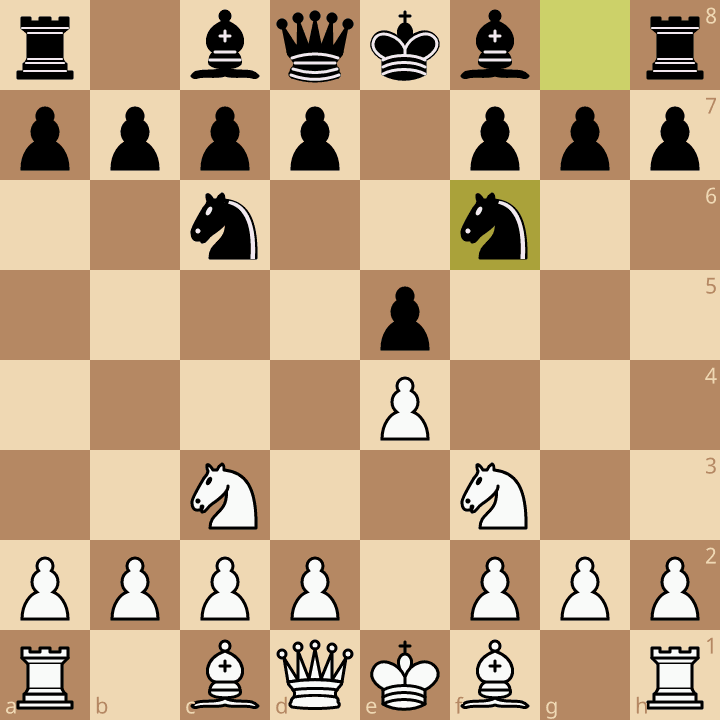
The Four Knights Game is a simple and symmetrical opening where both players develop naturally. It is ideal for beginners who want to learn sound opening principles without entering sharp complications.
Vienna Game
Moves
1.e4 e5 2.Nc3
Best For
- ✔ Flexible Setup
- ✔ Creative Attacking Ideas
- ✔ Dynamic Play
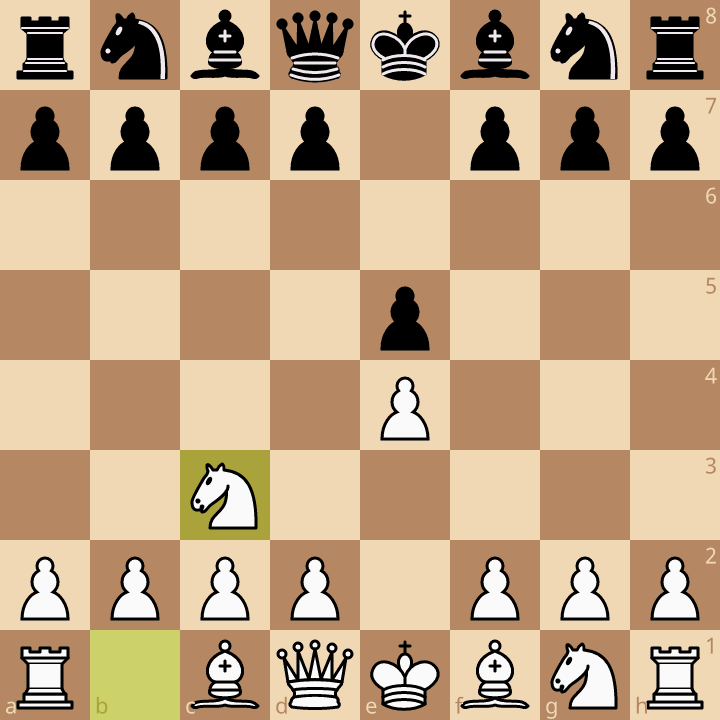
The Vienna Game is a flexible opening that keeps several options available. White develops naturally while preparing for active central and kingside play.
Petrov Defence (Russian Game)
Moves
1.e4 e5 2.Nf3 Nf6
Best For
- ✔ Solid Defence
- ✔ Counterattacking Approach
- ✔ Positional Reliability
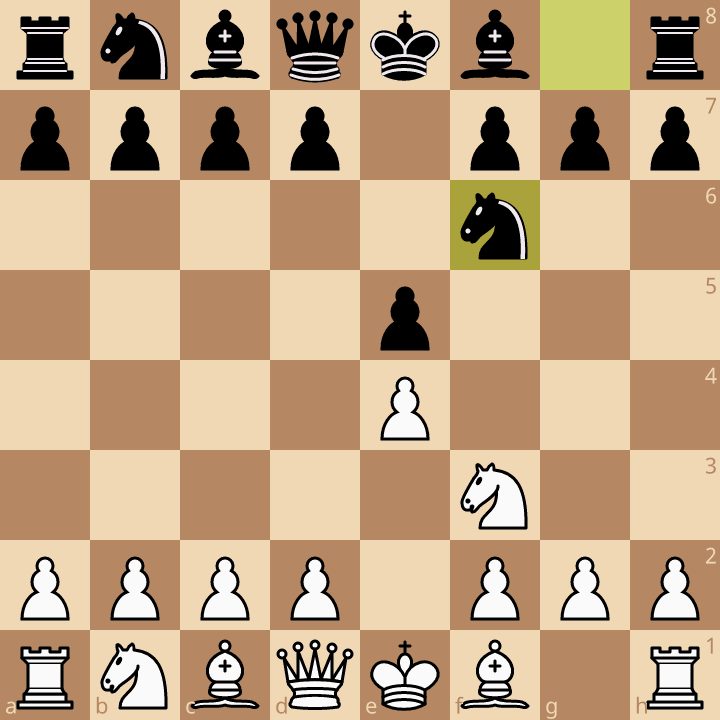
The Petrov Defence is a solid and reliable response to 1.e4. Instead of defending the e5 pawn, Black immediately counterattacks White’s centre, aiming for a balanced and resilient position.
Summary
Although these openings begin with the same first two moves, each leads to a different type of middlegame. Some favour tactical attacks, while others reward patience and positional understanding. As a beginner, you do not need to learn all six immediately. Choose one opening that matches your style, understand its basic ideas, and play it consistently before expanding your repertoire.
Before You Play Your Next Game
Ask yourself:
- ✅ Do I prefer tactical or positional play?
- ✅ Which opening feels most natural to me?
- ✅ Do I understand the idea behind my opening, or am I simply memorising moves?
Advice from the Coach
Don’t judge an opening by how many moves you know. Judge it by how well you understand its ideas. Playing one opening twenty times will teach you far more than playing twenty different openings once. Build confidence with a single opening, then gradually add new ones to your repertoire.
Did You Know?
- Learning Open Openings first makes it easier to understand many other opening systems later in your chess journey.
- The Italian Game and Ruy Lopez have been played for over 500 years.
- Many World Champions still choose Open Openings because they lead to rich and balanced positions.
| Previous Chapter: OG002 – Common Opening Traps | Next Chapter : OG004 – Semi-Open Chess Openings |