
| Chapter | Chapter Name | Unit | Level | Reading Time |
|---|---|---|---|---|
| OG002 | Common Opening Traps | Opening Guide | Beginner | 4 min |
Calculate First, Capture Later
Opening traps are short tactical combinations that punish careless or greedy moves during the first few moves of the game. They often arise from natural-looking positions, making them especially dangerous for beginners.
The purpose of learning opening traps is not to memorise tricks, but to develop good habits. Before accepting a free pawn or piece, always stop and calculate your opponent’s threats. Good calculation will help you avoid unnecessary losses and recognise tactical opportunities in your own games.
Key Takeaways
- Never assume a pawn or piece is free.
- Always calculate checks, captures, and threats.
- King safety is more important than material.
- Learn traps to avoid them—not to rely on them.
Légal’s Mate
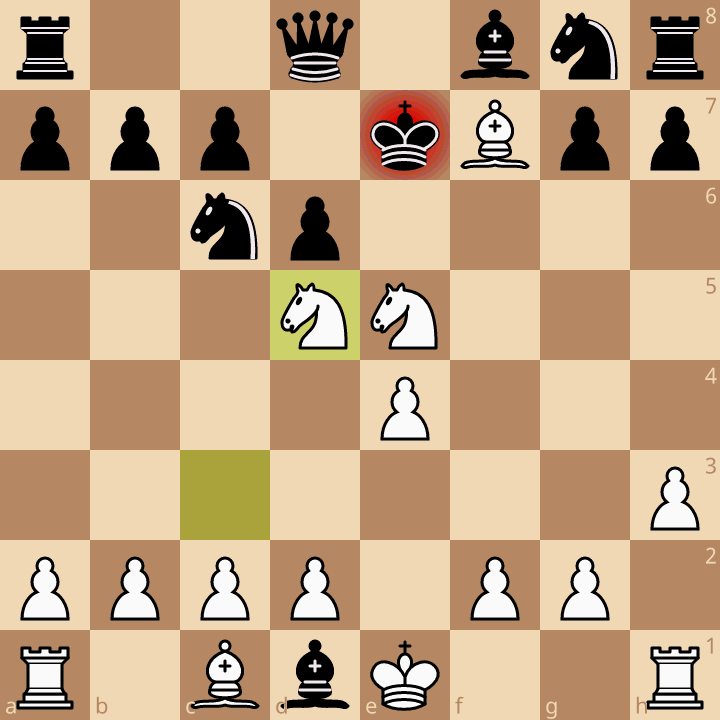
Black believes the bishop is safe and happily accepts White’s queen after 6.Nxe5! Bxd1??. Instead, White has prepared a beautiful tactical combination.
White begins with the brilliant sacrifice 6.Nxe5!, apparently leaving the queen on d1 undefended. Black often falls into the trap by greedily capturing the queen with 6…Bxd1??, believing they have won the game. However, this is exactly what White was hoping for.
White now continues with 7.Bxf7+!, forcing the black king to move because it is in check. The king has only one legal move, 7…Ke7, after which White calmly plays 8.Nd5#. The knight jumps to d5, delivering a beautiful checkmate.
The reason this checkmate works is because White’s pieces are perfectly coordinated. The bishop on f7 attacks important escape squares, the knight on d5 gives check while controlling c7, e7, and f6, and the bishop on c4 controls the f7–b3 diagonal, leaving the black king with nowhere to escape. Black’s own pieces also contribute to the mate by blocking the king’s escape squares.
The most important lesson from Légal’s Mate is that king safety is often more important than material. Black became greedy by capturing the queen without checking for tactical threats. Before accepting any seemingly free piece, always pause and ask yourself, “What is my opponent’s idea?” A few seconds of calculation can prevent you from walking into a devastating combination.
1.e4 e5 2.Nf3 d6 3.Bc4 Nc6 4.Nc3 Bg4 5.h3 Bh5?
The Fishing Pole Trap
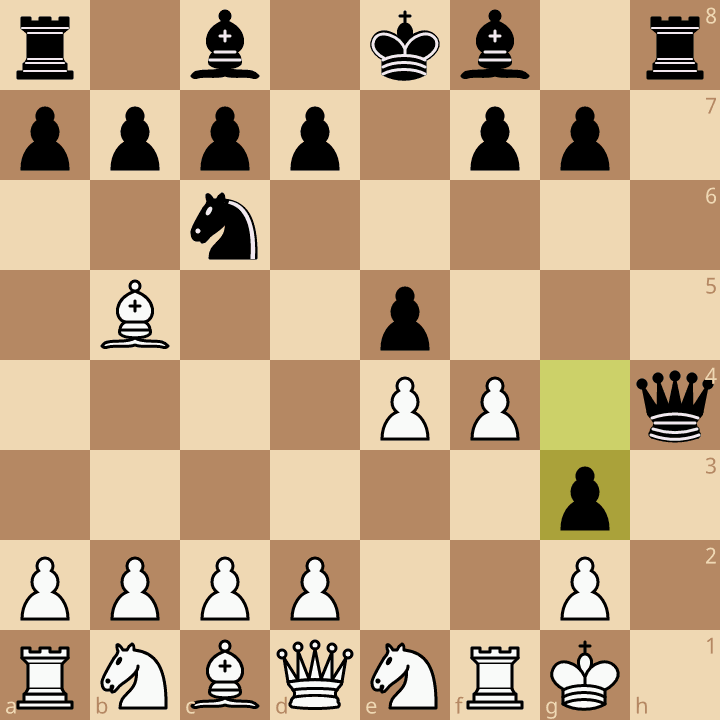
At first glance, White believes the knight on g4 can be captured safely with 6.hxg4.
However, this is exactly what Black wants. After 6…hxg4, Black sacrifices the knight to open the h-file directly towards White’s king. Although Black is temporarily down a piece, the open file allows the rook and queen to join the attack quickly.
White’s king, despite being castled, suddenly becomes vulnerable. Black can continue developing the attack with moves like …Qf6, …Qh6, or …Bd6, bringing more pieces into the attack while White struggles to defend. In many games, White is forced to give back material or even gets checkmated because there are too many threats against the exposed king.
The Fishing Pole Trap teaches an important lesson: never judge a position only by material. A seemingly free piece may be a deliberate sacrifice designed to expose your king.
Before accepting any sacrifice, always ask yourself what your opponent gains in return. If taking a piece opens files, diagonals, or attacking lines against your king, it is often safer to decline the sacrifice and continue your development.
Good players always consider the hidden danger behind a tempting capture, rather than assuming every free piece should be taken.
1.e4 e5 2.Nf3 Nc6 3.Bb5 Nf6 4.O-O Ng4 5.h3 h5!?
Mortimer Trap
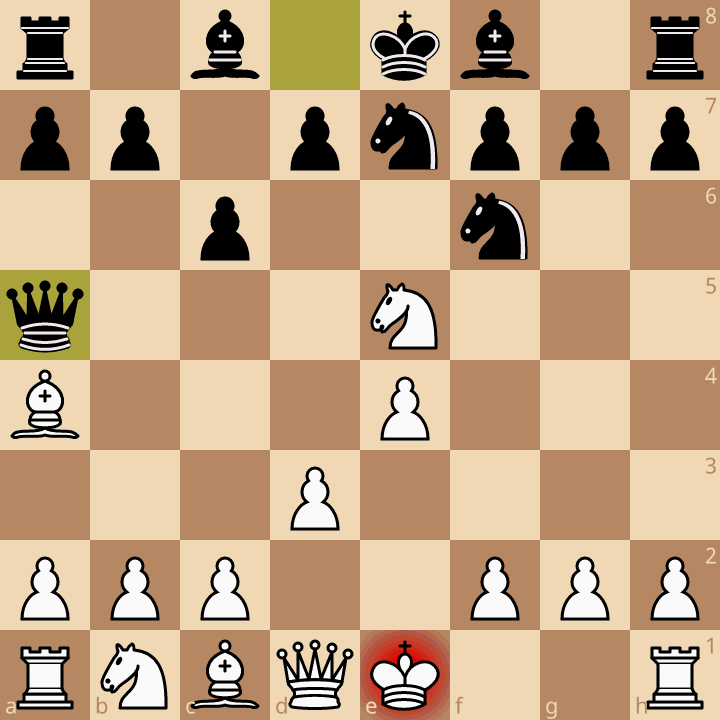
Black’s move 4…Ne7!? looks unusual and even appears to break one of the basic opening principles by moving the same knight twice.
Many beginners immediately assume Black has made a mistake and eagerly capture the e5 pawn with 5.Nxe5?, believing they have won material. In reality, this is exactly the response Black was hoping for.
Black immediately plays 5…c6!, attacking White’s bishop and forcing it to retreat. After 6.Ba4, Black continues with the tactical move 6…Qa5+, giving check to the white king while simultaneously attacking the knight on e5. White now faces a double threat.
The king must respond to the check, but there is no way to save the knight at the same time. On the following move, Black simply captures the knight and wins back the material with a better position.
The Mortimer Trap teaches a valuable lesson: an unusual move is not always a bad move. Strong players sometimes play surprising moves to tempt their opponents into making greedy decisions.
Before capturing a seemingly free pawn or piece, always ask yourself, “Why did my opponent allow this?” Spending a few extra seconds calculating your opponent’s tactical ideas will help you avoid many opening traps and build stronger positions from the very beginning.
1.e4 e5 2.Nf3 Nc6 3.Bb5 Nf6 4.d3 Ne7!? 5.Nxe5
Summary
Opening traps are designed to punish players who stop calculating. Although each trap is different, they all teach the same valuable lesson:
- Calculate before capturing.
- Respect your opponent’s threats.
- Keep your king safe.
- Don’t let greed influence your decisions.
Understanding why these traps work is far more valuable than memorising the moves.
Before You Play Your Next Game
Before accepting any “free” pawn or piece, ask yourself:
- ✅ What is my opponent threatening?
- ✅ Do they have a check, capture, or tactical idea?
- ✅ Will taking this material expose my king?
If you are unsure, spend a few extra seconds calculating before making your move.
Advice from the Coach
Every chess player falls into opening traps at some point. Don’t worry about memorising dozens of them. Instead, focus on developing the habit of calculating before every capture. As your tactical awareness improves, you’ll naturally avoid most opening traps and begin spotting them in your opponents’ games as well.
Did You Know?
- Strong players rarely rely on traps—they build good positions and take advantage of mistakes when they appear.
- Many famous opening traps are more than 200 years old and are still seen in club tournaments today.
- Most opening traps succeed because one player becomes greedy or stops calculating.
| Previous Chapter: OG001 – Understanding Chess Openings | Next Chapter : OG003 – Open Openings |