
PENTALA HARIKRISHNA
The Consistent Force of Indian Chess
Snapshot
- Born: 10 May 1986
- State: Andhra Pradesh
- FIDE ID: 5007003
- Grandmaster Year: 2001
- Peak Rating: 2770 (December 2016)
- Award: Arjuna Award (2006)
Gallery
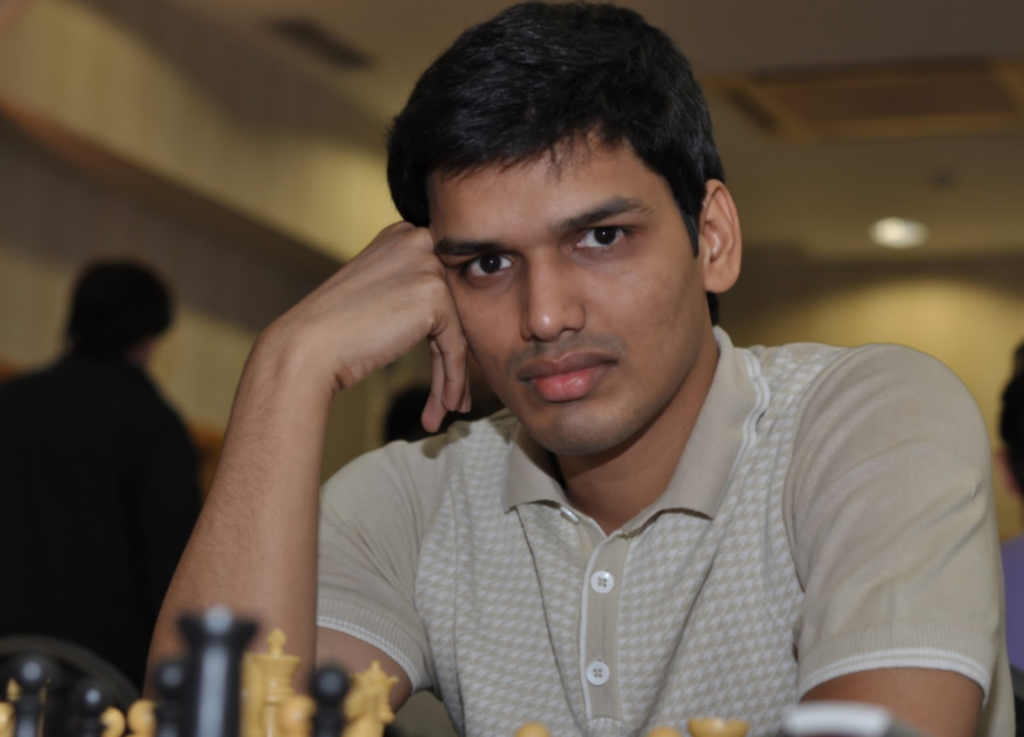
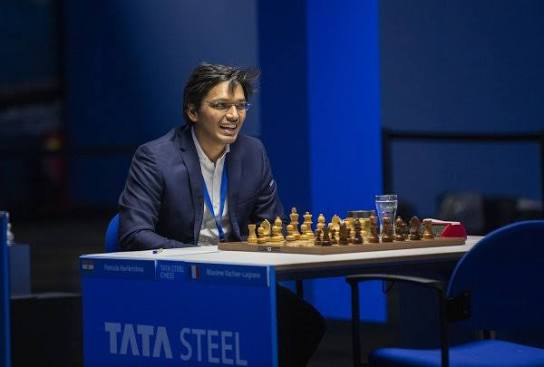
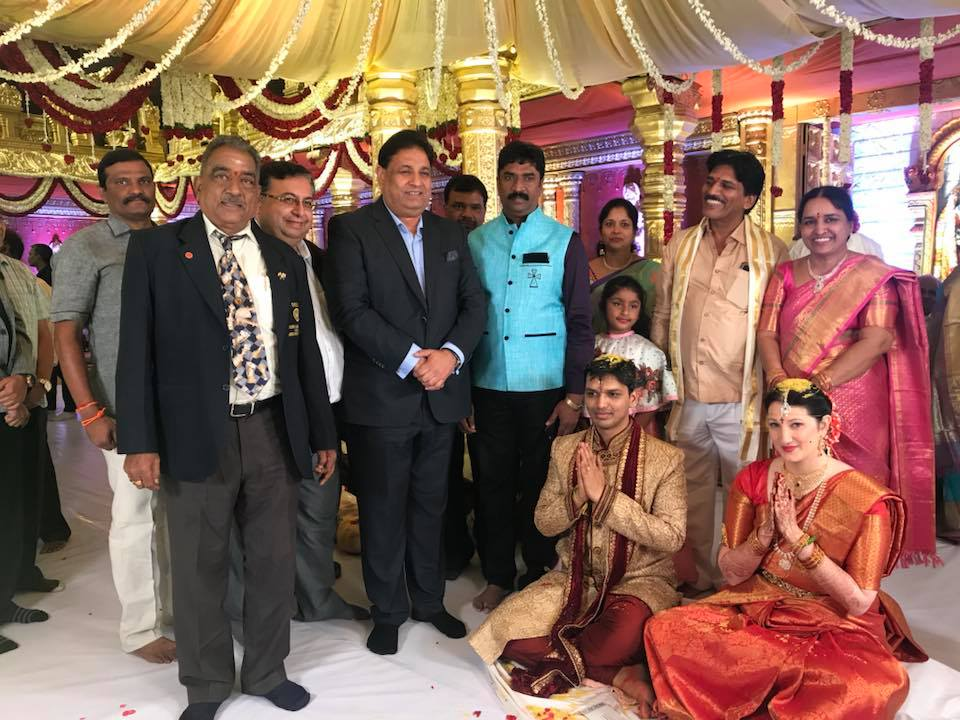
The Prodigy Who Became a World-Class Grandmaster
Not every great chess career is defined by a single spectacular breakthrough.
Some are built through consistency, adaptability, preparation and an ability to remain competitive year after year.
Pentala Harikrishna belongs firmly to that category.
Born in Guntur, Andhra Pradesh, Harikrishna emerged as one of India’s strongest junior talents during the 1990s. He won the World Under-10 Championship in 1996, collected numerous national age-group titles and rapidly progressed through the international junior circuit. He became a Grandmaster in 2001, at just 15 years of age.
But the most important phase of his rise was still to come.
In 2004, Harikrishna won the World Junior Championship in Kochi, becoming only the second Indian after Viswanathan Anand to win the prestigious title. He scored 10/13 and finished ahead of a strong international field.
Over the following decade, he established himself as one of India’s most reliable elite players.
He won the Asian Individual Championship in 2011, the Tata Steel Group B in 2012, the Biel MTO Masters in 2013 and numerous international tournaments. He was also a regular member of India’s Olympiad and international team squads.
Then came the defining rating milestone.
In 2016, Harikrishna reached 2770 Elo and climbed to World No. 10.
His career had moved from junior promise to Grandmaster, from Grandmaster to 2700 player, and finally to the very top of world chess.
And he did it without ever needing to become the loudest player in the room.
From Junior Champion to World No. 10
When Harikrishna emerged, Indian chess was already enjoying the extraordinary influence of Viswanathan Anand.
But Anand’s success created another challenge.
Could India produce another player capable of consistently competing with the world’s elite?
Harikrishna became one of the strongest answers to that question.
His victory at the World Under-10 Championship in 1996 was an early indication of his potential. His progression continued through the Indian junior system before he began making his mark internationally.
By 2001, he had become a Grandmaster.
Three years later, he achieved one of the biggest milestones of his young career.
At the 2004 World Junior Championship in Kochi, Harikrishna scored 10 points from 13 rounds and became only the second Indian after Anand to win the World Junior title.
The victory confirmed that his development was not simply the result of early promise.
He was becoming a serious international player.
The next decade brought a long list of strong tournament performances. Harikrishna became a regular participant in elite events and European leagues, while representing India in Olympiads and other major team competitions.
In February 2013, he crossed 2700 Elo for the first time, becoming only the third Indian player to achieve the mark at that time.
Then, in 2016, he reached the highest point of his career.
2770 Elo. World No. 10.
For an Indian player from Guntur who had started his journey as a child prodigy, it was the culmination of two decades of steady progress.
Five Games That Define Harikrishna
Harikrishna’s best games reveal something interesting.
He does not have just one way of winning.
Against Nigel Short, he used positional restriction and central control.
Against Loek van Wely and Shakhriyar Mamedyarov, he produced powerful attacking play.
Against Liviu-Dieter Nisipeanu, he survived extraordinary complications through calculation.
And against Hikaru Nakamura, he demonstrated how patient positional play can eventually turn into a direct attack.
The common thread is adaptability.
#1 — Nigel Short vs Pentala Harikrishnam Montreal International, 2007
Harikrishna’s victory over Nigel Short is a fine example of positional restraint followed by precise piece improvement. The opening was a Petroff Defence, and the early exchanges on e8 removed some of the immediate tension. After 13.Ne5, Short appeared to have an active setup, with his pieces pointing toward the kingside. Harikrishna, however, did not rush to create counterplay.
The sequence 14…Nf8 15.Qh5 Be6 showed his approach clearly. Instead of reacting to White’s queen, Black calmly developed his bishop and prepared to challenge the centre. The critical moment came with: 16.Rb1 f6!
Harikrishna immediately questioned the knight on e5 and began taking control of the position. After 17.Ng6 Bf7, the knight was forced to retreat, while Black’s pieces became increasingly coordinated. The exchange 18.Bxd6 Nxd6 further simplified White’s attacking possibilities. Then came the quiet but powerful 19…Ne4.
The knight reached an excellent central square, while Black’s pieces controlled the key areas of the board. Short’s advanced kingside pawns and active queen had failed to create a concrete threat, and Black had achieved a much more harmonious position. Short resigned after 19…Ne4.
There was no spectacular combination. No sacrificial attack. Just accurate development, timely central counterplay and excellent piece placement.
The Lesson:
- Improve your pieces before looking for tactics.
- Harikrishna’s play demonstrates how a position can be won simply by removing your opponent’s active possibilities and placing your own pieces on better squares.
- Sometimes the strongest move is not the one that attacks something.
- It is the move that makes your opponent’s position progressively worse.
#2 — Pentala Harikrishna vs Loek van Wely, Tata Steel Group A, 2013
This game is a brilliant example of Harikrishna’s attacking preparation and piece coordination. Against the Sicilian Scheveningen, White gradually built a kingside attack while keeping Black’s pieces tied down.
The first major signal came with 14.g4, followed by 15.g5. Harikrishna gained space and forced the knight to retreat, while the rook manoeuvre 17.Rf3 18.Rh3 brought a heavy piece directly toward the black king. The queen soon joined the attack: 19.Qe1 Bg7 20.Qh4
Black attempted to reorganise, but Harikrishna continued increasing the pressure. The critical breakthrough came with: 25.f5!
After 25…Nce5 26.Qh4 h5 27.Nde2, White maintained the initiative and prepared to open more lines.
The decisive sequence began with 31.exf5!, followed by 33.fxg6 fxg6 34.Ne6+. The knight entered with check, forcing the black king into an increasingly vulnerable position.
Then came the tactical finish: 36.Qe4 Rc1 37.Rf3 Kh7 38.Rf7+! Nxf7 39.Qxg6+
Harikrishna sacrificed the rook to remove the final defender and allow the queen to break through. With the black king exposed and the attack unstoppable, Van Wely resigned.
The Lesson:
- A strong attack is built through coordination, not improvisation.
- Harikrishna brought his rook, queen, knight and bishop into the attack one by one, creating threats that Black could not meet simultaneously.
- When every attacking piece has a purpose, even a rook sacrifice can become inevitable.
#3 — Pentala Harikrishna vs Liviu-Dieter Nisipeanu, Pune Super GM, 2004
This game is one of the most dramatic examples of Harikrishna’s calculation, tactical courage and ability to keep control in a chaotic position. Facing the higher-rated Nisipeanu, Harikrishna willingly entered a highly complicated middlegame where both kings became exposed.
The first signs of the coming battle appeared with 12.f4 Ng4 13.h3 Nh6 14.g4, as White gained space while Black’s queen became active with 14…Qh4.
After 16.b4, Black’s rook entered on d1 with check, but Harikrishna calmly brought his king to e2 and continued his attack. The critical sequence began with: 20.Nxe4 Nxg4 21.Bg2 Nh6 22.Nxf6+!
Harikrishna removed the knight on f6 and opened the position around Black’s king. After 22…gxf6 23.Bxb7+ Kf7 24.Bxa8, White had won significant material. But Black’s attack was far from over.
The exchange sacrifice 29…Rxe3+ 30.Qxe3 Qxh2 created another tactical storm. Harikrishna’s king was forced into a remarkable journey: 31.Qxc5 Nh4+ 32.Ke4 Qe2+ 33.Kd5 N6f5 34.Kc6
Despite the exposed king, Harikrishna calculated accurately and kept his pieces coordinated.
The final 35.Qd5+! brought the game to an end, with Black unable to continue the attack.
The Lesson:
- In complicated positions, courage must be backed by calculation.
- Harikrishna did not avoid complications. He entered them knowing that his pieces and king could navigate the tactical maze.
- When the position becomes chaotic, accurate calculation is your compass.
#4 — Pentala Harikrishna vs Hikaru Nakamura, Tata Steel Masters, 2014
This victory over Hikaru Nakamura, then rated 2789, is a beautiful example of Harikrishna’s patient positional play transforming into a decisive kingside attack.
The game began with the Sicilian Moscow Variation, and Harikrishna gradually built control of the centre with 13.d5. Rather than rushing forward, he expanded on the queenside with 14.b3, opening lines for his rook.
The sequence 18.axb5 axb5 19.Rxb5! was particularly instructive. Harikrishna’s rook became highly active, penetrating deep into Black’s position and eventually reaching the seventh rank with 26.Ra7.
With Black’s pieces tied down, Harikrishna switched the focus to the kingside: 29.Bh6 Qc5 30.Nh5!
The knight move created immediate threats around the black king. Nakamura attempted to eliminate the bishop with 30…Bg7, but after 31.Bxg7, Harikrishna’s queen entered the attack with 32.Qh6.
The final move: 33.Ng5! created decisive threats against the exposed king, and Nakamura resigned.
What makes the game special is the transition from positional pressure to tactical attack. Harikrishna first invaded the seventh rank, restricted Black’s pieces, and only then opened the attack.
The Lesson:
- Don’t attack before the position is ready.
- Harikrishna first improved his pieces and created weaknesses. Once Black’s position was restricted, the attack became almost inevitable.
- Build the pressure first — the tactics will come.
#5 — Pentala Harikrishna vs Shakhriyar Mamedyarov, Aerosvit GM Tournament, 2006
This victory over Shakhriyar Mamedyarov, then rated 2699, is a powerful example of Harikrishna’s attacking preparation, tactical calculation and fearless piece coordination.
The game began with the Four Knights Game, but the position quickly became sharp. Harikrishna gradually prepared his kingside attack with 17.f4, followed by the rook lift Rf3-g3. The rooks were clearly being positioned for an assault on Black’s king. The critical phase began with: 21.exf5 Bxf5 22.Rg5!
Harikrishna brought the rook deep into Black’s position, while the bishop on d3 and queen remained ready to join the attack. After 24.f5!, Mamedyarov attempted to eliminate the dangerous rook with 24…Rxf5, but Harikrishna had calculated a powerful tactical sequence: 25.Nh6+! gxh6 26.Qd4
The knight sacrifice ripped open the kingside, allowing the queen to enter with 27.Qh8+.
Harikrishna then sacrificed the second rook: 28.Rxf5+ Bxf5 29.Qf6+
The remaining pieces continued the attack, and after 30.Qxf5, White had transformed the sacrifices into a decisive material advantage. The final 32.Re7 completed the attack, leaving Black without a viable defence.
The Lesson:
- A sacrifice works when it opens a path for the rest of your pieces.
- Harikrishna did not sacrifice simply for an attack. Every exchange opened another line for the queen, rook or bishop.
- Calculate the destination, not just the sacrifice.
The Chess of Pentala Harikrishna
The five games reveal why Harikrishna has remained relevant at the highest level for so long.
Against Short: positional restriction became the foundation for a tactical advantage.
Against van Wely: piece coordination became a kingside attack.
Against Nisipeanu: calculation and king activity survived extreme complications.
Against Nakamura: patient manoeuvring became direct attacking pressure.
Against Mamedyarov: preparation turned sacrifices into a winning attack.
There is a common thread running through all five.
Harikrishna does not depend on one particular style.
He can manoeuvre.
He can defend.
He can calculate.
He can attack.
And when the position demands it, he can switch between all of them.
His career is therefore best understood through one word:
Adaptability.
He did not build his career around a single chess identity.
He built it around understanding the position in front of him.
A Pillar of Indian Chess
Harikrishna belongs to the generation that helped bridge the gap between Viswanathan Anand and India’s modern wave of elite Grandmasters.
When he emerged, Indian chess was still developing its depth at the highest level.
Harikrishna became one of the players who changed that.
His World Junior Championship victory in 2004 was particularly important because he became only the second Indian after Anand to win the title.
His subsequent career included years of Olympiad appearances, international team competitions and elite tournament participation. He represented India across numerous team events and became one of the country’s most experienced international players.
For Andhra Pradesh, his journey from Guntur to the world’s Top 10 was equally significant.
For Indian chess, however, his importance was even greater.
Anand had shown that an Indian could become a world champion.
Harikrishna helped demonstrate that India could develop a deeper generation capable of competing consistently with the world’s best.
Personal Life
Harikrishna was born on 10 May 1986 in Guntur, Andhra Pradesh. He learned chess at a very young age, with his grandfather Ranga Rao playing an important role in introducing him to the game.
His early development was remarkably rapid.
He won age-group championships in India, captured the World Under-10 title in 1996 and eventually progressed to the Grandmaster title in 2001.
His professional career subsequently took him around the world.
European leagues, international tournaments, Olympiads and elite events became a regular part of his life, giving him the practical experience required to compete against the strongest players of his generation.
What stands out about Harikrishna’s journey is that his career was not built around one extraordinary season.
It was built over more than two decades of continuous competition and adaptation.
The Everlasting Legacy
Pentala Harikrishna’s legacy is not defined by a single tournament.
It is the consistency of his journey.
He became a Grandmaster at 15.
He won the World Junior Championship.
He became Asian Individual Champion.
He crossed 2700.
He reached 2770 Elo.
And he climbed to World No. 10.
But the numbers only tell part of the story.
His deeper contribution was helping establish the idea that India’s chess strength could extend well beyond one extraordinary player.
Harikrishna became one of the players who proved that Indian Grandmasters could compete regularly against the world’s elite.
His games also show why he remained dangerous against different types of opponents.
He could patiently squeeze a position.
He could survive tactical chaos.
He could construct a long-term attack.
He could convert positional advantages.
And he could calculate when the position demanded it.
That versatility became the defining feature of his chess.
For India, he represents the generation that helped transform individual brilliance into collective strength.
For Andhra Pradesh, he remains one of the state’s greatest chess ambassadors.
And for the generation that followed, his career provides a valuable lesson:
You don’t have to dominate every tournament to build a great career. You have to remain good enough, prepared enough and determined enough to keep competing at the highest level.
The Road Ahead
Harikrishna’s career has already crossed more than two decades at the highest level.
His peak of 2770 and World No. 10 remains one of the strongest achievements by an Indian player.
But the next phase of his chess journey can be measured in more than rating points.
A player who has competed against Anand, Nakamura, Mamedyarov, Carlsen and many other elite Grandmasters carries an enormous amount of practical knowledge.
That experience becomes increasingly valuable to the generation now entering elite chess.
Harikrishna can continue contributing through competition, team events, preparation, mentoring and the sharing of knowledge accumulated over a long international career.
The young Indian Grandmasters of today are entering a chess world far more competitive than the one Harikrishna entered in the late 1990s.
But they also inherit something that players like him helped build:
the belief that an Indian player belongs at the very top.
His next chapter, therefore, is not simply about how many more games he wins.
It is also about what the next generation can learn from a player who spent more than two decades learning how to survive, adapt and compete among the world’s best.
The Consistent Force of Indian Chess
Pentala Harikrishna never needed one defining victory to establish his place in Indian chess history.
His career itself became the achievement.
He was a child champion.
Then a Grandmaster.
Then a World Junior Champion.
Then a 2700 player.
Then World No. 10.
And throughout the journey, he remained one of India’s most dependable representatives on the international stage.
His greatest lesson may be found not in one brilliant move, but in the way he built his entire career.
Keep improving.
Keep adapting.
Keep competing.
For Andhra Pradesh, he is a pioneer.
For India, he is part of the generation that turned depth into strength.
And for the next generation, he represents something perhaps even more valuable — the power of consistency.
That is the story of Pentala Harikrishna — The Consistent Force of Indian Chess.