
KONERU HUMPY
The Queen of Indian Chess
Snapshot
- Born: 31 March 1987
- State: Andhra Pradesh
- FIDE ID: 5008123
- Grandmaster Year: 2002
- Peak Rating: 2623 (July 2009)
- Award: Arjuna Award (2023) & Padma Shri (2007)
Gallery
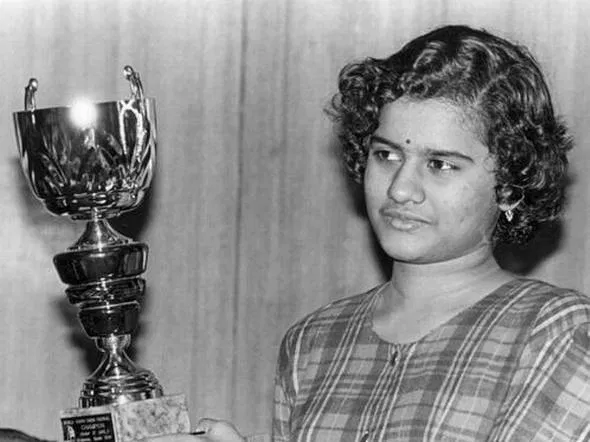


From Prodigy to the Pinnacle of Women’s Chess
Long before Indian women’s chess became one of the strongest forces in the world, there was a young girl from Andhra Pradesh who was already rewriting what seemed possible.
Her name was Koneru Humpy.
She learned chess at an extraordinarily young age under the guidance of her father, Koneru Ashok, who recognised her exceptional ability and eventually devoted himself to helping her career.
The progress was almost unbelievable.
She won the World Youth Championship in three consecutive age groups — Under-10 in 1997, Under-12 in 1998 and Under-14 in 2000. She also won the Asian Youth Under-12 title competing in the boys’ section.
But these were not simply junior achievements.
They were early signs of something much bigger.
Humpy was not merely becoming one of India’s strongest young girls.
She was becoming one of the country’s strongest young chess players.
The Youngest Woman Grandmaster
In 2002, Humpy completed the journey that had seemed almost impossible only a few years earlier.
At 15 years, 1 month and 27 days, she became a Grandmaster.
She broke Judit Polgar’s record for the youngest female Grandmaster — a record that she held until Hou Yifan surpassed it in 2008.
But the record was only one part of the story.
Humpy was also the first Indian woman to become a full Grandmaster.
India had produced its first male Grandmaster through Viswanathan Anand in 1988.
Humpy’s achievement showed that the country’s chess revolution was beginning to reach women’s chess too.
A new path had opened.
And Humpy was walking straight through it.
From Prodigy to World-Class Player
The Grandmaster title did not mark the end of Humpy’s rise.
It was the beginning.
She continued competing in open tournaments, where she regularly faced strong male opposition.
In 2004, she reached the semifinals of the Women’s World Championship in her first appearance.
In 2005, she won the North Urals Cup, one of the strongest women’s events of its time.
And in 2007, another historic milestone arrived.
Her rating crossed 2600.
Humpy became only the second woman in chess history, after Judit Polgar, to break the 2600 barrier.
By then, she was no longer simply India’s great young hope.
She was one of the strongest women players in the world.
Breaking Into the Elite
Humpy’s rise continued into the elite women’s circuit.
She reached the semifinals of the Women’s World Championship again in 2008 and 2010, both times meeting Hou Yifan.
She became a regular contender in the Women’s Grand Prix.
Across four Grand Prix cycles between 2009 and 2016, she finished runner-up, demonstrating extraordinary consistency at the highest level.
In 2011, she won the final leg of the FIDE Women’s Grand Prix in Doha, tying for first with Elina Danielian and securing her place as the challenger for the Women’s World Championship.
That earned her a match against the reigning World Champion, Hou Yifan.
Humpy had reached the very top of women’s chess.
Five Games That Defined the Queen
Humpy’s career is filled with victories against elite opposition.
Her games reveal a player with a remarkably broad chess understanding — capable of building long positional pressure, calculating deeply in tactical positions and handling complicated endgames with confidence.
More importantly, they reveal something that became central to her career:
Humpy was never intimidated by the name sitting across the board.
#1 — Koneru Humpy vs Zoltan Nemeth, Elekes Memorial GM, Budapest, 2005
Humpy’s victory over Zoltan Nemeth is a brilliant example of aggressive piece coordination followed by a relentless king hunt. Playing the Queen’s Gambit Accepted, Humpy gradually built an active position with 13.b4 and 17.f4, preparing to open lines against Black’s king.
The sequence 18.Ne4 Nxe4 19.Rxc8+ Bxc8 simplified some of the tension, but Humpy immediately saw the attacking possibilities. The critical moment came with:
21.Bxh7+!
The bishop sacrifice dragged Black’s king away from safety. After 21…Kxh7 22.Qh5+, Humpy’s queen entered the attack with tempo. She continued with 23.Bxg7 Kxg7 24.Qg5+, refusing to give Black time to consolidate.
Then came the powerful 25.Rf3!, bringing another attacker into the position. After 26.Qh4+ Kg6 27.Rg3+, the queen and rook worked together to drive the king across the board.
The king hunt continued with 28.Qh7+ Kf6 29.Rxg8, followed by a series of forcing checks. Humpy maintained complete control until 34.Qxd6 and 35.Qxd7, ending the attack decisively.
There was no single combination that won the game. Humpy simply built the attack, exposed the king and never surrendered the initiative.
The Lesson:
- Bring your pieces into the attack before forcing the position.
- Keep the initiative with checks, captures and threats.
- A powerful attack is a sequence, not a single brilliant move.
#2 — Koneru Humpy vs Julio Granda Zuniga, Ruy Lopez Chess Festival, Merida, 2008
Humpy’s victory over Julio Granda Zuniga is an excellent example of space advantage, patient manoeuvring and a perfectly timed pawn break. Playing the Nimzo-Indian Defence, Humpy immediately expanded on the queenside with 9.b4, gaining territory and restricting Black’s pieces.
After 11.Be2 Ba6 12.b5, Black’s bishop was forced back to b7, while Humpy continued to strengthen her position. The critical moment came with 18.bxa6 Rxa6, when Humpy accepted the structural changes and prepared to exploit Black’s exposed rook.
The sequence 19.Qb3 Rb8 20.c5! was particularly strong. Rather than rushing into a tactical attack, Humpy opened the centre at exactly the right moment. The c-pawn became a powerful source of pressure, while Black’s pieces struggled to coordinate.
After 20…Bd5 21.Qb5 Raa8, Humpy maintained control of the position. Then came the decisive 22.cxb6!, breaking through on the queenside and creating a serious tactical problem for Black. Granda responded with 22…Qxb6, but the resulting position was already beyond rescue, and he resigned.
The game is a fine illustration of Humpy’s ability to turn a small spatial advantage into a concrete tactical breakthrough. There was no reckless attack — just gradual improvement followed by the right pawn break.
The Lesson:
- Use space to restrict your opponent’s pieces.
- Improve your position patiently before opening the game.
- A well-timed pawn break can transform a positional advantage into a decisive one.
- Don’t attack simply because you can; attack when the position demands it.
#3 — Koneru Humpy vs Ju Wenjun, Women’s World Championship Knockout Tournament, Antakya, 2010
Humpy’s victory over Ju Wenjun is an excellent example of patient positional pressure followed by precise tactical conversion. Playing the King’s Indian Four Pawns Attack, Humpy seized space with 5.f4 and gradually built control of the centre. After 17.Nb5 f5 18.exf5, the position became increasingly sharp, with both sides preparing to open lines around the kings.
The critical phase began with 23.Nc6 Qg7 24.Ne5, when Humpy’s knight occupied a powerful central square and Black’s pieces became tied to defensive duties. The sequence 25.Nxg4 Qxg4 26.Kg1 allowed Humpy to continue improving her position, while 27.Nxc7 picked up material and forced Black to respond accurately.
Humpy’s rooks then became the centre of the battle. After 31.Re3 Nc5 32.h3, she gradually increased the pressure, eventually doubling her rooks and penetrating the seventh rank. The decisive sequence began with 39.Re7 R6f7 40.Re6, followed by the powerful exchange 41.Rdd6! Rxe6 42.Rxe6. Humpy simplified into a favourable queen ending while retaining the initiative.
The final phase was handled with remarkable precision. Humpy used 43.Qa8+ and continued checking the exposed king while advancing her queenside pawns. After 54.c5 and 55.c6, the passed pawn became another decisive weapon, and 60.Qd1+ completed the victory.
There was no single spectacular combination. Humpy built pressure, improved her pieces, simplified at the right moment and converted the advantage with relentless accuracy.
The Lesson:
- Build pressure before forcing the position.
- Active rooks can be more powerful than immediate material gains.
- When simplifying, make sure the resulting position remains favourable.
- A winning advantage must be converted with the same precision that created it.
#4 — Koneru Humpy vs Neil Berry, British Championship, Scarborough, 1999
Humpy’s victory over Neil Berry is a fine example of patient development followed by a well-timed kingside attack. Still very young, Humpy handled the Nimzo-Larsen Attack with remarkable maturity, gradually building a strong centre with 9.e4 and then expanding with 14.f4. Rather than rushing forward, she first improved her pieces and restricted Black’s counterplay.
The sequence 18.Nc4 Nb6 19.Nxd6 Qxd6 simplified the position, but Humpy immediately recognised that Black’s queen had become slightly misplaced. The critical moment came with: 20.fxe5 Qxe5 21.a5!
The pawn advance created additional space and restricted the knight on c8, while Humpy prepared to activate her rook. Then came the excellent 22.Rf5!, placing the rook on the fifth rank and creating direct threats against the black king.
After 23.Ba3 Qh6 24.Rh5!, the attack became increasingly difficult to defend. Humpy’s rook repeatedly gained tempi against the queen, forcing it away from useful defensive squares. The follow-up 25.Bxc5 won material, while 26.e5 opened another line and maintained the initiative.
Humpy then calmly finished with 27.Rh4 and 28.Qd2, leaving Black with no satisfactory defence. Berry resigned, despite the absence of a spectacular tactical combination. The game demonstrated Humpy’s ability to improve her pieces, gain space and gradually turn positional pressure into a direct attack.
The Lesson:
- Improve your pieces before launching the attack.
- Rook lifts can create powerful attacking opportunities without immediate sacrifices.
- Use tempo-gaining moves to keep your opponent’s pieces under pressure.
- A strong attack can emerge naturally from good positional play.
#5 — Koneru Humpy vs Mark Hebden, British Championship, Torquay, 2002
Humpy’s victory over Mark Hebden is an excellent example of patient preparation followed by precise tactical calculation. Playing the King’s Indian Defence, Humpy developed her pieces naturally before beginning to challenge Black’s queenside expansion with 16.f4 and 18.Rc1. Rather than forcing the position, she gradually increased the pressure and prepared her pieces for the tactical battle ahead.
The critical moment came with 23.cxb5 axb5 24.Bxb5!. Humpy immediately removed Black’s advanced pawn and accepted the complications that followed. After 24…Nxe4 25.Rxe4 Bxc3, the position became highly tactical, with both sides attacking each other’s pieces.
Humpy had calculated the sequence accurately. 26.Rxe8+ Rxe8 27.Qd3 kept her pieces active, while 28.Qf1 prepared to exploit the weaknesses around Black’s king. The powerful 29.bxc3 removed the dangerous bishop, and Humpy then activated her rook with 30.Rxd6, winning another pawn and penetrating deep into Black’s position.
The final sequence 32.Bxc6 Rxd6 33.Qxd6 simplified the complications in Humpy’s favour, leaving White with a decisive material advantage. 34.Bxc5 completed the conversion, and Hebden resigned.
The game shows how Humpy could remain calm in complicated positions while calculating several exchanges ahead.
The Lesson:
- Calculate beyond the first exchange.
- Tactical opportunities often appear after careful positional preparation.
- Active pieces can turn complicated positions decisively in your favour.
- Before entering a combination, always consider the position that remains after the exchanges.
The Chess of Koneru Humpy
Humpy’s chess is difficult to reduce to a single style.
She can play strategically.
She can calculate deeply.
She can defend difficult positions.
And when the opportunity appears, she can attack with tremendous accuracy.
But perhaps the defining feature of her chess is control.
She rarely appears overwhelmed by the importance of the occasion.
Whether she is playing a World Championship match, a Grand Prix event or an open tournament against elite opposition, her approach remains fundamentally the same.
Understand the position.
Find the critical moment.
Calculate.
Then act.
That discipline helped her remain among the world’s strongest women for more than two decades.
The Comeback
In 2016, Humpy stepped away from competitive chess following the birth of her daughter.
For a player who had spent virtually her entire life competing, it was a major change.
Two years away from elite chess can feel like an eternity.
The game moves quickly.
New players emerge.
Openings change.
Preparation evolves.
The competition becomes stronger.
But Humpy returned.
And she did not return merely to participate.
She returned to win.
In 2019, she won the Skolkovo leg of the Women’s Grand Prix and followed it with victory at the Women’s World Rapid Championship in Moscow. She also won the Cairns Cup in 2020.
Her comeback became one of the most inspiring chapters of her career.
The prodigy had grown into a champion.
And the champion had returned after motherhood to compete at the highest level again.
A Life Around the Chessboard
Humpy’s chess journey has always been closely connected with her family.
Her father, Koneru Ashok, played an enormous role in her development. He recognised her talent early and eventually dedicated himself to supporting her chess career.
That partnership became one of the defining stories of her rise.
From early junior tournaments to the world stage, her family remained closely connected to her career.
Later, Humpy’s life entered another important chapter when she became a mother.
Her decision to return to professional chess after taking a break demonstrated that a player’s career does not have to end when life changes.
In fact, it can begin another chapter.
Her comeback became particularly significant for women in sport.
Humpy showed that motherhood and elite competition do not have to be mutually exclusive.
A Pioneer for Indian Women’s Chess
Humpy’s importance to Indian chess extends far beyond her own titles.
She was the first Indian woman to become a Grandmaster.
She broke the 2600 barrier.
She challenged for the Women’s World Championship.
She won the Women’s Grand Prix.
She became a World Rapid Champion.
And she remained a major presence in Indian chess for more than two decades.
When Humpy became a Grandmaster in 2002, India’s women’s chess ecosystem was nowhere near the strength it is today.
There were far fewer elite women players.
Far fewer Grandmasters.
Far fewer international opportunities.
Today, India has a remarkable generation of women players — including Grandmasters who have grown up in an environment that Humpy helped create.
She was one of the players who made that future possible.
The Road Between Generations
India’s women’s chess story has changed dramatically during Humpy’s lifetime.
Players who once had to fight simply to establish themselves internationally now grow up in a country with hundreds of tournaments, strong academies, experienced coaches and a rapidly expanding Grandmaster base.
Humpy belongs to the generation that helped make that transformation possible.
The pioneers opened the door.
Humpy pushed it wider.
And the generation that followed walked through it with confidence.
Today, Indian women are no longer simply trying to prove that they belong at the international level.
They are winning medals.
Winning Olympiads.
Winning World Championships.
And competing among the world’s strongest players.
Humpy was one of the players who made that normal.
A Legacy Beyond the Board
Koneru Humpy’s story is ultimately about much more than becoming India’s first woman Grandmaster.
It is about breaking one barrier after another.
Youngest.
First Indian woman Grandmaster.
2600.
World Championship contender.
World Rapid Champion.
Mother.
Comeback.
Champion again.
She entered chess as a prodigy.
She became a Grandmaster.
She became one of the strongest women players in history.
And she became one of the most important figures in the story of Indian women’s chess.
If Viswanathan Anand showed India that an Indian could conquer the world of chess, Humpy showed an entire generation of Indian girls that they belonged there too.
She did not simply become a great Indian chess player.
She changed what Indian women’s chess could aspire to become.
That is why Koneru Humpy belongs among the Legends of Indian Chess