
| Chapter | Chapter Name | Unit | Level | Reading Time |
|---|---|---|---|---|
| BG008 | Discover Hidden Attacks | Basic Guide | Beginner | 5 min |
Discovered Attacks, Checks & Double Attacks
Not every winning move is an immediate capture. Sometimes, the strongest attack comes from a piece that was already aiming at the target but was blocked by another piece. When that blocking piece moves, the hidden attack is suddenly revealed. This is called a discovered attack.
Sometimes, the moving piece also creates its own threat at the same time. Now the opponent faces two attacks with one move, known as a double attack. These tactical ideas often surprise opponents because the danger was hidden until the very last moment.
In this chapter, you’ll learn how to recognise these powerful patterns and use them to win material.
Key Takeaways
After completing this chapter, you will be able to:
- ✔ Recognise a discovered attack.
- ✔ Understand a discovered check.
- ✔ Identify a double attack.
- ✔ Look for hidden tactical opportunities before every move.
Discovered Attack
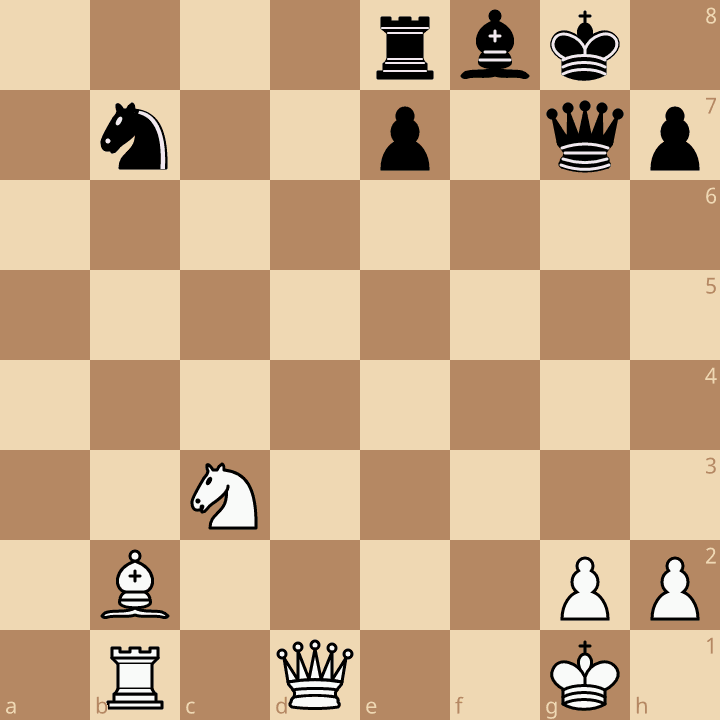
White to move. One of your pieces is blocking another. Can you move it to reveal a hidden attack and win material?
A discovered attack occurs when one piece moves away, revealing an attack from another piece that was hidden behind it. The piece that moves does not have to make the attack itself—it simply uncovers the power of the piece behind it.
Bishops, rooks and queens often create discovered attacks because they attack along long lines. These tactics reward players who notice hidden possibilities instead of only obvious threats.
The correct move is Nd5.
By moving the knight, White opens the bishop’s diagonal, allowing it to attack Black’s queen. Although the knight appears to be the active piece, the real attack comes from the bishop that was previously blocked. Black must now deal with the newly revealed threat and often loses material.
Before making any move, check whether one of your own pieces is blocking another. Sometimes, moving a piece creates an opportunity that wasn’t visible a moment earlier.
Discovered Check
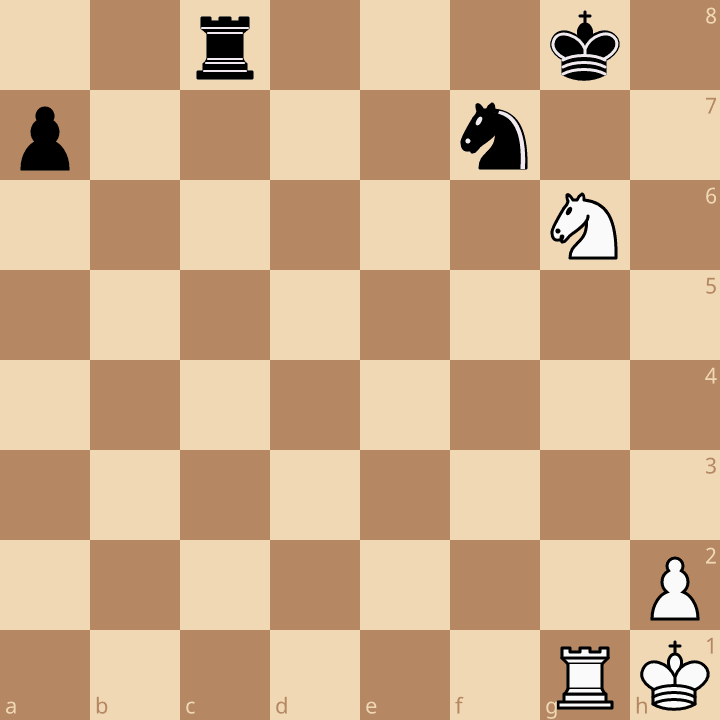
White to move. Your king is safe, but one move can uncover a powerful check from another piece. Can you find the winning idea?
A discovered check is a special type of discovered attack where the revealed attack is against the opponent’s king. Because a king must respond to check immediately, discovered checks are among the strongest tactical weapons in chess.
Very often, the moving piece also creates another threat, making it difficult for the opponent to defend both ideas at once.
The correct move is Ne7+.
The knight moves away, uncovering the rook’s attack on the king. At the same time, the knight attacks another important piece. Black must first respond to the check, giving White time to win additional material on the following move.
Discovered checks are powerful because the opponent has no choice but to deal with the king’s safety. Whenever one of your pieces stands between a rook or bishop and the enemy king, always ask whether moving that piece creates a discovered check.
Double Attack
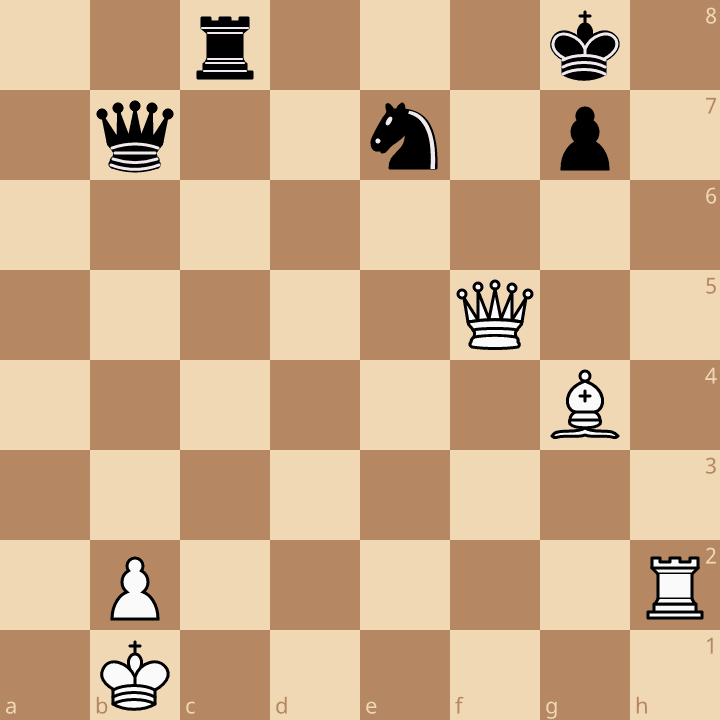
White to move. One move creates two dangerous threats at once. Can you find the move that leaves Black unable to stop both?
A double attack happens when one move creates two separate threats at the same time. Unlike a fork, the attacks do not always come from the same piece.
One piece may give check while another attacks a queen, or a discovered attack may create two simultaneous dangers. Since the opponent can usually answer only one threat, double attacks often win material or lead to checkmate.
The winning move is Qh7+.
White’s queen gives check while another piece simultaneously attacks Black’s rook. Because Black must respond to the check, the rook cannot be saved. This is a classic double attack. Strong tactical players constantly look for moves that create more than one problem for their opponent.
Before making your move, ask yourself whether you can combine two threats into a single move. Very often, that is the simplest path to gaining a decisive advantage.
Summary
Hidden attacks are among the most dangerous tactical ideas in chess. Remember these questions:
- Is one of my pieces blocking another?
- Can moving it reveal an attack?
- Can one move create two threats?
The more often you ask these questions, the easier it becomes to spot tactical opportunities.
Advice from the Coach
Many beginners only look at the piece they are about to move. Strong players also look at the pieces that will become active after the move. Before moving any piece, take a moment to ask: “What will this move uncover?” Sometimes the hidden attack is much stronger than the move itself.
Before You Play Your Next Game
Before every move, ask yourself:
- ✅ Can I reveal an attack by moving one piece?
- ✅ Is there a discovered check?
- ✅ Can I create two threats with one move?
- ✅ Is one of my own pieces blocking another?
These four questions will help you discover tactical opportunities that many opponents never see.
Did You Know?
- Many spectacular Grandmaster combinations begin with a discovered attack.
- A discovered check is often stronger than an ordinary check because the moving piece may also create another threat.
- Some of the most famous sacrifices in chess work because they uncover a hidden attack from a rook, bishop, or queen.
| Previous Chapter: BG007 – Batteries & X-Ray Attacks | Next Chapter : BG009 – Removing The Defender & Overloading |