
| Chapter | Chapter Name | Unit | Level | Reading Time |
|---|---|---|---|---|
| BG007 | Batteries & X-Ray Attacks | Basic Guide | Beginner | 5 min |
When Two Pieces Work Better Than One
In chess, even the strongest piece cannot win every battle alone. The best attacks happen when two or more pieces work together toward the same target. This cooperation is called a battery.
A battery allows one piece to support another, creating powerful threats along a file, rank, or diagonal. Sometimes, a piece can even attack through another piece, creating what is known as an X-ray attack. These ideas appear frequently in tactical combinations and attacking games.
In this chapter, you will learn how pieces combine their strength to create powerful attacking opportunities.
Key Takeaways
After completing this chapter, you will be able to:
- ✔ Recognise different types of batteries.
- ✔ Understand how pieces support one another.
- ✔ Identify X-ray attacks.
- ✔ Look for coordinated attacks instead of single-piece threats.
Rook Battery
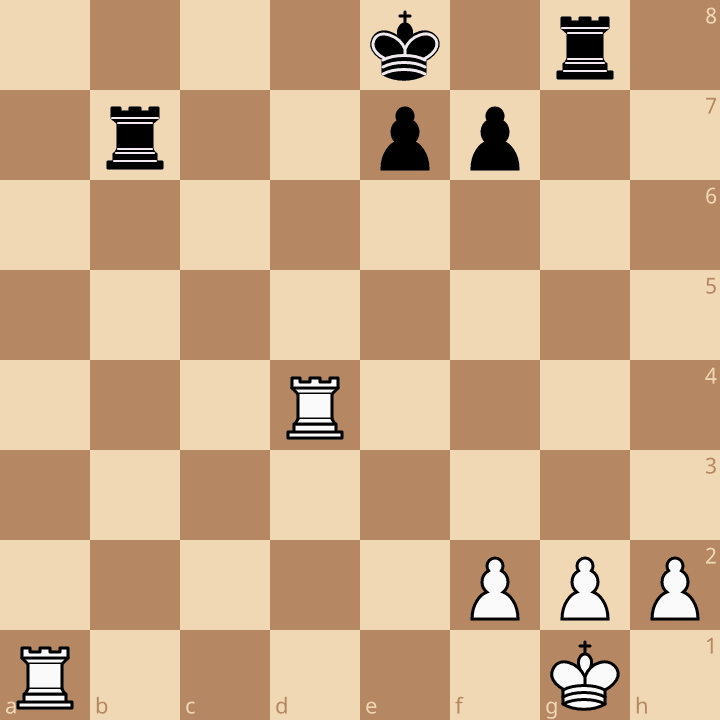
White to move. Two rooks can line up on the same file to increase pressure against Black’s king. Can you find the strongest move?
A rook battery is formed when two rooks stand on the same file or rank, working together to attack the same target. The front rook creates the immediate threat, while the second rook supports it from behind.
This arrangement greatly increases attacking power and is especially effective on open files. Strong players often double their rooks before launching an attack against the opponent’s king or weak pawns
The correct move is Rad1, placing both rooks on the same open file.
The first rook applies pressure directly, while the second rook supports any future advance or exchange. Black now faces continuous pressure because every move must consider the doubled rooks. Even if one rook is exchanged, the remaining rook continues the attack.
This example shows that coordinated pieces are much stronger than isolated ones. Before looking for sacrifices, always ask whether your rooks can be doubled to increase pressure.
Queen & Bishop Battery
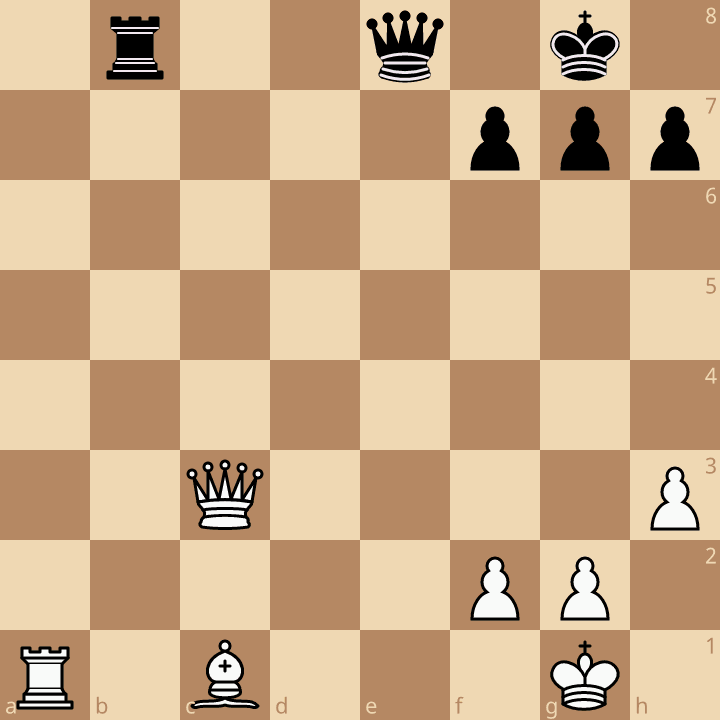
White to move. The queen and bishop can combine their strength on the same diagonal to create a dangerous attacking threat. Can you find it?
A queen and bishop battery is created when both pieces attack along the same diagonal. The bishop usually stands in front, while the queen supports from behind.
Together, they create powerful threats against the king, especially on weakened diagonals near the opponent’s castled position. Many famous attacks begin with this simple but effective coordination between the queen and bishop.
The correct move places the queen behind the bishop, creating a battery aimed directly at the opponent’s king. Although no immediate checkmate exists, Black must now defend carefully because several tactical ideas have appeared at once.
The bishop controls key squares while the queen reinforces every attack along the diagonal. Coordinated attacks force the defender to spend valuable moves protecting weaknesses instead of creating counterplay. Whenever your bishop has an open diagonal, ask yourself whether the queen can join the attack.
X-Ray Attack
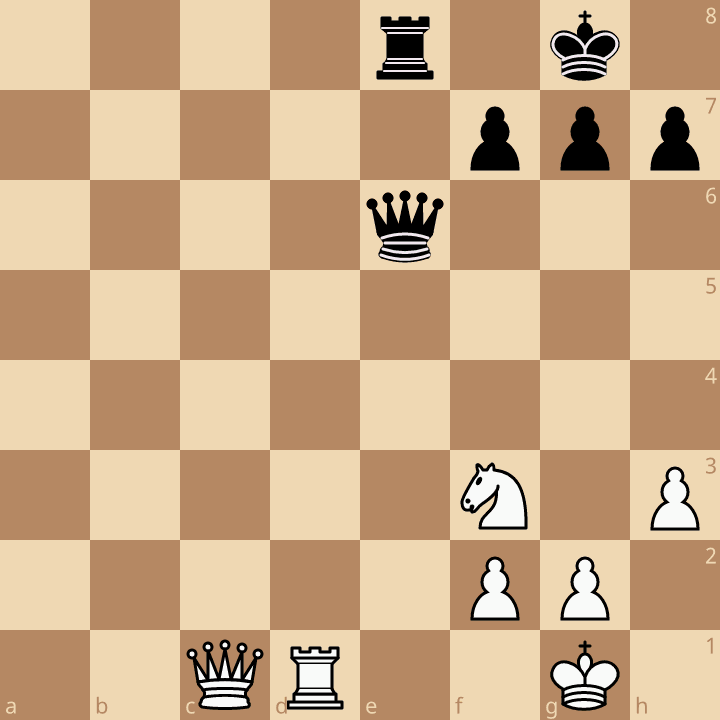
White to move. An enemy piece blocks your attack, but something valuable is hiding behind it. Can you discover the tactical idea?
An X-ray attack happens when a rook, bishop, or queen attacks through a blocking piece toward another target behind it.
The front piece may move, be exchanged, or become pinned, allowing the hidden attack to become effective. X-ray attacks often appear together with pins, discovered attacks, or batteries. They reward players who look beyond the first piece they see.
The correct move increases pressure on the blocking piece without capturing immediately. Although the front piece appears safe, it also protects a more valuable piece behind it.
Once the blocking piece moves or is exchanged, the attack reaches its real target. This hidden pressure is called an X-ray attack.
Many tactical combinations begin by exploiting pieces that stand on the same file, rank, or diagonal. Before making a move, don’t just look at the first piece in your way—ask what lies behind it.
Summary
Strong attacks rarely come from a single piece. Remember these ideas:
- Double your rooks on open files.
- Combine your queen and bishop on open diagonals.
- Look beyond blocking pieces for hidden targets.
- Coordinated pieces are stronger than isolated ones.
Advice from the Coach
Many beginners search only for immediate threats. Strong players first improve the position of their pieces so they work together. Before attacking, ask yourself one important question:
“Can another piece join the attack?”
Very often, the strongest move is not a sacrifice—it is simply bringing one more piece into the battle.
Before You Play Your Next Game
Before every move, ask yourself:
- ✅ Can I double my rooks?
- ✅ Can my queen support my bishop?
- ✅ Is there an X-ray attack?
- ✅ Can two pieces attack the same target together?
The more your pieces cooperate, the stronger your position becomes.
Did You Know?
- World Champions often double their rooks before starting a kingside attack.
- Queen and bishop batteries are among the most common attacking patterns against a castled king.
- X-ray attacks frequently appear in combinations involving pins and discovered attacks.
| Previous Chapter: BG006 – Spot Forks, Pins & Skewers | Next Chapter : BG008 – Discover Hidden Attacks |