
| Chapter | Chapter Name | Unit | Level | Reading Time |
|---|---|---|---|---|
| BG006 | Spot Forks, Pins & Skewers | Basic Guide | Beginner | 5 min |
Recognising the Most Common Tactical Patterns
Many chess games are not won because one player knows more opening theory. They are won because one player notices a simple tactical opportunity that the other player misses. A single fork can win a queen, a pin can make an important piece helpless, and a skewer can force your opponent to lose material.
The good news is that these tactical patterns appear repeatedly in chess. Once you learn to recognise them, you will start seeing them in your own games. In this chapter, you will learn three of the most common tactical ideas through practical positions, simple explanations, and step-by-step solutions.
Key Takeaways
After completing this chapter, you will be able to:
- Recognise a fork.
- Identify a pin.
- Understand a skewer.
- Look for tactical opportunities before every move.
Fork
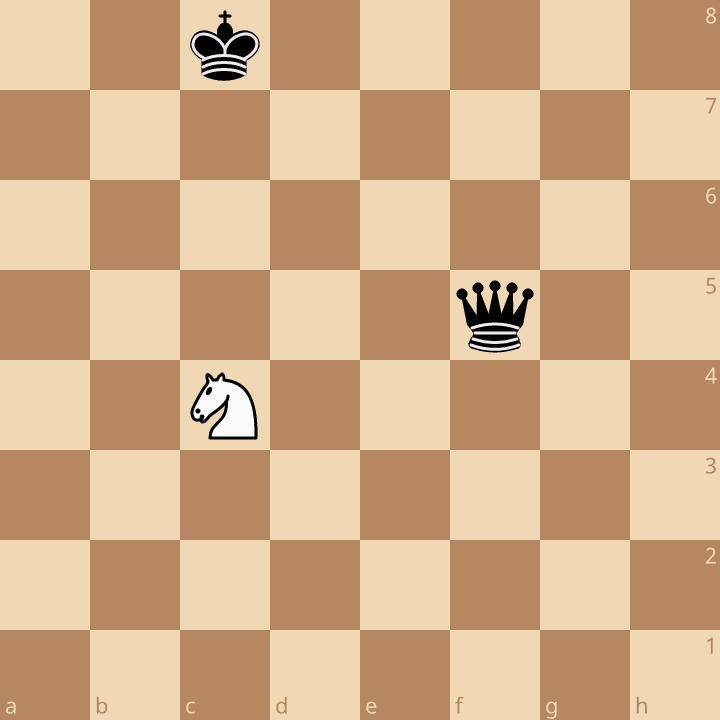
White to move. One move allows a single piece to attack both the king and the queen at the same time. Can you find it?
A fork is a tactical pattern where one piece attacks two or more enemy pieces simultaneously. Since the opponent can usually respond to only one threat, another valuable piece is often lost.
Knights create the most famous forks because of their unique movement, but queens, bishops, kings and even pawns can also fork. Before every move, ask yourself whether one piece can create two threats at the same time.
The correct move is Nd6+.
The knight jumps to d6, attacking both the king and the queen. Because the king is in check, Black has no choice but to move the king. After the king escapes, White captures the queen on the following move, winning significant material.
This is called a knight fork, one of the most common tactical ideas in chess. Whenever your knight reaches a central square, take a moment to see how many pieces it attacks. Many beginner games are decided simply because one player notices a fork while the other player does not.
Pin
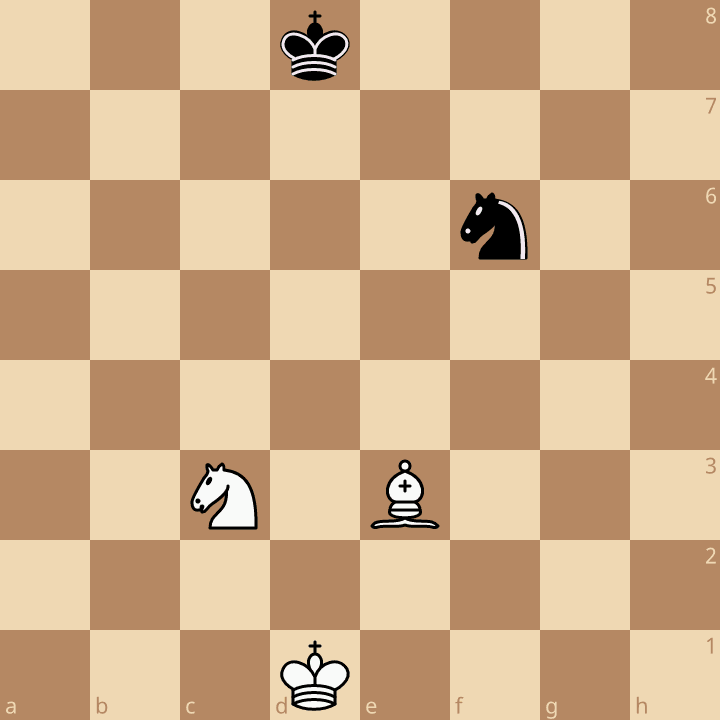
White to move. An enemy piece appears free to move, but doing so would expose something much more valuable. Can you spot the tactic?
A pin occurs when a piece cannot safely move because a more valuable piece stands behind it. If the pinned piece moves, the stronger piece becomes vulnerable or the king is exposed to check.
Pins are usually created by bishops, rooks or queens attacking along a rank, file or diagonal. A pinned piece still occupies its square, but its movement is severely restricted.
The correct move is Bg5.
The bishop attacks the knight, but the real target is the king standing behind it. Because moving the knight would expose the king to check, the knight cannot legally move. Although Black has not lost material immediately, the pinned knight has become almost useless.
White can now increase the pressure by bringing more pieces into the attack or by capturing the knight at the right moment. Strong players often create pins first before launching a larger combination, making this one of the most useful tactical weapons.
Skewer
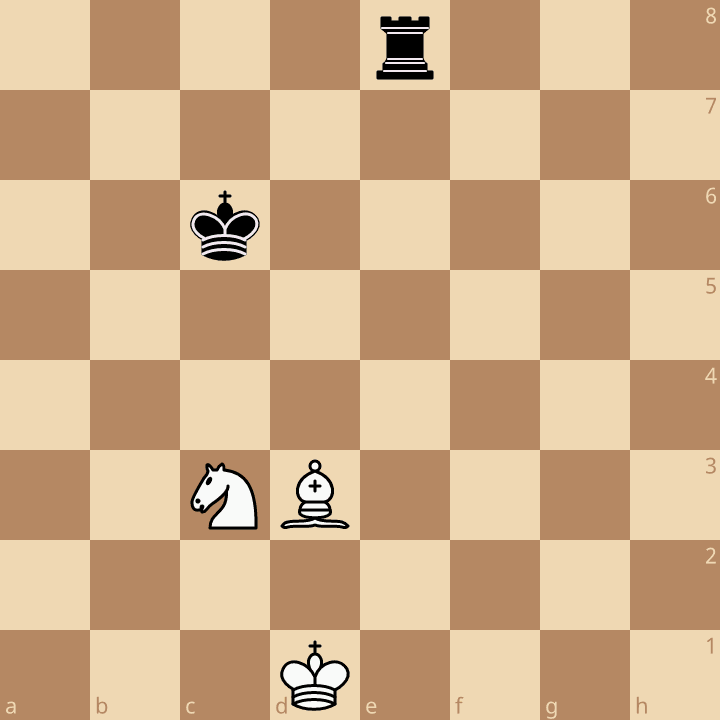
White to move. Two valuable enemy pieces stand on the same line. Can you force the stronger piece away and win the weaker one?
A skewer is very similar to a pin, but the order of the pieces is reversed. The more valuable piece is attacked first and is forced to move away, exposing the less valuable piece behind it.
Bishops, rooks and queens often create skewers because they attack along straight lines. Whenever two important pieces are lined up, always look carefully for this tactical opportunity.
The winning move is Bb5+.
The bishop gives check to the king. Since the king cannot remain in check, it must move to a safe square. Once the king moves away, the rook behind it is left unprotected and White captures it on the next move. Unlike a pin, where the front piece remains in place, a skewer forces the front piece to move first.
Whenever you notice two enemy pieces standing on the same file, rank or diagonal, always ask yourself whether a skewer is possible.
Summary
Forks, pins and skewers are among the first tactical patterns every chess player should learn.
Remember these simple questions:
- Can I attack two pieces at once?
- Is an enemy piece unable to move because something valuable is behind it?
- Can I force a valuable piece to move and win another piece?
The more often you ask these questions during a game, the easier it becomes to recognise tactical opportunities.
Advice from the Coach
Most beginners lose tactical opportunities because they play too quickly. Before making every move, spend a few extra seconds scanning the board for forks, pins and skewers. Even if you don’t find one, developing the habit of looking for tactical patterns will sharpen your calculation and reduce costly mistakes. Chess is not only about finding good moves—it is also about noticing opportunities that others overlook.
Before You Play Your Next Game
Before every move, ask yourself:
- ✅ Can I create a fork?
- ✅ Can I pin one of my opponent’s pieces?
- ✅ Is there a possible skewer?
- ✅ Can my opponent do the same to me?
If you make this your thinking routine, tactical ideas will gradually become part of your natural chess vision.
Did You Know?
- A knight fork is one of the most common tactical themes in beginner chess.
- Pins can be absolute (to the king) or relative (to a valuable piece).
- Many famous combinations begin with a fork, pin or skewer before leading to checkmate or winning material.
| Previous Chapter: BG005 – Playing Your First Tournament | Next Chapter : BG007 – Batteries & X-Ray Attacks |