
| Chapter | Chapter Name | Unit | Level | Reading Time |
|---|---|---|---|---|
| BG005 | Playing Your First Tournament | Basic Guide | Beginner | 4 min |
Everything You Need Before You Sit at the Board
Every chess player remembers their first tournament. The excitement of entering the playing hall, seeing rows of chessboards, hearing the chief arbiter announce the start of the round, and shaking hands with an opponent you’ve never met before—it’s an experience unlike any casual game at home.
For many beginners, however, that excitement is mixed with nervousness. Questions begin to appear. How do I use the chess clock? What if I make an illegal move? Do I have to write my moves down? Can I talk during the game?
The good news is that every experienced player once asked the same questions.
A chess tournament is simply a place where everyone follows the same rules so that every game is fair. Once you understand these rules, you’ll feel more confident and be able to focus on what really matters—playing good chess and enjoying the experience.
This chapter introduces the essential tournament rules and etiquette that every beginner should know before playing their first rated event.
Key Takeaways
After completing this chapter, you will be able to:
- Understand how chess tournaments are organised.
- Use a chess clock correctly.
- Record your moves using chess notation.
- Follow basic tournament etiquette.
- Avoid common mistakes made by first-time players.
FIDE-Rated vs Unrated Tournaments
Not every chess tournament affects your rating.
Unrated tournaments are ideal for beginners. They are a great way to gain experience without worrying about rating points.
FIDE-rated tournaments are officially recognised by FIDE (the International Chess Federation). Your performance determines whether your rating increases or decreases.
If you’re playing your first event, don’t worry too much about your rating. Focus on learning, gaining experience, and enjoying the competition.
Understanding the Chess Clock
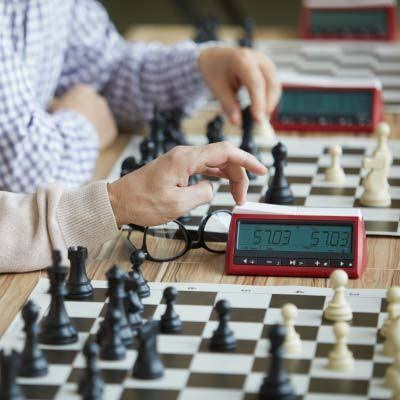
IAlmost every tournament uses a chess clock.
Each player has their own time.
When you complete your move, press your side of the clock.
Your opponent’s time then begins to run.
One important habit:
Move first. Press the clock second.
Never press the clock before making your move.
Running out of time usually means losing the game, even if you have a winning position.
Writing Down Your Moves
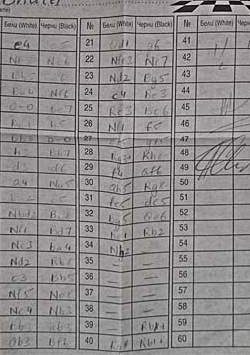
In longer time controls, players usually record every move on a scoresheet.
Example:
- e4 e5
- Nf3 Nc6
- Bb5
Writing moves helps:
- Replay your games later.
- Analyse mistakes.
- Resolve disputes if needed.
Don’t worry about speed. With practice, notation becomes second nature.
Tournament Etiquette
Good manners are just as important as good moves.
Remember these simple rules:
- Arrive before the round starts.
- Shake hands before and after the game (if local event norms permit).
- Keep silent during play.
- Switch your mobile phone completely off.
- Never disturb nearby games.
- Respect your opponent, win or lose.
Chess is a game of respect.
Common Tournament Rules
A few important rules every beginner should know:
Touch-Move Rule
- If you deliberately touch one of your own pieces, you must move the piece, if it has a legal move.
- If you touch your opponent’s piece, you must capture it if legally possible.
Adjusting a Piece
Need to straighten a piece?
Simply say: “I adjust.”
Then straighten the piece without penalty.
Illegal Moves
Making an illegal move can result in penalties.
- Before moving, always check that your move is legal.
- Thinking for a few extra seconds is much better than making an illegal move.
After the Game
Whether you win, lose, or draw:
- Thank your opponent.
- Shake hands (where customary).
- Analyse the game if your opponent agrees.
- Learn from your mistakes.
Remember: Every tournament is a lesson.
Summary
Before your first tournament, remember these important points:
- Learn how the chess clock works.
- Record your moves carefully.
- Respect tournament rules.
- Stay calm under time pressure.
- Treat every game as an opportunity to improve.
Advice from the Coach
Don’t judge your first tournament by the number of points you score. Judge it by what you learn. Every strong player has stories of difficult first tournaments, missed tactics, time trouble, and nervous moments. Those experiences are part of becoming a better player. Leave the tournament with more knowledge than you had when you arrived.
Before You Play Your Next Tournament
Before entering your first event, ask yourself:
- ✅ Do I know how to use a chess clock?
- ✅ Can I record moves correctly?
- ✅ Do I understand the touch-move rule?
- ✅ Do I know basic tournament etiquette?
- ✅ Am I ready to enjoy the experience, regardless of the result?
If you answered YES, you’re ready to play your first tournament with confidence.
Did You Know?
- FIDE stands for Fédération Internationale des Échecs, the International Chess Federation.
- Most international tournaments use the Swiss System, where players with similar scores face each other each round.
- Many Grandmasters still analyse every tournament game after it finishes because improvement never stops.
| Previous Chapter: BG004 – Special Moves & Game Results | Next Chapter : BG006 – Spot Forks, Pins & Skewers |