
KRISHNAN SASIKIRAN
The Quiet Warrior of Indian Chess
Snapshot
- Born: 7 January 1981
- State: Tamil Nadu
- FIDE ID: 5004985
- Grandmaster Year: 2000
- Peak Rating: 2720 (May 2012)
- Award: Arjuna Award (2007)
Gallery

Where the journey began.
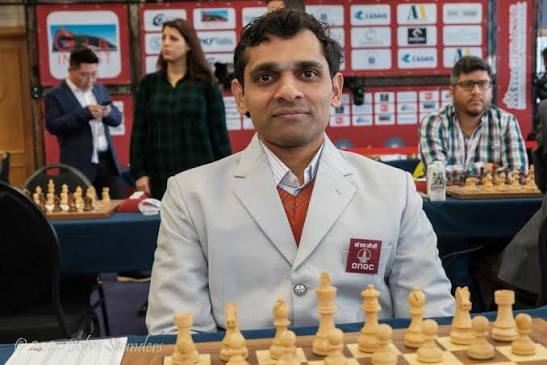
India’s second 2700+ player.
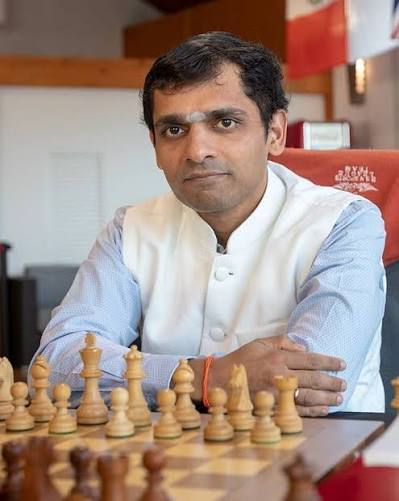
Strength without the noise.
Beyond Anand: The Rise of Sasikiran
Not every chess career is built around spectacular victories or constant headlines.
Some are built through consistency, preparation, resilience and an unwavering commitment to the game.
Krishnan Sasikiran belongs firmly to that category.
For more than two decades, Sasikiran has been one of India’s most dependable Grandmasters, representing the country at the highest level while quietly building an extraordinary career. He won his first Indian National Championship in 1999, earned the Grandmaster title in 2000 and eventually crossed the prestigious 2700 Elo barrier, reaching a peak rating of 2720 in May 2012.
Unlike players who rely primarily on spectacular tactical battles, Sasikiran built his reputation through deep opening preparation, positional understanding and precise endgame technique.
His calm temperament and fighting spirit made him a cornerstone of the Indian national team in Olympiads and World Team Championships.
And perhaps fittingly for a player known for his quiet professionalism, one of his most important contributions came away from the board — as a trusted second to Viswanathan Anand during the 2013 World Championship match.
The Generation That Built India’s Depth
When Sasikiran emerged, Indian chess was undergoing a fundamental transformation.
Viswanathan Anand had already demonstrated that an Indian player could reach the absolute summit of world chess. The next challenge was to prove that Anand was not an exception.
Sasikiran became an important part of that answer.
His career showed that India could produce multiple players capable of competing with the world’s elite.
He won the Indian National Championship four times and became only the second Indian player after Anand to cross 2700 Elo — a landmark that demonstrated the growing depth of Indian chess.
For Tamil Nadu, his rise was equally significant.
Chennai was already developing into one of India’s great chess centres, and Sasikiran became one of the players who strengthened that reputation.
The Second Indian to Reach 2700
For years, Viswanathan Anand stood alone above the 2700 Elo mark, carrying the hopes of Indian chess on the international stage. Krishnan Sasikiran changed that.
In 2006, Sasikiran crossed the 2700 rating barrier, becoming only the second Indian player after Anand to achieve the milestone. His peak rating eventually reached 2720 in May 2012.
The achievement was significant far beyond the number itself. At a time when India was still developing its pool of elite Grandmasters, Sasikiran demonstrated that Anand was not an isolated phenomenon. India could produce another player capable of competing consistently at the highest level of international chess.
His rise represented the growing depth of Indian chess. Anand had shown that an Indian could become a world champion; Sasikiran showed that another Indian could join the world’s elite.
That milestone also paved the way for the generation that followed — players who would eventually push India’s representation at the 2700+ level from two players to many.
Sasikiran was no longer simply following Anand’s path. He was helping create a new path for Indian chess.
Five Games That Define Sasikiran
Sasikiran’s best games reveal a recurring theme.
He rarely rushed.
Instead, he improved his pieces, created weaknesses, restricted counterplay and waited for the position to reveal its tactical possibilities.
#1 – Krishnan Sasikiran vs Viswanathan Anand, World Cup — Hyderabad, 2002
One of the most significant victories of Sasikiran’s career — defeating Viswanathan Anand in a classical game on home soil.
The game began with the King’s Indian Attack, with Sasikiran gradually building a broad centre. After 19.g4, White gained space on the kingside, while the central advance 28.e6! created serious problems for Black’s coordination.
Sasikiran remained patient as the position became increasingly complex. The exchange on 31.f5 Nxd4 32.Qxd4 removed Black’s active knight and left White with a dangerous initiative.
The critical phase came with 41.f6!, when Sasikiran’s advanced pawn restricted the black king and opened attacking possibilities around it. White’s queen and rook then coordinated beautifully: 42.Qg3 Qc1+ 43.Kh2 Rb1 44.Qd6
Anand’s queen and rook remained active, but Sasikiran’s pieces controlled the critical squares. After 47.c5, White created another dangerous passed pawn, while the final sequence forced Black’s king into a defensive position.
Following 52.Kf2, Anand resigned.
The Lesson:
- Build pressure patiently before launching the final attack.
- Sasikiran didn’t rush the position. He improved his pieces, created weaknesses and waited for the right moment to strike.
- Against the strongest opponents, patience can be your greatest weapon.
#2 – Krishnan Sasikiran vs Michal Krasenkow, Calvià Olympiad — 2004
This Olympiad victory showcases Sasikiran’s ability to build a powerful centre and turn advancing passed pawns into a decisive weapon.
The game began with the Semi-Slav Defence, where Krasenkow chose the ambitious 5…f5. Sasikiran responded by castling queenside and preparing a direct kingside expansion with 16.g4.
The critical sequence began with 17.e4!, immediately challenging Black’s centre. After 20.dxe5 Bg6 21.exd6, White’s central pawns became extremely dangerous.
Sasikiran’s tactical awareness was evident with 21…Bxe4+ 22.Ka1, after which he continued pushing the passed pawn: 23.fxe4 a4 24.Ba2 Rf3 25.e5
The e-pawn had now become a major force, restricting Black’s pieces and creating the threat of further promotion.
The decisive phase came with: 27.Rxd5 Qf7 28.Rdd1 Qc4 29.e6!
Instead of rushing to win material, Sasikiran kept advancing the pawn. After 30.d7 Rd3 31.Rde1, Black could no longer prevent the connected passed pawns from deciding the game.
Krasenkow resigned.
The Lesson:
- A passed pawn becomes dangerous when it is supported by active pieces.
- Sasikiran didn’t simply push his pawns forward — he built the entire position around them.
- Create the passed pawn, support it, and make your opponent spend every move stopping it.
#3 – Hikaru Nakamura vs Krishnan Sasikiran, Sigeman & Co Tournament — Malmö, 2005
This victory over Hikaru Nakamura is a wonderful example of Sasikiran’s ability to remain calm against unusual opening play and then gradually take control of a long, complex game.
Nakamura began with the provocative 2.Qh5, but Sasikiran refused to be distracted. He developed naturally, secured his king and patiently improved his pieces.
The middlegame became a battle of manoeuvring. Sasikiran’s pieces gradually became more active, while his rook and knight coordination created increasing pressure.
The critical phase arrived after 43.c5 dxc5 44.bxc5 Nxc5, when Black emerged with active pieces and a dangerous passed-pawn structure.
After the queens were exchanged with 51.Qf8+ Qe8 52.Qxe8+ Bxe8, Sasikiran entered an endgame where his superior coordination and passed b-pawn became decisive.
The final phase was a remarkable display of patience. Black’s king supported the advancing pawn while the rook restricted White’s counterplay. The game finally ended with: 84…b2 85.Rb8+ Ka4 86.g6 Bb5 87.g7 b1=Q
The promotion was unstoppable, and Nakamura resigned.
The Lesson:
- Stay calm when your opponent tries to take the game outside your comfort zone.
- Sasikiran didn’t react to Nakamura’s unusual opening. He developed, improved his pieces and waited for the position to become favourable.
- Good chess is often about refusing to be rushed.
#4 – Krishnan Sasikiran vs Rustam Kasimdzhanov, Doha — 2006
This game against former FIDE World Champion Rustam Kasimdzhanov is a fine example of Sasikiran’s ability to combine positional pressure with a precisely timed kingside attack.
The game began with the Torre Attack, and Sasikiran gradually built a strong central position.
The advance 13.e5 gained space, while 17.Rad1 and 18.a4 prepared further expansion on the queenside.
The critical moment came with 23.e6!, creating a dangerous advanced pawn and forcing Black’s pieces into passive positions. Sasikiran continued to improve his pieces rather than rushing the attack.
The pressure intensified with 27.Ng5+, followed by the powerful manoeuvre 32.Nf7+. White’s pieces became increasingly coordinated around the exposed king.
The decisive combination began with: 42.Rd5! Bxe6 43.Bxg6! Kxg6 44.Qxh5+
Sasikiran’s bishop sacrifice opened the king completely, allowing the queen to enter with check.
After 45.Nd4 Qc8 46.Rg5, White’s attack was overwhelming and Kasimdzhanov resigned.
The Lesson:
- A successful attack is built before it is launched.
- Sasikiran first improved his pieces, gained space and restricted Black’s counterplay. Only when every piece was ready did he strike.
- Coordinate your pieces first — then calculate the tactical blow.
#5 – Krishnan Sasikiran vs Curt Hansen, Sigeman & Co Tournament — Malmö, 2005
This game is an excellent example of Sasikiran’s positional patience, king activity and endgame technique.
The game began with the Queen’s Gambit Declined: Exchange Variation, and Sasikiran gradually built a strong central position. The key moment came with 17.e5!, gaining space and forcing Black’s knight into a less active position.
After the exchanges beginning with 23…f6, the queens soon disappeared, and the game transitioned into an endgame where Sasikiran’s king became the most important piece on the board.
The decisive transformation began with: 33.Kf4 Kf7 34.Ke5!
Sasikiran immediately centralised his king, while Black struggled to coordinate his pieces. After 35.Kxd5, White had won an important pawn and continued improving his position.
The passed d-pawn became increasingly dangerous, while Sasikiran’s knight controlled key squares. The sequence 39.d5 Na5+ 40.Kd4 h4 41.Ne2 showed excellent coordination.
By 46.Ke5, White’s king had penetrated deep into Black’s position. Sasikiran’s knight then supported the king while targeting weaknesses, and after 49.Ne6, Hansen resigned.
The Lesson:
- In the endgame, activate your king before looking for tactics.
- Sasikiran transformed a small advantage into a winning position simply by centralising his king, improving his knight and creating a passed pawn.
- When the queens are gone, your king should not be watching the game — it should be playing it.
The Chess of Krishnan Sasikiran
The five games reveal why Sasikiran became such a respected player.
Against Anand: patient pressure became a kingside attack.
Against Krasenkow: passed pawns became a winning weapon.
Against Nakamura: patience became endgame domination.
Against Kasimdzhanov: coordination became an attack.
Against Hansen: king activity became the decisive factor.
There is a common thread running through all five.
Sasikiran rarely tried to win the game in one move.
He built his advantages.
He improved his pieces.
He restricted his opponent.
And when the position was ready, he struck.
That is the essence of the Quiet Warrior.
A Pillar of Indian Chess
Sasikiran belongs to the generation that helped bridge the gap between Viswanathan Anand and India’s modern wave of elite Grandmasters.
During the early 2000s, India had only a small group of players capable of competing consistently at the highest international level.
Sasikiran was one of them.
His four National Championship titles, international victories and long service to the Indian team established him as one of the country’s most reliable players. His crossing of the 2700 rating barrier was particularly significant, demonstrating that Anand was not India’s only player capable of reaching that level.
For Tamil Nadu, his achievements further strengthened Chennai’s reputation as India’s chess capital.
Young players could now look beyond Anand and see another Indian Grandmaster competing successfully against the world’s best.
The Man Behind the Board
Despite his achievements, Sasikiran has always maintained a remarkably humble and private personality.
Unlike players who actively seek the spotlight, he has generally allowed his chess to speak for itself.
His calm temperament, analytical mindset and meticulous preparation have earned him immense respect among fellow professionals.
He has represented organisations including ONGC, while balancing domestic competitions with a demanding international schedule.
His professionalism has also made him particularly valuable in team events, where reliability and preparation can be as important as individual brilliance.
The Trusted Second
One of the most revealing chapters of Sasikiran’s career came away from the tournament board.
He served as one of Viswanathan Anand’s seconds during the 2013 World Championship, a role that speaks volumes about the trust placed in his analytical ability and chess understanding.
For a player whose own career had been built on preparation and positional understanding, working behind the scenes at the highest level of world chess was a natural extension of his strengths.
It also reflects something larger.
Sasikiran wasn’t simply building his own career.
He was contributing to the success of Indian chess as a whole.
The Everlasting Legacy
Krishnan Sasikiran’s legacy cannot be measured only through tournament victories or rating milestones.
He represents a generation that helped transform Indian chess from a country dependent on one superstar into a nation capable of producing multiple world-class Grandmasters.
His four National Championship titles, international successes and crossing of the 2700 barrier secured his place among India’s strongest players.
But his influence also exists away from the scoreboard.
As a trusted second, mentor, analyst and team player, he has contributed knowledge and experience to the wider Indian chess ecosystem.
His career has been defined by something increasingly rare in modern sport: longevity without noise.
The Road Ahead
Indian chess today is filled with young stars, elite Grandmasters and world champions.
But the current generation stands on foundations built by players like Sasikiran.
With decades of international experience, deep opening knowledge and an understanding of elite tournament preparation, he remains capable of contributing as a competitor, trainer, mentor and national-team resource.
His journey demonstrates that influence in chess does not always come through the loudest victories or the biggest headlines.
Sometimes it comes through showing up.
Preparing harder.
Representing your country.
Helping your teammates.
And doing it year after year.
The Quiet Warrior of Indian Chess
Krishnan Sasikiran never needed to be the loudest voice in the room.
His chess did the talking.
He became India’s second player to cross 2700 Elo.
He won four National Championships.
He represented India at the highest level.
He defeated Anand, Nakamura and other world-class opposition.
And he contributed behind the scenes to one of the greatest chapters in Indian chess history.
For Tamil Nadu, he remains one of its finest chess ambassadors.
For India, he represents the generation that proved Anand was not an exception.
And for the next generation, Sasikiran’s greatest lesson may be the simplest one: You don’t always have to make noise to make history.
That is the story of Krishnan Sasikiran — the Quiet Warrior of Indian Chess.