
ABHIJIT KUNTE
Maharashtra’s Grandmaster and the Gentleman of Indian Chess
Snapshot
- Born: 03 March 1977
- State: Maharashtra
- FIDE ID: 5002265
- Grandmaster Year: 2000
- Peak Rating: 2568 (January 2001)
- Award: Dhyanchand Award (2021)
Gallery
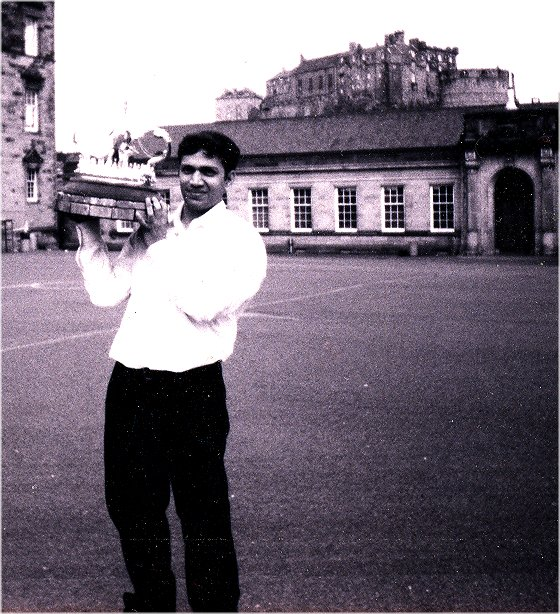
Where the journey began.
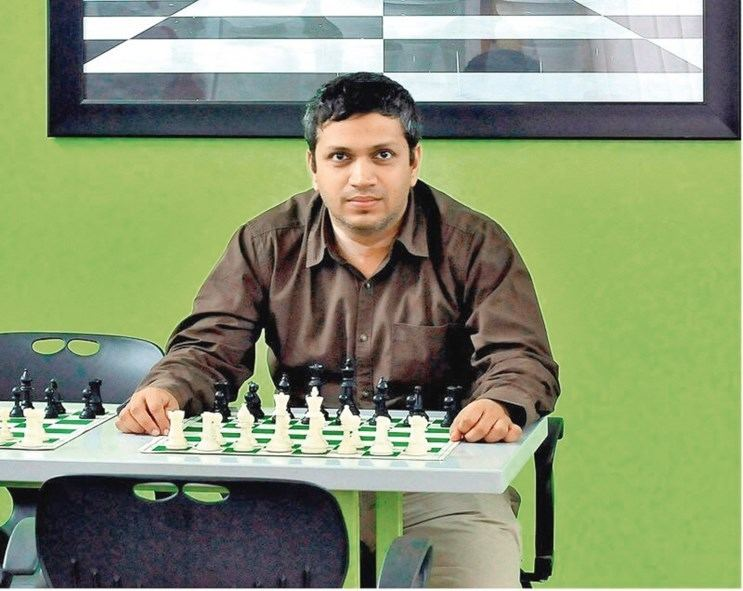
India’s fourth Grandmaster
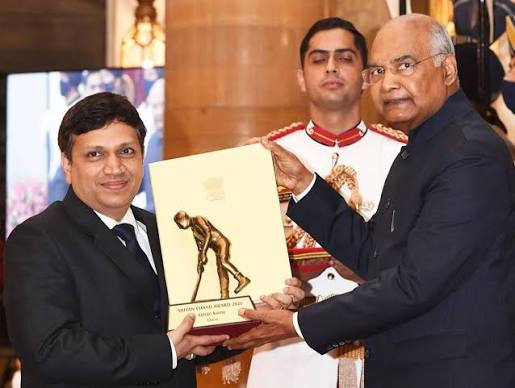
A lifetime dedicated to Indian chess
The Quiet Rise of a Grandmaster
Not every chess career is built around spectacular headlines.
Some are built through consistency, preparation and an unwavering commitment to the game.
Abhijit Kunte belongs to that generation.
Emerging from Maharashtra at a time when India had only a handful of Grandmasters, Kunte established himself as one of the country’s strongest players through the 1990s and early 2000s.
His playing style reflected his personality — calm, measured and deeply analytical.
He was rarely interested in unnecessary complications. Instead, Kunte built positions carefully, understood the value of small advantages and possessed the technical ability to convert them.
His rise came during an important period in Indian chess.
Viswanathan Anand had already opened the door.
Dibyendu Barua had followed.
Pravin Thipsay had widened the path.
And Kunte became the next Indian player to reach the Grandmaster title.
In doing so, he became India’s fourth Grandmaster, further demonstrating that the country’s success was developing into a genuine chess movement.
The Fourth Grandmaster
By the time Kunte reached the highest title, Indian chess was beginning to develop a depth that had been unimaginable only a decade earlier.
Anand had established himself among the world’s elite.
Barua had become India’s second Grandmaster.
Thipsay had followed as the third.
Kunte’s achievement added another name to that growing list.
His Grandmaster title was more than a personal milestone.
It was another indication that India was producing players capable of competing internationally on a sustained basis.
Kunte’s career also demonstrated something important about the evolution of Indian chess.
The country was no longer dependent on one exceptional player.
A generation was emerging.
And Kunte was an important part of it.
A Champion on the National Stage
Kunte’s strength was not limited to international competition.
He became a regular presence at the top of Indian chess and established himself as one of Maharashtra’s most successful players.
His national championship performances demonstrated the consistency that became a hallmark of his career.
Winning once can be a moment.
Remaining among the strongest players for years requires something else: discipline.
Kunte’s ability to remain competitive across different generations reflected his deep understanding of the game.
He could manoeuvre through quiet positions, calculate accurately when tactics appeared and defend difficult positions without losing his composure.
That balance made him a particularly difficult opponent.
Five Games That Defined the Gentleman
Across five memorable games, Kunte’s chess reveals the qualities that defined his career — resilience, tactical awareness, positional understanding, patience and technical precision.
From a marathon endgame against Šarūnas Šulskis to a tactical Olympiad victory and a hard-fought battle against Surya Shekhar Ganguly, these games show a player whose strength came from understanding the position rather than forcing it.
#1 – Abhijit Kunte vs Šarūnas Šulskis, Gibraltar Masters — 2004
This 73-move battle is a wonderful example of Kunte’s resilience, active king play and endgame technique against a higher-rated opponent.
The game began with the Zukertort Opening and quickly simplified after 12…Qxd1 13.Rxd1.
The first major tactical sequence came with 15…Nxf2 16.Rxf2 Be6, followed by 18…Bxf2+, leaving Kunte to fight on with an imbalanced position.
Rather than allowing Black’s active rooks to dominate, Kunte gradually improved his pieces. His e-pawn became a powerful passed pawn, while his king became increasingly active.
The critical phase came when Kunte pushed the pawn forward: 41.e6 a4 42.Ne5 a3 43.Ra6
The race between the passed pawns became extremely tense, but Kunte’s king and knights coordinated beautifully.
After 55.e7 Re8 56.Ke6, White’s pieces controlled the critical squares and Black’s counterplay began to disappear.
Kunte eventually converted the advantage after 73.Kf5.
The Lesson:
- An active king can transform an endgame.
- Kunte didn’t rush. He activated his king, coordinated his knights and kept his passed pawn moving.
- In the endgame, your king is a fighting piece — use it.
#2 – Geoffrey Borg vs Abhijit Kunte, Istanbul Olympiad — 2000
Kunte’s victory at the Istanbul Olympiad is a fine example of how positional pressure can eventually transform into a tactical attack.
Playing the Nimzo-Indian Defence, Kunte gradually built pressure in the centre while White struggled to coordinate his pieces. The critical moment arrived with 22…Nxe4!, when Kunte exploited the tactical weaknesses created by White’s advanced pawns.
After 24…Rxd5 25.Rxe6 fxe6, Black’s pieces became increasingly active. The kingside attack then accelerated with 27…h3! and 28…hxg2, creating a dangerous passed pawn on the second rank.
The decisive sequence was spectacular: 29.Nxf5 Nf3+ 30.Kf2 exf5 31.Rxe7 g1=Q+!
Kunte’s g-pawn promoted with check, while his knight and queen kept White’s king under relentless pressure.
After 32.Kxf3 Qf1+, the attack continued without giving White a moment to breathe. Kunte’s queen and knight coordinated perfectly, eventually winning decisive material.
White resigned after 40…Qxb2.
The Lesson:
- Tactics are often the reward for good positional preparation.
- Kunte first improved his pieces and created weaknesses. When the tactical opportunity appeared, he calculated precisely and transformed the pressure into a decisive attack.
- Build the position first — then strike when the tactics appear.
#3 – Dennis Ovcina vs Abhijit Kunte, Commonwealth and South African Open, Ekurhuleni, 2011
This game is a strong example of Kunte’s ability to counter an ambitious kingside attack by striking in the centre.
Facing Bird’s Opening, Kunte remained flexible while White expanded with g4, h4 and g5.
Instead of reacting passively, Black advanced in the centre with 10…d4 and later created further pressure with …f5.
The position became tactical after 24…Qxd3, when Kunte removed White’s advanced pawn and activated his queen. The critical sequence followed: 27.Nf1 Ncxe5! 28.fxe5 Nxe5
Kunte’s knights exploited the weaknesses created by White’s aggressive pawn advances, while his queen and rooks quickly joined the attack.
After 32…Bc6+, Black’s pieces became increasingly coordinated around the exposed king. The decisive phase came with: 38…f4 39.Re1 Rg3+ 40.Kf1 Qd3+ 41.Re2 f3
The advanced f-pawn, supported by the queen and rook, left White with no adequate defence. Ovcina resigned.
The Lesson:
- When your opponent attacks on the flank, strike in the centre.
- Kunte did not try to match White’s kingside expansion. He challenged the centre, opened lines and used White’s advanced pawns as targets.
- A flank attack can become a weakness when the centre is allowed to break open.
#4 – Surya Ganguly vs Abhijit Kunte, 43rd Indian Championship, Visakhapatnam, 2006
This game is a wonderful example of Kunte’s calculation, defensive resilience and ability to turn tactical complications in his favour against one of India’s strongest Grandmasters.
The game began with the sharp Sicilian Scheveningen, where Ganguly launched the Keres Attack with 6.g4. Kunte remained composed despite White’s aggressive intentions, while the repeated …Nh7–f6 manoeuvre helped Black hold the position together.
The tactical battle began with 17.Nxd6+ Bxd6 18.Rxd6 Qxd6. Kunte accepted the exchange complications and then found the remarkable sequence: 19…Qb6 20.Rd8+ Qxd8 21.Bxd8 Kxd8
Black emerged from the exchanges with a favourable position, while White’s queen remained active.
Kunte then steadily took control. After 24.Qxf7 Nhf6 25.Nd6 Kc7 26.Nxc8 Kxc8, Black’s king safely eliminated the dangerous knight, while the rook became increasingly active.
The final phase was decisive: 27…Rxh2 28…Rh3 29…Rf3 30.Qc4+ Kb8 31.Qe2 Rf4 32.Qd2 g3
The advanced g-pawn and active rook left White without sufficient counterplay, and Ganguly resigned.
The Lesson:
- In tactical positions, calculation matters more than material.
- Kunte accepted complications, accurately navigated the exchanges and emerged with the more active pieces.
- When the position becomes tactical, calculate the entire sequence — not just the first exchange.
#5 – Vahagn Voskanian vs Abhijit Kunte, Quebec Open Chess Championship, Montreal, 2006
This game highlights Kunte’s ability to manoeuvre patiently, improve his pieces and gradually take control of a complex position.
Playing the Queen’s Indian Defence, Kunte developed his pieces carefully while both sides manoeuvred around the centre. The sequence 23…c5 24.Nxe4 dxe4 opened the position and gave Black greater activity.
The critical phase began with 27…Bxa3, when Kunte captured a pawn and created pressure on the queenside. His pieces became increasingly active, with the rooks eventually dominating the open files.
After the exchange of queens and rooks beginning with 40.Rd1 Qxd1 41.Rxd1 Rxd1, Black reached a favourable position and continued to improve his pieces.
Kunte’s rooks became particularly dangerous on the second rank. The sequence 53…Rxe2 54.Kxg4 Re5 demonstrated excellent coordination, while the final rook activity left White unable to create meaningful counterplay.
After 58.Qb8 Rf6 59.Qb8 Rf6, Black’s control was complete and White resigned.
The Lesson:
- Small improvements eventually become a big advantage.
- Kunte didn’t need a spectacular combination. He improved his pieces, activated his rooks and gradually restricted White’s options.
- Keep improving your worst-placed piece — pressure often grows quietly before the position finally breaks.
The Chess of Abhijit Kunte
Kunte’s chess was rarely about forcing the game into chaos.
His greatest strength was his ability to understand what the position required.
He could defend patiently.
He could manoeuvre for long periods.
He could calculate tactical sequences when the position demanded it.
And when an endgame appeared, he possessed the technical understanding to convert small advantages.
That combination made him an extremely complete player.
The five games reveal different sides of his chess:
Šulskis: endurance and endgame technique.
Borg: tactical awareness.
Ovcina: central counterplay.
Ganguly: dynamic defence and compensation.
Voskanian: positional improvement.
Together, they reveal the player behind the nickname.
Calm. Precise. Respectful. Difficult to beat.
The Gentleman of Maharashtra Chess
Few players have represented Maharashtra as consistently as Abhijit Kunte.
Throughout his career, he became one of the state’s most recognisable chess ambassadors, inspiring young players to pursue competitive chess.
But his contribution went beyond tournament results.
Kunte has been involved in coaching, mentoring, commentary and chess promotion, sharing his experience with players at different stages of their development.
His approachable personality and willingness to share knowledge have made him particularly respected within the Maharashtra chess community.
For a generation of young players, he represented something important:
A Grandmaster who was approachable.
Someone who could explain a position, discuss a game and share experience without creating distance between himself and the next generation.
His influence helped create an environment in which aspiring Maharashtra players could believe that international success was attainable.
A Life Beyond the Board
Away from competitive chess, Kunte is known for his calm personality, professionalism and dedication to the game.
He is married to Meghana Kunte, who has been a constant source of support throughout his chess career.
Professional chess demands extensive travel, preparation and long periods away from home. Yet Kunte has maintained a strong connection between his family life and his continued involvement in chess.
His career eventually expanded beyond playing.
Coach.
Mentor.
Commentator.
Administrator.
Educator.
The roles changed, but the connection with chess remained.
That ability to remain involved in the game beyond tournament competition is an important part of Kunte’s story.
The Everlasting Legacy
Abhijit Kunte’s legacy extends far beyond becoming India’s fourth Grandmaster.
He belonged to a generation that helped expand the foundation laid by India’s earliest pioneers.
When he reached the Grandmaster level, India was still a long way from becoming the chess powerhouse it is today.
There were far fewer Grandmasters.
International training opportunities were limited.
Chess education was nowhere near as accessible as it is now.
Yet Kunte competed, succeeded and remained relevant across generations.
For Maharashtra, he became one of the state’s most respected chess ambassadors.
For India, he became an important link between the pioneering generation and the modern chess era.
And for the players who learned from him, his influence extends beyond his tournament record.
The Road Between Two Eras
Today’s young Indian players inherit an extraordinary chess ecosystem.
Grandmasters are everywhere.
International tournaments are accessible.
Chess engines provide instant analysis.
Online platforms make knowledge available to almost anyone.
But players like Kunte competed before much of that infrastructure existed.
They had to travel.
They had to prepare differently.
They had to learn through experience.
And they had to establish themselves internationally while Indian chess was still developing.
Kunte was part of the generation that helped make the transition possible.
Anand opened the door.
Barua proved the revolution was real.
Thipsay widened the path.
Kunte helped make that path part of the mainstream.
The Gentleman of Indian Chess
Abhijit Kunte’s story is ultimately not about one title or one tournament.
It is about consistency, character and contribution.
He became India’s fourth Grandmaster at a time when every new Indian Grandmaster was a significant national achievement.
He competed successfully at the highest levels.
He represented India internationally.
He became one of Maharashtra’s most respected chess figures.
And he continued giving back to the game through coaching, mentoring and education.
In an era increasingly dominated by engines, statistics and instant results, Kunte represents something timeless about chess: understanding the position, respecting the opponent and letting the quality of your moves speak for itself.
That is why Abhijit Kunte belongs among the Legends of Indian Chess.