
| Lesson | Principle | Level | Theme | Reading Time |
|---|---|---|---|---|
| #103 | Opening | Beginner | Common Opening Traps | 6 mins |
Lesson Objective
Learn how to recognize some of the most common opening traps encountered by beginners. By understanding these tactical ideas, you will avoid early blunders, recognize your opponent’s threats, and improve your calculation skills during the opening.
Introduction
Understanding the opening principles and avoiding common mistakes are essential for every chess player. However, there is another challenge that beginners frequently encounter—opening traps. These are short tactical sequences that appear harmless at first but can quickly lead to the loss of material or even checkmate if one player overlooks a hidden threat.
Opening traps often rely on natural-looking moves that tempt an opponent into making an inaccurate decision. Many of these traps have been played for centuries and remain popular in beginner and club-level games because they exploit common mistakes such as poor calculation, greed, or neglecting king safety.
While it is useful to know these traps, the goal is not to memorize them in the hope of winning quick games. Instead, they should be studied to improve tactical awareness and teach the importance of calculating before making forcing moves. The following examples introduce two famous opening traps that every beginner should recognize.
Key Takeaways
- Do not capture material without calculating your opponent’s response.
- Be suspicious of moves that appear to offer a “free” pawn or piece.
- Always look for tactical ideas involving checks, captures, and threats.
- King safety is often more important than material.
- Learn opening traps to avoid falling into them, not to depend on them.
Example 1 – The Blackburne Shilling Trap
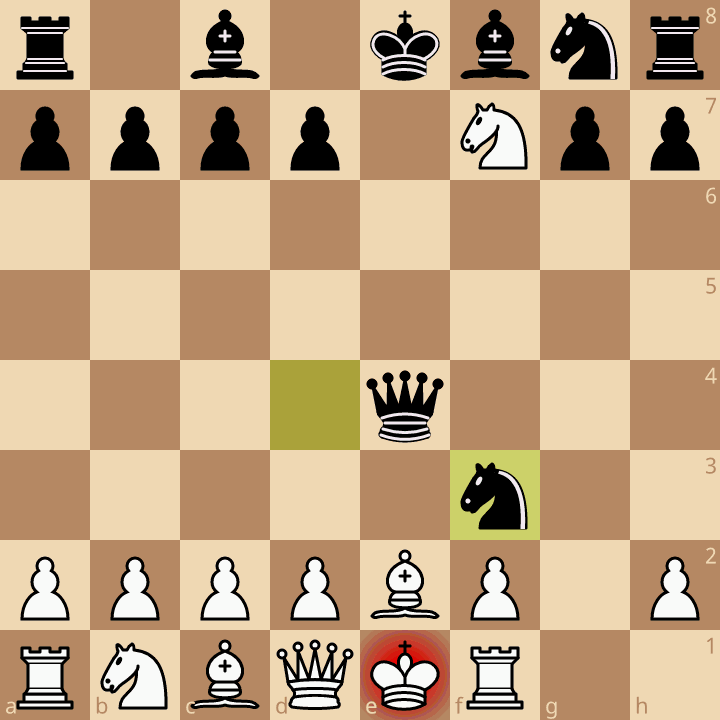
1.e4 e5 2.Nf3 Nc6 3.Bc4 Nd4?!
At first glance, Black’s move 3…Nd4?! appears strange. The knight moves twice in the opening, violating one of the basic opening principles, and the pawn on e5 appears to be left undefended. Many beginners immediately capture the pawn with 4.Nxe5?, believing they have won a free pawn.
However, this is exactly what Black hopes for.
After 4…Qg5, Black attacks both the knight and the vulnerable g2 pawn. If White continues greedily with 5.Nxf7??, trying to win the rook, Black launches a devastating attack:
5…Qxg2 6.Rf1 Qxe4+ 7.Be2 Nf3#
White is checkmated after only a few moves.
Although this trap is famous, it is not considered a sound opening because Black’s third move is objectively inaccurate. A well-prepared White player can simply continue with 4.Nxd4, 4.c3, or 4.O-O, obtaining a comfortable position.
Lesson: Never assume an apparently free pawn is truly free. Before capturing material, always ask yourself why your opponent allowed it and calculate the tactical consequences.
Example 2 – Legal’s Mate
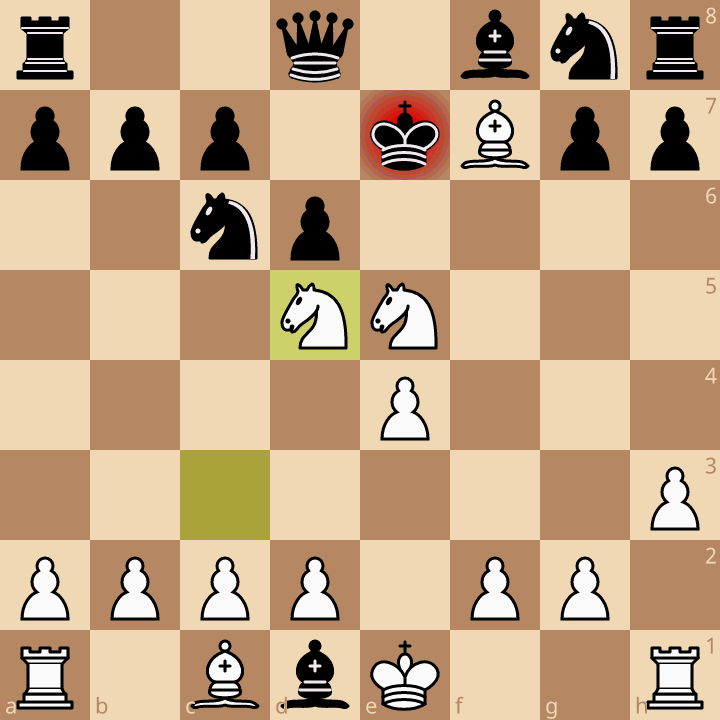
1.e4 e5 2.Nf3 d6 3.Bc4 Nc6 4.Nc3 Bg4 5.h3 Bh5?
Legall’s Mate is one of the most elegant tactical combinations in chess history. After Black develops the bishop to g4, White questions it with 5.h3. Instead of retreating safely or exchanging the bishop, Black mistakenly plays 5…Bh5?, overlooking a powerful tactical idea.
White now sacrifices the queen temporarily with the brilliant move: 6.Nxe5!
If Black greedily accepts the queen with: 6…Bxd1??
White delivers a beautiful checkmate: 7.Bxf7+ Ke7 8.Nd5#
Despite winning the queen, Black’s king is trapped in the center and has no escape from White’s perfectly coordinated pieces.
Unlike the Blackburne Shilling Trap, Legall’s Mate is based on sound tactical principles rather than a dubious opening move. It teaches players to value piece activity and king safety more than material. Even if Black declines the sacrifice, White generally obtains an active and comfortable position.
Lesson: Material is not always the most important factor in chess. Active pieces, tactical coordination, and an exposed king can be far more powerful than a temporary material advantage.
Example 3 – The Fishing Pole Trap
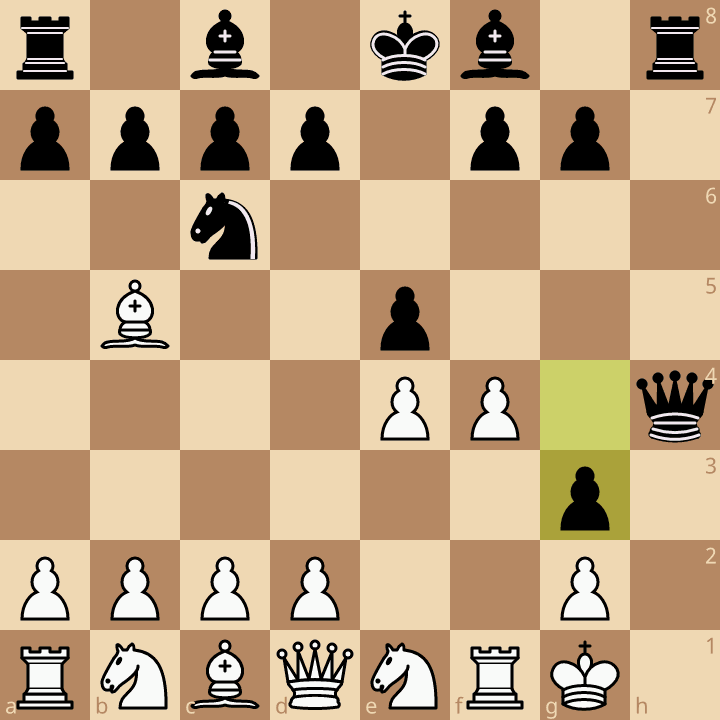
1.e4 e5 2.Nf3 Nc6 3.Bb5 Nf6 4.O-O Ng4 5.h3 h5!?
The Fishing Pole Trap is an aggressive opening trap that arises from the Ruy Lopez (Spanish Opening). After both players develop normally, Black deliberately places the knight on g4, inviting White to chase it away with h3. Instead of retreating the knight, Black surprises White with the unusual move 5…h5!?, seemingly leaving the knight hanging. This move is a tactical sacrifice designed to tempt White into capturing the knight and opening the h-file.
Many beginners believe they have won a free piece after 6.hxg4?. However, this is exactly what Black wants. Black immediately responds with 6…hxg4, opening the h-file and creating dangerous attacking chances against White’s castled king. If White continues carelessly with 7.Ne1??, Black launches a decisive attack: 7…Qh4 8.f4 g3!
The correct approach is not to capture the knight immediately. Instead, White should continue normal development with moves such as c3, Re1, and d4, strengthening control of the center while leaving Black’s knight stranded on g4.
Lesson: The Fishing Pole Trap teaches one of the most important attacking principles in chess: an open file leading directly to the opponent’s king can be more valuable than material. Before accepting a seemingly free piece, always ask yourself what lines your opponent is trying to open and whether your king will remain safe. Sound development and careful calculation are often the best defence against tactical traps.
Example 4 – Mortimer Trap
1.e4 e5 2.Nf3 Nc6 3.Bb5 Nf6 4.d3 Ne7!?
The Mortimer Trap is a lesser-known but clever opening trap that arises from the Ruy Lopez (Spanish Opening). At first glance, Black’s move 4…Ne7!? appears to be a mistake. By moving the knight a second time instead of developing another piece, Black seems to violate one of the fundamental opening principles.
Many beginners immediately play 5.Nxe5?, believing they have won a free pawn. In reality, Black has anticipated this move and responds with 5…c6!, attacking White’s bishop and forcing it to retreat. After 6.Ba4, Black continues with the tactical move 6…Qa5+, simultaneously checking the white king and attacking the knight on e5. White cannot defend both threats at the same time and is forced to lose the knight, giving Black a clear material advantage.
Although the Mortimer Trap can be effective against an unprepared opponent, White can avoid it easily by continuing normal development. Moves such as 5.O-O, 5.c3, or 5.Nc3 follow sound opening principles and maintain a comfortable position without taking unnecessary risks.
Lesson: The Mortimer Trap teaches beginners to calculate before capturing material. If your opponent makes an unusual move, do not assume it is a blunder. Instead, ask yourself why they played it and look for hidden tactical ideas. By prioritizing development, king safety, and careful calculation over greed, you will avoid many opening traps and build stronger positions from the very beginning of the game.
From the Editor
Opening traps are exciting because they demonstrate how quickly a game can be decided by a single mistake. However, they should never replace good opening fundamentals. Players who consistently follow the opening principles—developing their pieces, controlling the center, and castling early—will naturally avoid most traps without needing to memorize dozens of variations. Treat these examples as lessons in tactical awareness rather than shortcuts to victory. Strong chess is built on sound principles, careful calculation, and respect for every move your opponent makes.