
PRAVIN MAHADEO THIPSAY
Maharashtra’s Trailblazer and India’s Third Grandmaster
Snapshot
- Born : 12 August 1959
- State : Maharashtra
- FIDE ID : 5000505
- Grandmaster Year : 1997
- Peak Rating : 2515 (January 1995)
- Awards : Arjuna Award (1984)
Gallery
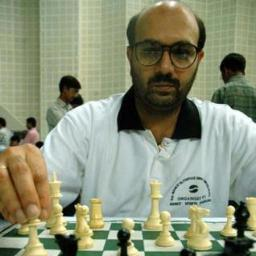
A rising force in Indian chess.
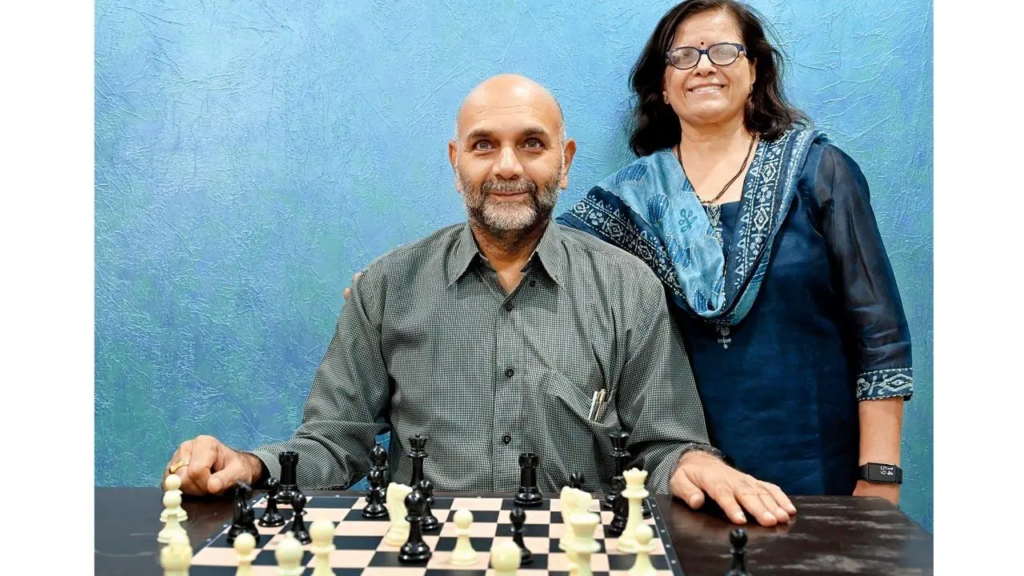
A lifetime dedicated to the game.
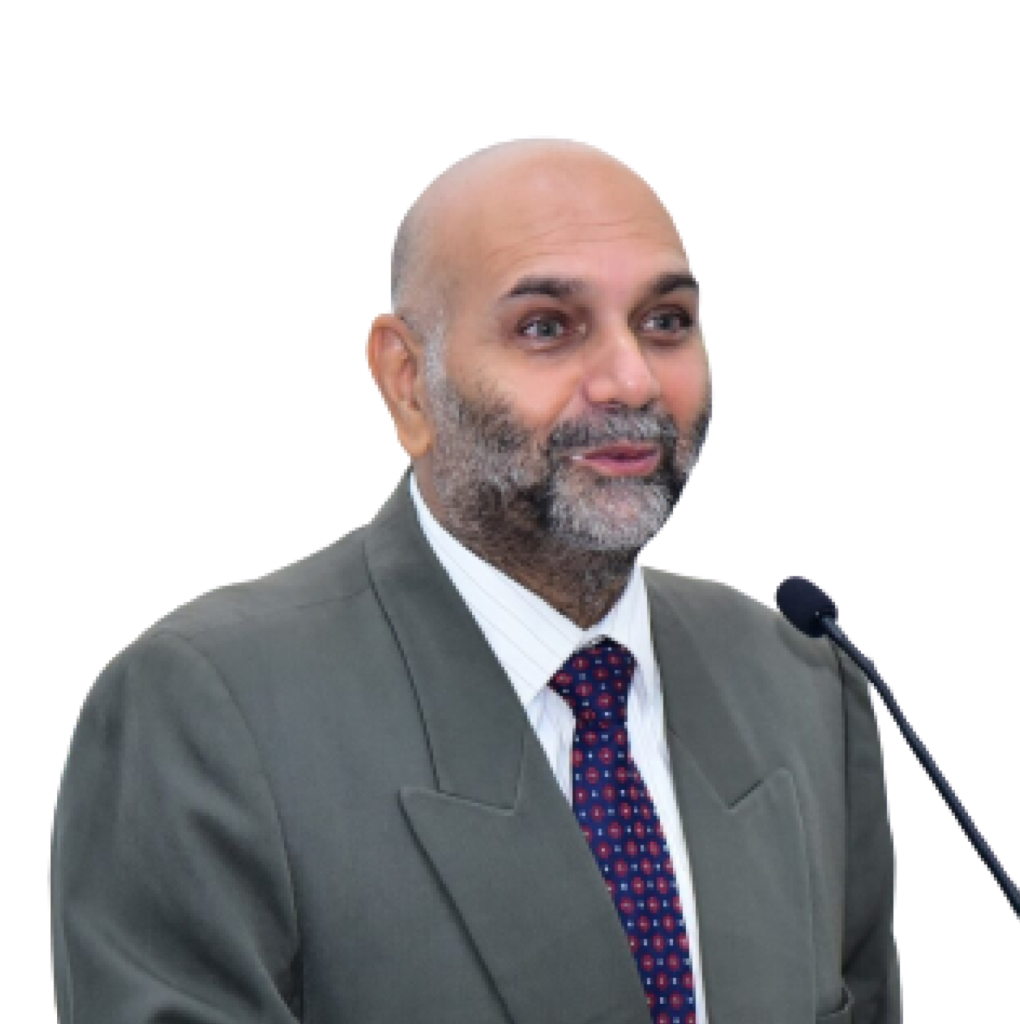
Carrying the game forward across generations.
Before the Grandmasters Came in Numbers
Long before India became a global chess powerhouse, there were players who carried Indian chess forward when the road was far less travelled.
Pravin Mahadeo Thipsay was one of them.
Born in Mumbai in 1959, Thipsay emerged as one of India’s strongest players during the 1970s and 1980s — a period when international opportunities were limited and India’s chess infrastructure was still developing.
He belonged to a generation that had to build its own path.
There were fewer tournaments, fewer international opportunities, limited access to training and none of the technology that has transformed chess preparation today. Success demanded talent, perseverance and an extraordinary commitment to the game.
Thipsay possessed all three.
His rise helped bridge two important eras of Indian chess — from Manuel Aaron’s pioneering generation to the emergence of Viswanathan Anand and the modern chess revolution.
While Anand would eventually take Indian chess to the summit of the world, Thipsay was among those who helped make that ascent possible.
For nearly two decades, he was a dominant force on the Indian circuit.
And his record speaks for itself.
Seven national championship titles.
The Road to Grandmaster
By the time Viswanathan Anand became India’s first Grandmaster in 1988, Thipsay had already spent years competing at the highest level of Indian chess.
Then came Dibyendu Barua.
And in 1997, Thipsay completed a journey that had taken years of persistence.
He became India’s third Grandmaster.
The achievement was significant not merely because of the title, but because of what it represented.
India was beginning to produce Grandmasters beyond a single extraordinary talent.
First Anand.
Then Barua.
Then Thipsay.
The pattern was becoming clear.
Indian chess was developing depth.
Thipsay’s Grandmaster title was another important milestone in that transformation — proof that Indian players could establish themselves internationally through sustained excellence.
By then, he was already a seven-time National Champion and one of the most respected players in the country.
The Grandmaster title crowned a career. It did not define it.
Seven-Time National Champion
Thipsay’s dominance on the domestic circuit remains one of the defining features of his playing career.
He won the Indian National Chess Championship seven times, establishing himself as one of the most successful players in the history of Indian national chess.
Winning a national championship once requires exceptional form.
Doing it seven times requires something much harder:
longevity.
Thipsay remained competitive across changing generations, changing styles and an evolving Indian chess landscape.
He was not simply a player who enjoyed one great period.
He repeatedly returned to the top.
His success also helped establish Maharashtra as one of the country’s important centres of chess.
For young players watching from Mumbai and elsewhere in the state, Thipsay represented something important:
A chess player could build a long, meaningful career in India.
Five Games That Defined the Trailblazer
Across five memorable games, Thipsay’s chess reveals the qualities that defined him — positional understanding, dynamic play, tactical precision, fighting spirit and exceptional defensive technique.
From defeating elite opposition such as Anthony Miles to holding a young Viswanathan Anand, these games tell the story of a player who could attack when necessary, defend when required and patiently grind down advantages.
#1 – Anthony Miles vs Pravin Thipsay, British Championship — Brighton, 1984
At the 1984 British Championship, Pravin Thipsay faced England’s elite Anthony Miles, rated more than 180 points higher.
Playing Black in the King’s Indian Sämisch, Thipsay produced a remarkably dynamic victory.
After 12.exf5 gxf5, Thipsay accepted structural damage in exchange for active play.
The thematic 16…e4! and 17…f4 immediately transformed the position, driving White’s pieces back and opening lines toward the king.
Thipsay’s pieces became increasingly coordinated. His rooks invaded the c-file with 23…Rc4 and 25…Rfc8, while the f-pawn continued its advance with 31…f3.
The decisive sequence came late in the game. After 34.Rxc5 Rxc5 35.Rd3 Qxe4, Black’s queen and rook dominated the position. The final combination was beautifully calculated:
36.Nc2 Qxe1+ 37.Nxe1 Rc1#
A spectacular checkmate against a world-class opponent.
The Lesson:
- Activity can outweigh structure.
- Thipsay willingly accepted weaknesses to gain time, open lines and create threats. Once his pieces became active, Miles was forced into a purely defensive role.
- When the position demands it, prioritize activity over material or structural perfection.
#2 – Ziaur Rahman vs Pravin Thipsay, Dhaka — 1997
This marathon encounter shows a very different side of Pravin Thipsay’s chess — patience, precision and endgame technique.
Playing the King’s Indian Defence, Thipsay allowed White to build space on the queenside while patiently positioning his pieces for counterplay. The manoeuvres 13…Na4 and 14…Bxa4 immediately created pressure, while the rooks became increasingly active on the c-file.
The critical middlegame sequence came with 25…Qc3 26.Rf3 Qxb4, leading to a queen exchange and a complicated endgame. Thipsay’s active pieces then began to dominate.
After 30…Rxd2 31.Bxd2 Bxd1, Black emerged with a favourable position, while White’s advanced b-pawn became a temporary source of counterplay.
Thipsay handled the long endgame with remarkable accuracy. His king became increasingly active, his passed pawns advanced, and his bishop and rook worked together to restrict White’s pieces.
The game eventually reached move 70, with Black’s connected passed pawns and active bishop deciding the battle.
The Lesson:
- Patience can be a weapon.
- Thipsay didn’t force the position. He improved his pieces, exchanged at the right moment and patiently converted his advantages.
- When the position is complicated, don’t rush — keep improving until the advantage becomes decisive.
#3 – Pravin Thipsay vs Christopher Duncan, 18th Lloyds Bank Masters Open — London, 1994
This game showcases Thipsay’s attacking instincts and tactical precision in the sharp Sicilian Dragon.
After 10.f4 and 12.f5, Thipsay immediately signalled his intentions on the kingside.
The position became increasingly dangerous as White’s f-pawn advanced to 26.f6!, creating a direct threat against Black’s king.
The attack quickly accelerated: 27.Rxf6 Rgg8 28.Qd4 Rge8
Thipsay’s rooks dominated the f-file while his queen controlled key attacking squares. The decisive sequence began with 31.Rxf7!, sacrificing material to rip open Black’s position.
After 31…Qh4 32.Nf6 Qh6 33.Nxe8, Thipsay had invaded the eighth rank, winning decisive material while maintaining the attack.
The final move, 34.R7f6, left Black without a meaningful defence, and Duncan resigned.
The Lesson:
- In an attack, every tempo matters.
- Thipsay did not allow Black time to consolidate. His pawns created weaknesses, his rooks invaded the open files, and his knight delivered the final tactical blows.
- When your opponent’s king is exposed, keep creating threats — don’t give them time to breathe.
#4 – William Nicholas Watson vs Pravin Thipsay, Frunze — 1985
This game is a superb example of Thipsay’s tactical vision and attacking coordination.
The opening began quietly, but Black quickly created pressure with 10…Bg4, followed by the aggressive 13…Nf4. Thipsay’s pieces were already pointing toward White’s king.
The tactical explosion came with: 14.Ne4 Bf3! 15.gxf3 Qh4
Thipsay willingly gave up a bishop to rip open the kingside. After 17…Qh3, White’s king was trapped in a dangerous position.
Watson tried to fight back with 18.Nf6+, but Thipsay had calculated the complications. The remarkable sequence: 19.Qxf4 exf4 20.Nxe8 Qxf3+ 21.Kg1 Rxe8 left Black with a devastating attack and decisive material advantages.
Thipsay’s rooks then invaded the second rank with 22…Re2, while his queen continued hunting the exposed king.
The final sequence 25.Rxe2 Qg4+ 26.Kh1 Qxe2 left White completely lost, and Watson resigned after 28…h6.
The Lesson:
- A sacrifice is powerful when it opens the lines your pieces need.
- Thipsay’s 14…Bf3! was not a speculative sacrifice. It destroyed White’s kingside and gave the queen and rooks access to decisive attacking squares.
- Don’t sacrifice simply to win material — sacrifice when it transforms the position.
#5 – Viswanathan Anand vs Pravin Thipsay, Indian Championship — Bombay, 1986
This game is perhaps the most fitting way to close the five-game collection: Thipsay holding his own against a young Viswanathan Anand.
The game followed a Closed Ruy Lopez, with both players manoeuvring carefully before the position became tactical. Anand’s 21.Nxe5 was met by 21…dxe5, and the resulting passed pawns created complications in the centre.
Thipsay’s defence was particularly impressive after 22.d6 Qc6 23.dxe7 Rxe7. White’s advanced pawn had reached the seventh rank, but Thipsay remained calm and coordinated his pieces to neutralise the danger.
The position gradually simplified. After the queens and rooks were exchanged, the game entered a bishop-and-pawn ending where both sides fought for every available advantage.
Anand’s king became active with 50.Kxf5, but Thipsay’s 50…Kd7 51.Bd2 Bxa3 ensured that White could not force the win.
The players agreed to a draw.
The Lesson:
- Defence is an active skill.
- Thipsay did not simply absorb Anand’s pressure. He exchanged the right pieces, activated his king and created enough counterplay to hold the position.
- When facing pressure, don’t just defend your pieces — look for ways to make your opponent defend too.
The Chess of Pravin Thipsay
Thipsay’s chess was never defined by a single style.
That may be one of his greatest strengths.
He could attack when the position demanded it.
He could manoeuvre patiently when the position required restraint.
And he could defend positions that many players would simply allow to collapse.
His games against Miles and Duncan reveal the attacking side of his chess.
His victory over Ziaur Rahman demonstrates his patience and endgame technique.
And his draw against Anand shows the other crucial element of his game: resilience.
Thipsay understood that chess is not about forcing every position into your preferred style.
It is about understanding what the position demands — and responding accordingly.
The Builder of Maharashtra Chess
Thipsay’s contribution to Indian chess did not end with his playing career.
In many ways, his influence became broader.
For decades, he has contributed to chess as a coach, mentor, author, commentator, arbiter and administrator.
At a time when quality chess instruction was difficult to access, Thipsay became an important source of knowledge for aspiring players.
Through coaching camps, books, newspaper columns, commentary and educational initiatives, he helped make serious chess more accessible.
His influence has been particularly important in Maharashtra.
Mumbai has long been one of India’s major chess centres, and Thipsay became one of the most recognisable ambassadors of the state’s chess culture.
He helped generations of players understand not only how to play chess, but how to think about chess.
That distinction matters.
A strong player can win games.
A good teacher can create players.
Thipsay did both.
A Life Around the Chessboard
Thipsay’s connection with chess also extends into his family.
He is married to International Master Bhagyashree Thipsay, one of India’s pioneering women chess players and a multiple-time national champion.
Bhagyashree’s own achievements include the Arjuna Award and Padma Shri, and she has played an important role in the development and promotion of women’s chess in India.
Together, Pravin and Bhagyashree have spent decades contributing to Indian chess as players, mentors, educators and ambassadors.
Their story represents something unusual in Indian sport: two elite chess careers becoming part of the same family and the same national chess journey.
The Everlasting Legacy
Pravin Thipsay’s legacy cannot be measured solely through ratings, titles or tournament victories.
His greater contribution lies in the role he played during one of the most important transitions in Indian chess history.
He was part of the generation that came before the explosion of Grandmasters.
He became India’s third Grandmaster.
He won the National Championship seven times.
He competed against some of the strongest players of his generation.
And then he spent decades giving his knowledge back to the game.
For Maharashtra, he remains a trailblazer.
For Indian chess, he represents a bridge between generations.
And for the players who learned from him, his influence extends far beyond the results printed beside his name.
The Road Between Generations
Today, India has a vast network of Grandmasters, academies, tournaments and training resources.
Young players can analyse games instantly, work with engines and compete internationally from a very early age.
The chess world they inhabit is radically different from the one Thipsay entered.
But progress is never created by one generation alone.
It is passed from one generation to the next.
Manuel Aaron helped open the path.
Pravin Thipsay walked that path and widened it.
Viswanathan Anand took Indian chess onto the world stage.
And the generations that followed inherited a chess ecosystem that pioneers like Thipsay helped build.
The Maharashtra Trailblazer
Pravin Thipsay’s story is ultimately about more than becoming India’s third Grandmaster.
It is about longevity, knowledge and contribution.
He was a champion before Indian chess became a global force.
A Grandmaster before India had dozens of them.
A teacher before online chess made knowledge instantly available.
And a mentor during the years when Indian chess began transforming into the powerhouse it is today.
If Viswanathan Anand inspired India to dream bigger, and Dibyendu Barua helped prove that India’s chess revolution was real, then Pravin Thipsay helped connect the generations that made that revolution possible.
He did not simply play through the rise of Indian chess.
He helped build it.
That is why Pravin Thipsay belongs among the Legends of Indian Chess.