
| Chapter | Chapter Name | Unit | Level | Reading Time |
|---|---|---|---|---|
| OG005 | Closed Chess Openings | Opening Guide | Beginner | 3 min |
Strategic Battles Begin with 1.d4
Closed Openings usually begin with 1.d4 d5, where both players establish a strong presence in the centre before developing their pieces. Unlike Open Openings, which often lead to immediate tactical battles, Closed Openings focus on solid pawn structures, careful piece placement, and long-term planning.
These openings reward patience and positional understanding rather than quick attacks. Instead of looking for early combinations, players gradually improve their pieces, prepare pawn breaks, and build small advantages that can be converted later in the game.
Key Takeaways
- Closed Openings usually begin with 1.d4 d5.
- Strong pawn structures are the foundation of these openings.
- Long-term planning is often more important than immediate tactics.
- Understanding ideas is more valuable than memorising variations.
Queen’s Gambit
Moves
1.d4 d5 2.c4
Playing Style
- ✔ Central Control
- ✔ Positional Play
- ✔ Long-Term Pressure
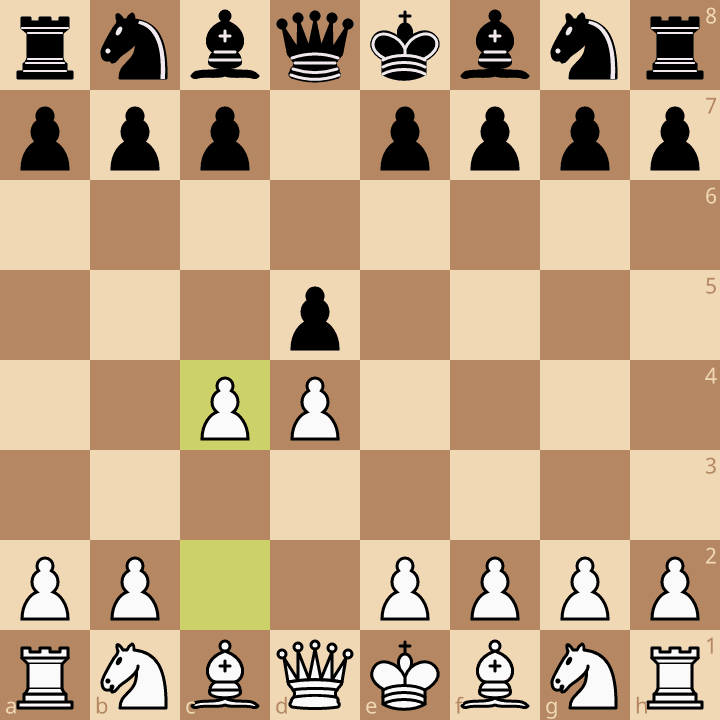
The Queen’s Gambit challenges Black’s centre by offering the c-pawn to gain space and long-term positional pressure.
Queen’s Gambit Declined (QGD)
Moves
1.d4 d5 2.c4 e6
Playing Style
- ✔ Solid Defence
- ✔ Strategic Planning
- ✔ Reliable Structure
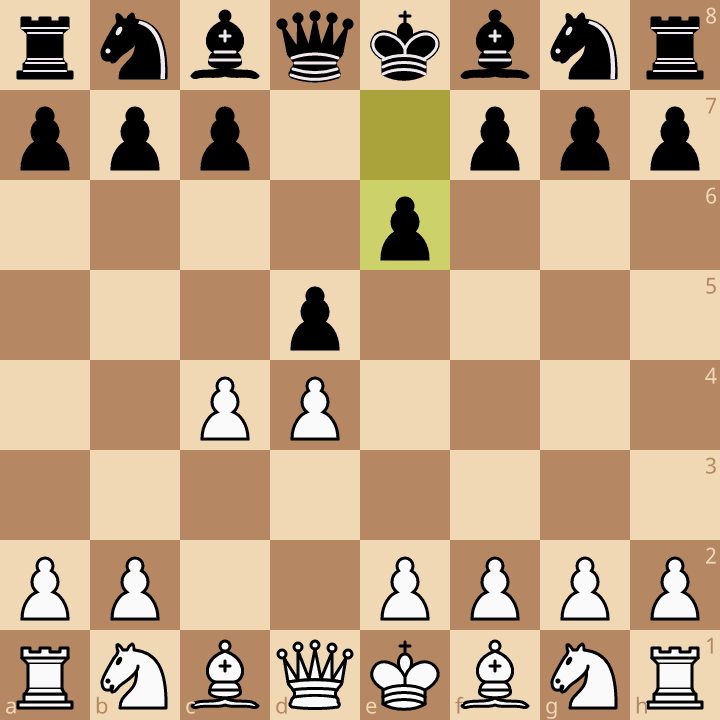
The Queen’s Gambit Declined strengthens Black’s centre with …e6, creating one of the most solid and reliable defences in chess.
Slav Defence
Moves
1.d4 d5 2.c4 c6
Playing Style
- ✔ Flexible Development
- ✔ Strong Pawn Structure
- ✔ Positional Play
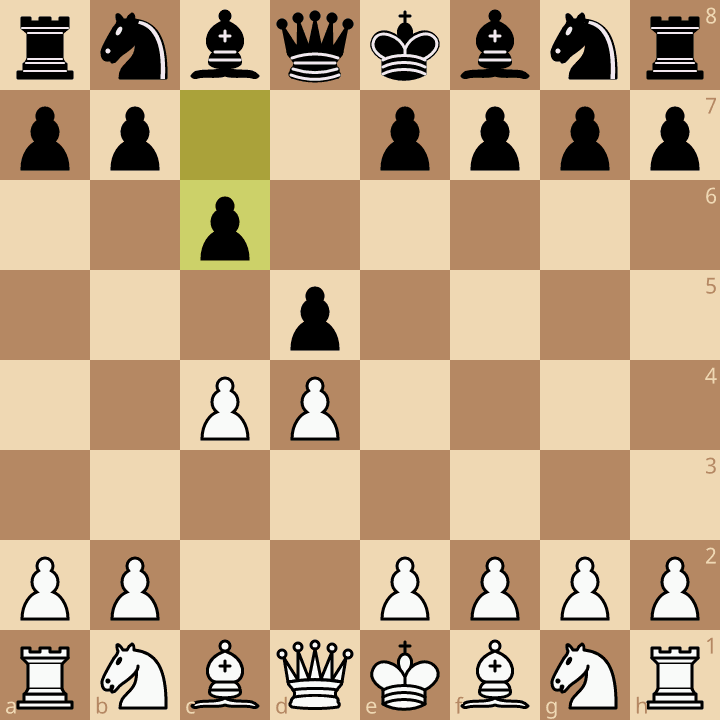
The Slav Defence supports the d5 pawn while keeping Black’s light-squared bishop free, leading to flexible and balanced positions.
King’s Indian Defence
Moves
1.d4 Nf6 2.c4 g6
Playing Style
- ✔ Counterattacking
- ✔ Kingside Attack
- ✔ Dynamic Play
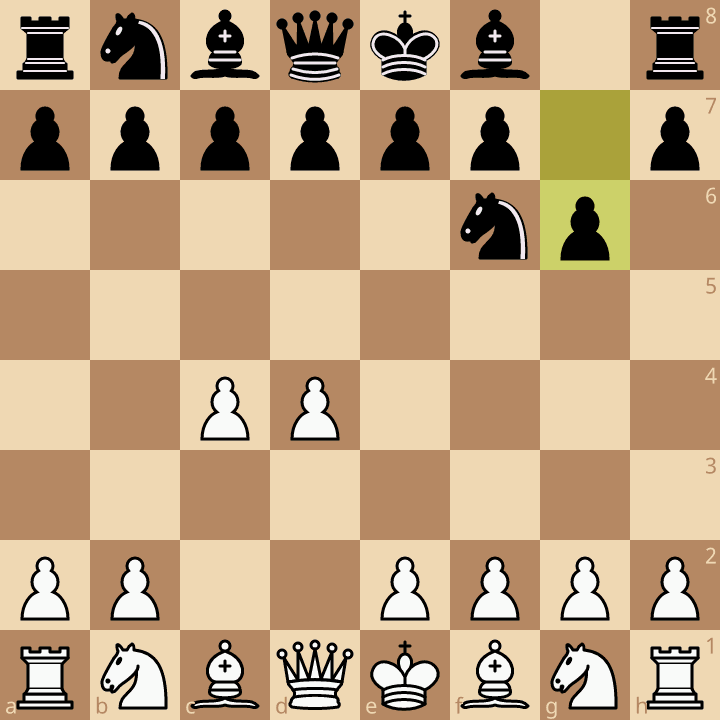
The King’s Indian Defence allows White to build the centre before launching an energetic counterattack against it.
Nimzo-Indian Defence
Moves
1.d4 Nf6 2.c4 e6 3.Nc3 Bb4
Playing Style
- ✔ Positional Pressure
- ✔ Piece Activity
- ✔ Strategic Play
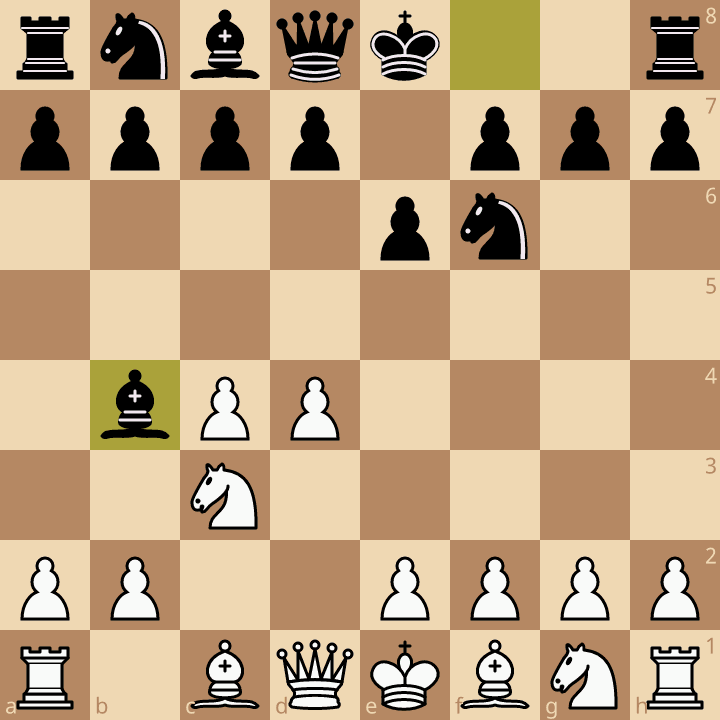
The Nimzo-Indian Defence immediately places pressure on White’s centre by pinning the knight, creating rich strategic positions.
Grünfeld Defence
Moves
1.d4 Nf6 2.c4 g6 3.Nc3 d5
Playing Style
- ✔ Active Counterplay
- ✔ Dynamic Positions
- ✔ Central Pressure
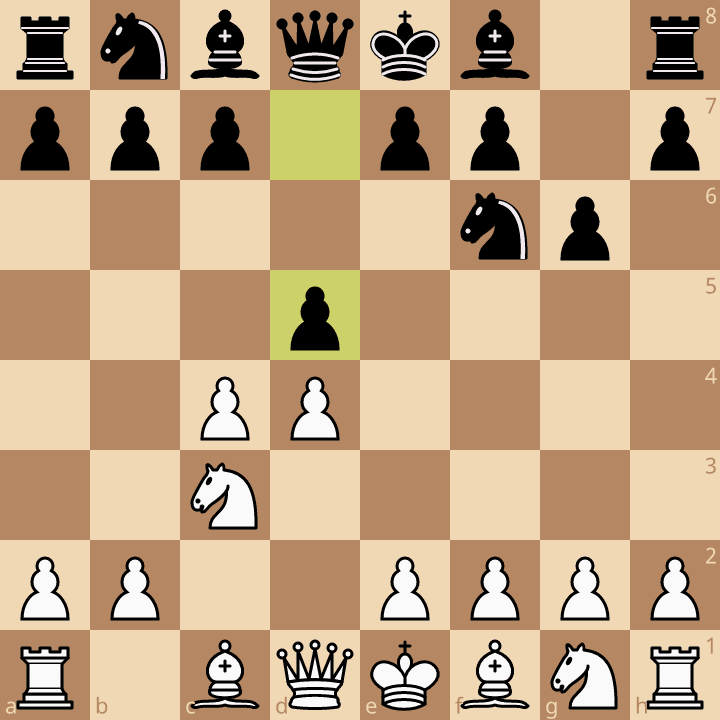
The Grünfeld Defence challenges White’s centre at an early stage, creating active and dynamic positions with plenty of counterplay.
Summary
Although these openings all begin with 1.d4, they lead to very different types of positions. Some, like the Queen’s Gambit and Slav Defence, focus on building a strong positional foundation, while others, such as the King’s Indian and Grünfeld Defence, invite White to occupy the centre before launching a powerful counterattack.
There is no single “best” Closed Opening. Choose the one that best matches your style and gradually learn its typical plans and pawn structures.
Before You Play Your Next Game
If you play 1.d4, ask yourself:
- ✅ Do I prefer positional or dynamic play?
- ✅ Am I comfortable with long-term planning?
- ✅ Which opening best matches my style?
Play the same opening regularly before adding new systems to your repertoire.
Advice from the Coach
Closed Openings are rarely won by memorising moves. They are won by understanding pawn structures, improving your pieces, and making small positional improvements. Be patient, trust your plan, and let your position grow stronger move by move.
Did You Know?
- Many World Champions have relied on Closed Openings because they reward strategic understanding and long-term planning over tactical tricks.
- The Queen’s Gambit is one of the oldest and most respected openings in chess.
- The King’s Indian Defence was a favourite weapon of attacking legends such as Bobby Fischer and Garry Kasparov.
| Previous Chapter: OG004 – Semi-Open Chess Openings | Next Chapter : OG006 – Italian Game Opening |