
| Chapter | Chapter Name | Unit | Level | Reading Time |
|---|---|---|---|---|
| BG015 | Essential Beginner Checkmate Patterns | Basic Guide | Beginner | 4 min |
Three Simple Patterns Every Beginner Should Know
Not every checkmate belongs to a famous pattern like Fool’s Mate or Back Rank Mate. Many games are won through simple and practical mating ideas that every beginner should recognise. In this chapter, you’ll learn three easy checkmate patterns that appear regularly in club and online games.
Key Takeaways
- Learn three practical checkmate patterns.
- Recognise common attacking ideas.
- Improve your finishing skills.
- Build confidence in spotting checkmate opportunities.
Queen & Rook Checkmate
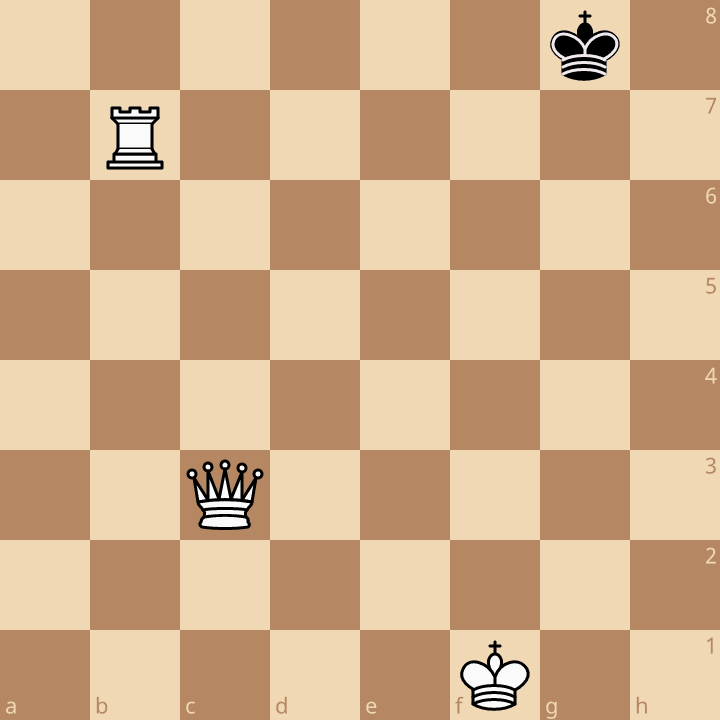
White’s queen and rook are perfectly coordinated, while the black king is trapped on the back rank.
Can you find the checkmate?
The queen and rook are one of the strongest attacking combinations in chess. The queen delivers the check, while the rook controls an entire rank or file, preventing the king from escaping. When both pieces work together, even a lone king has very few chances to survive.
White plays 1. Qc8# or Qg7#, delivering checkmate.
The queen attacks the black king on g7 or c8, while the rook on b7 controls the entire 7th rank, preventing the king from escaping. The queen also controls the nearby escape squares, leaving the black king with no legal move. The king cannot capture the queen because it is protected by the rook.
The important lesson is that the queen and rook work together. The queen delivers the check, while the rook quietly controls the escape route, making the checkmate possible. Whenever these two pieces are coordinated, always look carefully—you may have a checkmate instead of simply winning material.
Queen & Bishop Checkmate
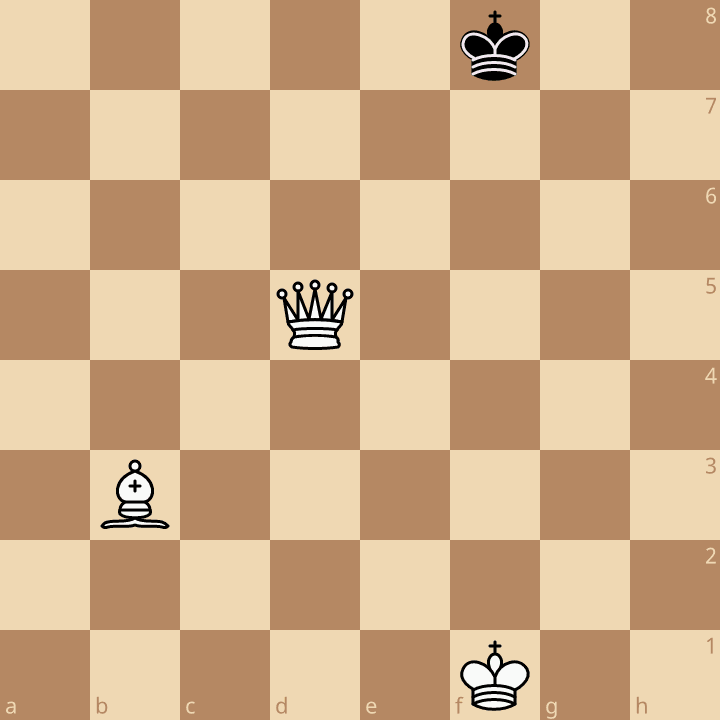
White’s queen and bishop are perfectly coordinated, while the black king has very few safe squares remaining.
Can you find the checkmate?
The queen and bishop form a powerful attacking combination. The queen delivers the check, while the bishop controls important diagonal escape squares. Together, they create a mating net that leaves the king with no safe place to move.
White plays 1. Qf7#, delivering checkmate.
The queen attacks the black king on f7, while the bishop on b3 protects the queen by controlling the a2–g8 diagonal. The queen also controls the king’s escape squares, leaving no legal move. Since the queen is protected by the bishop, the king cannot capture it, and no piece can block the attack.
The important lesson is that the queen and bishop work together perfectly. The queen delivers the check, while the bishop provides the hidden support that makes the checkmate possible. Whenever your queen and bishop are aimed at the enemy king, always look for a mating opportunity before searching for material gains.
Queen & Knight Checkmate
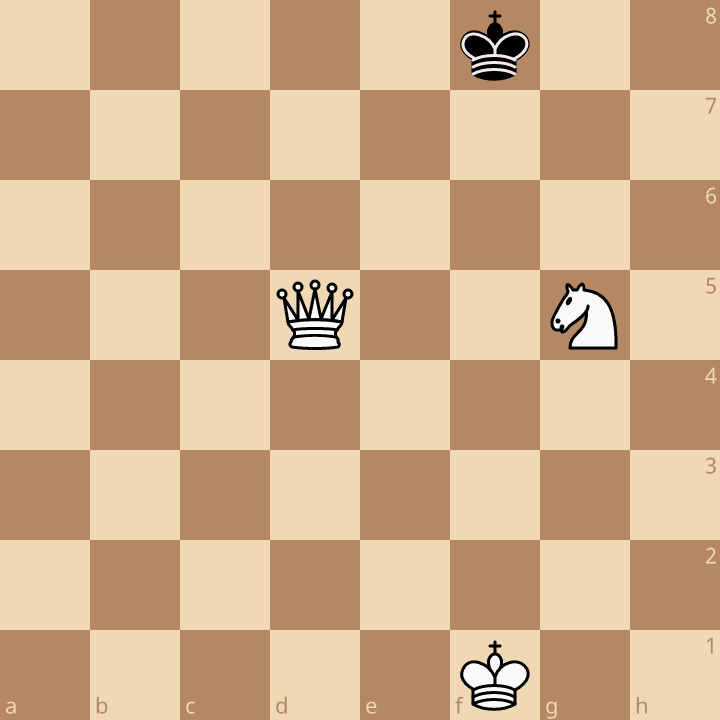
White’s queen and knight are working together to attack the black king. The knight controls important escape squares, giving White a chance to finish the game.
Can you find the checkmate?
The queen and knight make an excellent attacking team. The queen delivers the check, while the knight controls nearby escape squares that the queen cannot. Together, they can trap the enemy king and create a powerful mating net.
White plays 1. Qf7#, delivering checkmate.
The queen attacks the black king on f7, while the knight on g5 protects the queen. The queen also controls the remaining escape squares around the king, leaving no legal move. Since the queen is protected by the knight, the king cannot capture it, and the game ends immediately.
The important lesson is that the queen and knight complement each other perfectly. The queen attacks from a distance, while the knight controls nearby escape squares. Whenever these two pieces work together around the enemy king, always look carefully for a checkmate before searching for material.
Summary
Every successful attack follows the same principle:
- Coordinate your pieces.
- Restrict the king’s movement.
- Control the escape squares.
- Deliver checkmate with confidence.
Before You Play Your Next Game
Before looking for a winning move, ask yourself:
- ✅ Can two of my pieces work together?
- ✅ Is the enemy king running out of escape squares?
- ✅ Do I have a checkmate instead of simply winning material?
Advice from the Coach
Most beginners look for spectacular sacrifices, but simple coordination wins far more games. Before making your next move, check whether two of your pieces can work together to create a mating net. Many checkmates are found not because of brilliant calculation, but because the pieces support each other.
You have now completed the Chess Basics Guide. You understand the rules, the most common tactical ideas, and the essential checkmate patterns. Before moving on to openings, make sure you can recognise these patterns without hesitation. Strong players don’t memorise checkmates—they recognise them instantly. Build that habit, and you’ll start winning many more games.
Did You Know?
- Most checkmates are delivered by two or more pieces working together.
- Even simple piece coordination can be stronger than having extra material.
- Spotting checkmate should always come before looking to win material.
| Previous Chapter: BG014 – Ladder Mate | Next Chapter : OG001 – Understanding Chess Openings |