
| Chapter | Chapter Name | Unit | Level | Reading Time |
|---|---|---|---|---|
| BG010 | Deflection & Decoy | Basic Guide | Beginner | 5 min |
Move the Defender. Win the Game.
Not every tactical combination begins with a direct attack. Sometimes, the key is to force an important piece away from its duty or tempt it onto an unfavourable square. These two ideas are called Deflection and Decoy. Learning to recognise them will help you win material, create powerful attacks, and find combinations that are often hidden in plain sight.
Key Takeaways
- Understand the difference between Deflection and Decoy.
- Learn how to force a defender away from an important square.
- Recognise when a piece can be lured to an unfavourable position.
- Improve your tactical awareness during attacks.
Deflection
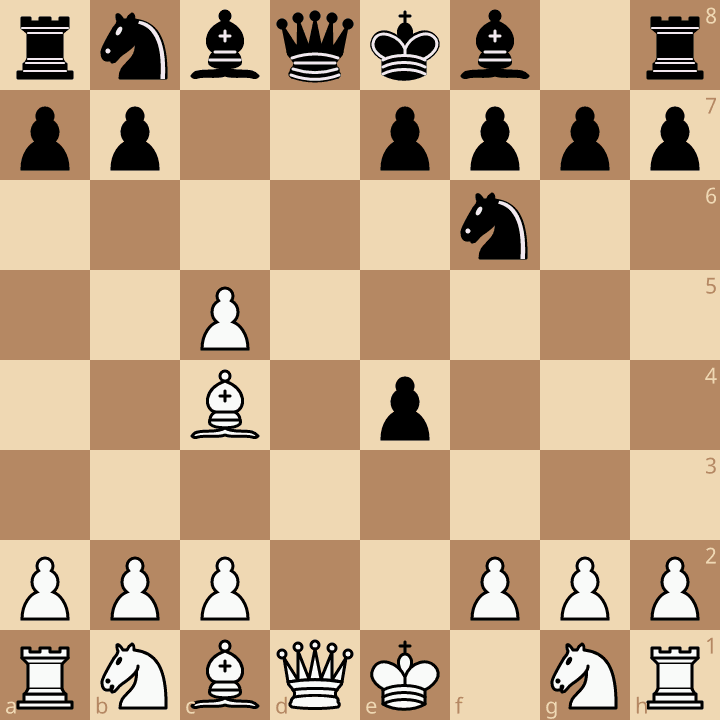
Black’s king is protecting the queen on d8. White wants to win the queen but cannot capture it while the king remains on e8.
Can you force the king away from its defensive duty?
Deflection is a tactical idea in which an opponent’s piece is forced to leave an important square or defensive duty. Once that piece moves away, it can no longer protect another piece or square, allowing you to win material or launch a decisive attack.
White begins with 1. Bxf7+!, sacrificing the bishop to give check. Black has only one sensible response: 1…Kxf7, capturing the bishop and moving the king away from e8.
With the king no longer protecting the queen, White immediately plays 2. Qxd8, winning Black’s queen.
The important lesson is that White did not attack the queen first. Instead, White forced the king to leave its defensive position, making the queen vulnerable. This is the essence of Deflection—forcing a defending piece away so another target can be won.
Decoy
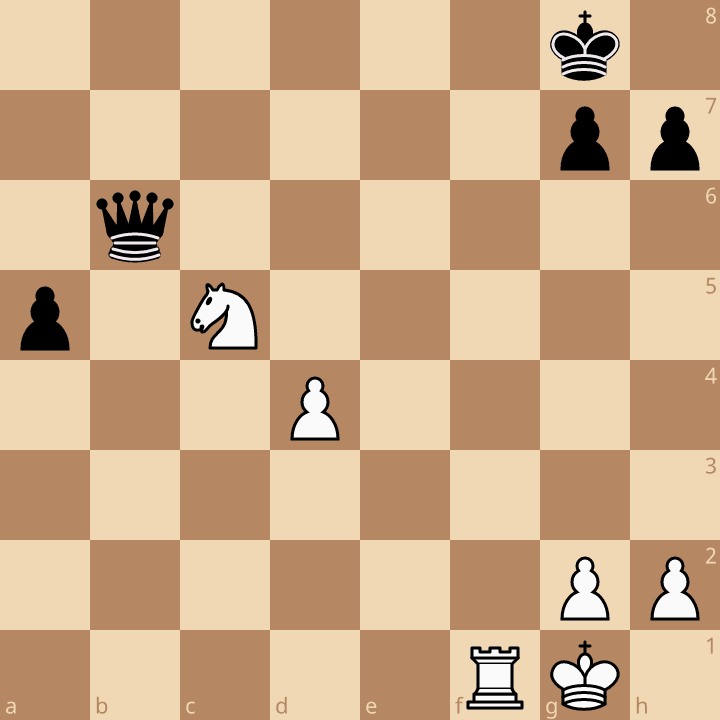
Black’s king appears safe, and the queen on b6 is actively defending the position. White sees an opportunity to lure the king onto a specific square before launching a powerful knight fork.
Can you find the winning combination?
A Decoy is a tactical idea in which an opponent’s piece is lured onto a specific square where it becomes vulnerable or allows another tactical idea to work. Unlike Deflection, which forces a piece away from its duty, Decoy tempts the opponent into moving exactly where you want.
White begins with 1. Rf8+!, sacrificing the rook to give check. Black has little choice but to accept the sacrifice with 1…Kxf8.
By capturing the rook, the king is decoyed onto f8, the exact square White wanted. White now plays 2. Nd7+!, attacking both the king and the queen with a powerful knight fork. The king must move, leaving the queen undefended. White wins the queen and gains a decisive material advantage.
The important lesson is that the rook sacrifice was planned from the beginning. White did not sacrifice the rook hoping for compensation. Instead, the sacrifice lured the king onto a square where the knight fork became possible. This is the essence of a Decoy.
Summary
Many tactical combinations begin by changing the position of an important defending piece.
Ask yourself:
- Can I force this defender to move?
- Can I lure an opponent’s piece onto a weaker square?
- Will moving this piece create a new tactical opportunity?
Before You Play Your Next Game
Before making your move, ask yourself:
- ✅ Can I force an important defender away?
- ✅ Can I tempt my opponent’s king or queen onto a bad square?
- ✅ Will moving one piece change the position in my favour?
Advice from the Coach
Strong players often don’t attack immediately. Instead, they first change the position of the defending pieces. Learning to recognise Deflection and Decoy will help you discover combinations that are easy to miss but powerful when executed correctly.
Did You Know?
- Deflection is also known as Diverting the Defender in some chess books.
- Decoy is sometimes called Attraction because the opponent’s piece is lured to a particular square.
- Many famous sacrifices by world champions work because an important piece is first deflected or decoyed before the final combination begins.
| Previous Chapter: BG009 – Remove The Defender & Overloading | Next Chapter : BG011 – Fool’s Mate |