
Chapter 2
Middlegame Mastery
MG002
RESTRICTION
Take Away the Squares. Create the Tactic.
Restriction is the art of limiting the mobility of your opponent’s pieces by controlling the squares they need.
A restricted piece may become passive, vulnerable, trapped, or unable to defend important targets. Against the king, restriction can be even more powerful: take away its escape squares, and a promising attack can become a forced checkmate.
The important idea is simple: Don’t always attack the piece. First ask where it can go.
A strong player doesn’t necessarily look for an immediate tactical blow. Sometimes the winning move is the one that quietly takes away the opponent’s options.
How to See Restriction
When looking at a position, don’t only count the squares your opponent controls.
Look at the squares they need.
Ask yourself:
- Where can the opponent’s piece or king escape?
- Which escape squares are already unavailable?
- Can I control another important square?
- Can I reduce the opponent’s mobility before attacking?
- Once the available squares disappear, what tactical opportunity becomes possible?
Think of the pattern as:
Target → Escape Squares → Restriction → Tactical Consequence
The restriction itself may not win anything immediately.
The power comes from what becomes possible after the options disappear.
Practical Examples
Example 1 — Restricting the King’s Escape
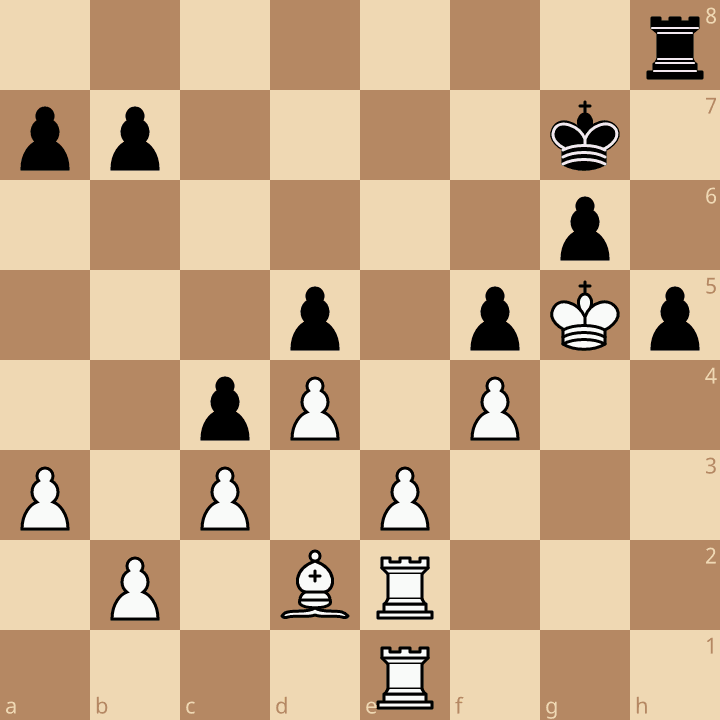
Can you find the move that takes away the king’s final escape?
White enjoys a significant material advantage, possessing an extra rook and bishop. However, the advanced position of the White king on g5 has become a serious weakness. Rather than focusing on material, Black recognises that the king has very limited escape squares and looks for a way to remove the remaining route.
The brilliant move: 1…h4! is the key to the combination. Instead of giving an immediate check, Black advances the h-pawn to restrict the White king’s mobility. The move removes the king’s final escape square and creates a mating net. After 2.Kh2, Black finishes with: 2…Rh5#
The rook delivers checkmate while the pawn on h4 prevents the king from escaping. White’s extra material is irrelevant. The king has nowhere to go.
The important point isn’t the final checkmate. It is the move 1…h4! Black first restricts the king, and only then delivers the final blow.
Restriction → No Escape → Checkmate
Solution: 1…h4! 2. Rh2, Rh5#
Example 2 — Restricting the King’s Mobility
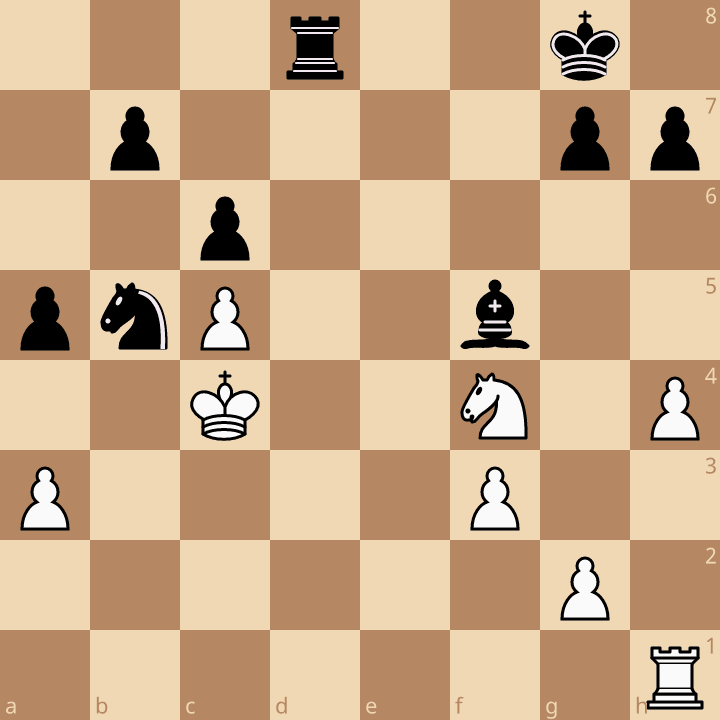
Can you see why Black sacrifices the rook?
White has concentrated most of its forces on the kingside, but the king on c4 has very few safe squares. Black’s rook, bishop and knight are coordinated around the exposed king.
The brilliant: 1…Rd3!! sacrifices the rook.
At first glance, giving up a rook appears risky. But the sacrifice has a deeper purpose: it draws the White knight away from its defensive position and further restricts the king’s escape squares.
After: 2.Nxd3 Black has achieved the desired restriction. Now comes: 2…Be6#
The bishop delivers checkmate while the remaining Black pieces control the available escape squares. White’s material advantage becomes irrelevant because the king has been completely trapped.
The rook sacrifice was not the objective. Restriction was the objective.
The sacrifice was simply the method used to remove a key defensive resource.
Restrict the king → Remove its escape squares → Deliver the final blow
Solution: 1…Rd3!! 2.Nxd3, Be6#
The Thinking Process
When you identify a potential target, don’t immediately ask: “How can I attack it?”
Ask:
- 1. Where can it go? – Identify every useful escape square.
- 2. Which squares are already unavailable? – Look at the opponent’s existing restrictions.
- 3. Can I take away another square? – A quiet move may be stronger than an immediate attack.
- 4. What happens when the mobility disappears? – Look for the tactical consequence.
This is the key transition: Don’t calculate only the attack. Calculate the position after the opponent’s options have been reduced.
Restriction in Three Steps
- More Squares → More Freedom
- Fewer Squares → More Vulnerability
- No Escape → Tactical Opportunity
Remember: The best attack is sometimes the move that takes away the opponent’s ability to escape.
Before You Play Your Next Game
When attacking a piece or king, ask yourself:
- Where can it escape?
- Which squares are already unavailable?
- Can I control another escape square?
- Can I restrict it before attacking?
- What tactical opportunity appears once its mobility is reduced?
And especially against the king: Before searching for checkmate, count the escape squares.
Advice from the Coach
Don’t always attack the piece. Attack its freedom.
A restricted piece has fewer choices. A restricted king has fewer escape squares. A restricted defender may no longer be able to protect what matters.
Strong players gradually make the opponent’s position smaller.
They take away squares.
They reduce options.
And eventually, the tactic appears.
When your opponent has fewer choices, your moves become stronger.
Did You Know?
- Many spectacular mating combinations are not created by the final checking move.
- The decisive moment often comes one move earlier, when an escape square is removed.
- The checkmate is simply the consequence.